 Sudden Valley
 Bellingham and Sudden Valley Ask More of a Window Install
A window installed the same way everywhere isn't installed correctly here. Whatcom County sits where Salish Sea weather and heavy Cascade foothill rainfall overlap, and homes in Bellingham and out at Sudden Valley each take that in their own way. Bellingham's neighborhoods closer to the bay deal with salt-laden air moving in off the water. Sudden Valley's tree-covered lots around Lake Whatcom hold shade and moisture longer, which means moss and algae get a head start on any surface that stays damp. Add driving rain that comes in sideways during a fall or winter storm, and a window opening that isn't flashed and sealed correctly will find a way to leak — sometimes in year one, sometimes five years down the road when nobody's looking.
Window installation done right in this climate isn't about the window unit itself so much as everything around it: the flashing, the sealant, the drainage path, and how that opening ties into the wall and siding around it. That's the part that gets rushed on a lot of jobs, and it's the part that actually keeps water out.
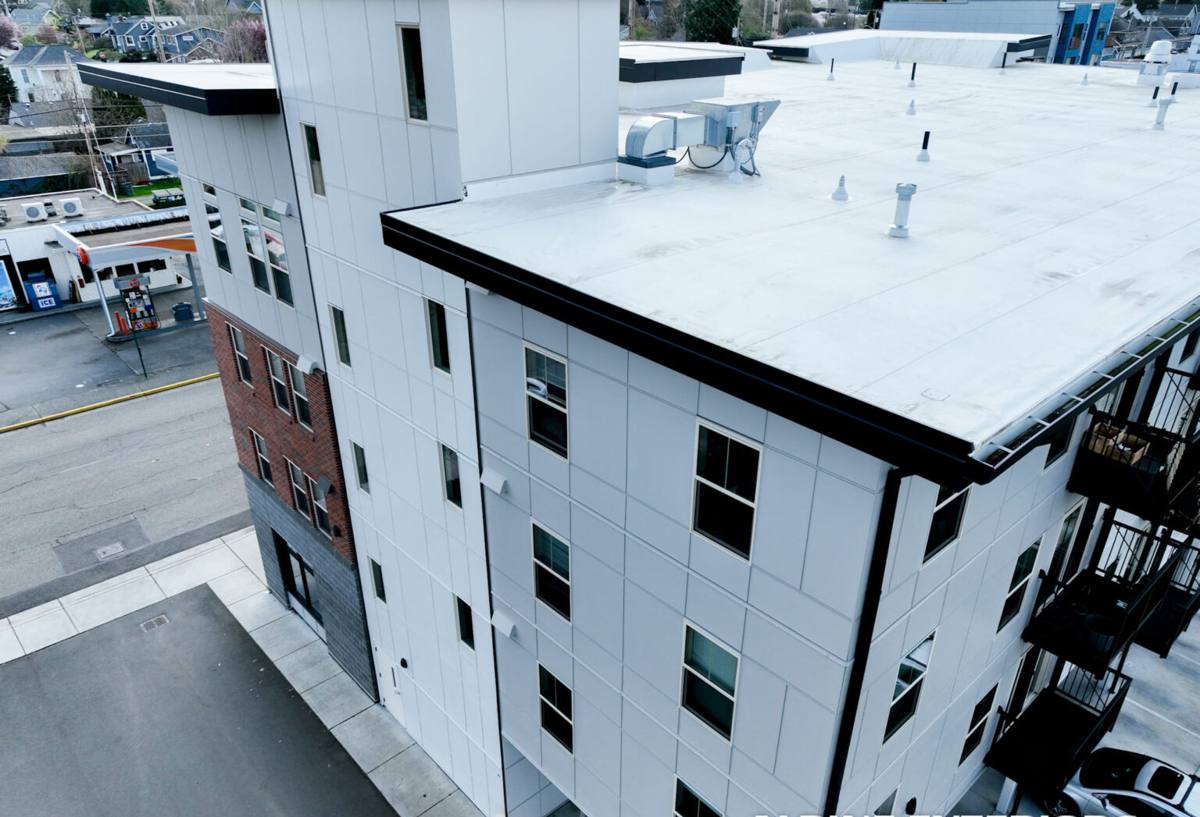
What This Climate Does to a Window Over Time
None of this is dramatic on its own, but it adds up:
- Wind-driven rain pushes water sideways and upward under sills and around trim, not just straight down — a flashing detail that works in a dry climate can fail here.
- Salt air near the bay speeds up corrosion on exposed metal hardware — cranks, locks, and screws — faster than it would inland.
- Extended moss and algae growth, especially on shaded, tree-covered lots like much of Sudden Valley, holds moisture against sills and can clog weep holes that are supposed to let water drain back out.
- Sustained dampness, more than hard freezes, is the main threat to window framing here — wood that stays wet for weeks at a time rots, even if it never freezes.
- Condensation between panes shows up when a seal has already failed, which usually means the moisture problem has been building for a while before you notice it.
Why a Dry-Climate Install Fails Here
A lot of window problems we get called out for weren't caused by a bad window — they were caused by an install that skipped a sill pan, relied on caulk alone instead of proper flashing, or sealed the interior tightly while leaving the exterior water path unclear. In a low-rainfall area that mistake might not show up for years. In Whatcom County it shows up fast.
Retrofit vs. Full-Frame Replacement
There are two basic ways to replace a window, and the right choice depends on the condition of what's already there — not just on budget.
| Factor | Retrofit (Pocket) Replacement | Full-Frame Replacement |
|---|---|---|
| Best for | Sound existing frame, no rot or water damage | Rotted sill, damaged framing, or a window that's changing size |
| Cost | Lower — less labor and material | Higher — more labor, trim, and sometimes siding work |
| Disruption | Minimal, often a one-day-per-window job | More involved; interior and exterior trim usually affected |
| Moisture management | Depends on the existing flashing being intact | Full opportunity to rebuild flashing, sill pan, and WRB tie-in correctly |
| Best fit locally | Newer homes with sound original installs | Older homes, or any home with signs of past water intrusion |
If we open a wall and find soft framing or old flashing that was never lapped correctly with the weather-resistive barrier, we'll tell you honestly whether retrofit is still the right call or whether it's worth doing full-frame instead. It's a judgment call based on what's actually behind the trim, not a default answer.
What a Correct Installation Actually Involves
The window unit itself is a commodity to some extent — the installation is where the job is won or lost. A correct install includes:
- A sill pan that directs any water that gets past the window back outside, not into the wall cavity.
- Head and side flashing lapped in the right order with the house's weather-resistive barrier, so water sheds downward and outward at every layer.
- Backer rod and sealant at the joints, not just a bead of caulk over a gap — caulk alone isn't a flashing system.
- Shimming and leveling that keeps the frame square without racking it, which is what keeps the sash operating smoothly for years.
- Insulation packed to the manufacturer's spec — under-filled gaps let air and moisture in, and over-packed foam can bow the frame and cause seal problems.
- Weep holes and drainage paths left clear, not sealed shut or blocked by trim.
- Fastening done to the manufacturer's schedule — installing outside that spec can void the window's warranty even if the window itself never fails.
Why Window Installation and Siding Are the Same Job Here
Most leaks around a window don't come from the glass or the sash — they come from the joint where the window meets the wall. That's a siding detail as much as it's a window detail. A crew that only installs windows sees the opening as a box to fill. A crew that also does siding sees it as one piece of a continuous water-management system: the WRB, the flashing, the drainage plane, and the siding all have to work together, or water finds the seam where they don't.
This matters most when a full-frame replacement is happening at the same time as siding work. That's the best window in the wall's life to get the flashing right, because the wall is already open and the siding hasn't gone back on yet. Doing the two separately, with two different crews, is how gaps in that system happen — one company assumes the other handled the tie-in, and neither one did.
Choosing the Right Window for This Climate
Frame material matters more here than in a drier climate, because moisture exposure is more constant. Here's how the common options generally compare for a Whatcom County home:
| Material | Moisture tolerance | Maintenance here | Relative cost |
|---|---|---|---|
| Vinyl | Good — won't rot, handles damp exposure well | Low — occasional cleaning | Lower |
| Fiberglass | Very good — stable through temperature and moisture swings | Low | Higher |
| Wood-clad | Depends heavily on the cladding and how well joints are sealed | Higher — exposed wood needs regular upkeep in a wet climate | Higher |
We're honest about the trade-off with wood-clad windows in this climate: they can look great, but any exposed wood joint that isn't maintained is a moisture entry point waiting to happen, and that upkeep is a real ongoing commitment here. For most Bellingham and Sudden Valley homes we work on, vinyl or fiberglass gives the best balance of appearance, cost, and low maintenance. On hardware, we look for corrosion-resistant fasteners and cranks — a small detail, but one that matters more this close to the bay.
On glazing, double-pane with a low-E coating and argon fill is the standard for meeting Washington's energy code and keeps interior surfaces warmer, which cuts down on condensation forming on the glass itself during cold, damp stretches.
Our Installation Process
- On-site assessment — we check existing sills, framing, and trim for soft spots, staining, or past water damage before recommending retrofit or full-frame.
- Measuring and product selection — sized to the actual opening, with a material and glazing recommendation based on exposure (bay-facing vs. tree-sheltered).
- Removal and inspection — once the old window is out, we look at the sheathing and framing behind it before anything new goes in.
- Flashing and WRB integration — sill pan, side and head flashing tied properly into the existing weather barrier.
- Setting, shimming, and leveling — square, plumb, and operating smoothly before anything is sealed.
- Insulating and sealing — to spec, with attention to weep paths and drainage.
- Trim and siding tie-in — exterior trim and siding restored so the whole assembly sheds water as one system.
- Walkthrough and cleanup — operation checked, site cleaned, and any warranty paperwork handed over.
Signs Your Windows Are Ready for Replacement
- Fogging or haze between the panes — a sign the seal has already failed
- Soft, spongy, or discolored wood at the sill or interior trim
- Visible moss, algae, or dark staining collecting at the corners or sill
- Noticeable drafts, or a sash that's hard to open, close, or lock
- Energy bills creeping up without another clear explanation
- Peeling or bubbling paint on interior trim near the window
- Daylight or outside air noticeable around the frame edges
Any one of these on its own might just need a repair. Several at once, especially on an older window, usually means the frame and seals are past the point where patching makes sense.
Why a Crew That Already Works This Area Matters
Bellingham has a mix of older housing stock closer to downtown and newer construction further out, while Sudden Valley is largely built from a different era with its own common framing and siding details. Knowing which decades tend to have which problems saves time diagnosing an issue instead of guessing. Wind and rain exposure also isn't uniform across the area — an open, bay-facing lot in Bellingham takes weather very differently than a shaded, tree-covered lot around Lake Whatcom, and the flashing and drainage details worth prioritizing shift accordingly. A crew that works this ground regularly also knows the local permitting expectations for window and siding work, so there are no surprises partway through a project.
If your windows are showing their age, or you're planning siding work and want the window openings handled as part of the same water-management plan, we're glad to take a look. Estimates are free, there's no pressure to move forward, and you'll get an honest read on what your home actually needs — use the form below to get started.