 Sudden Valley
 Window Installation Built for Columbia's Exposure
Columbia is one of the residential pockets we work regularly out of our Sudden Valley base, and it comes with its own combination of weather stress that a window has to survive year after year. Salt-tinged air moving in off the water, driving rain that doesn't always fall straight down, and a moss season that runs longer here than it does inland all put steady pressure on window frames, sills, and the flashing details around them. A window that's a good fit for a dry inland lot isn't automatically the right choice for a Columbia home, and we've built our installation approach around what actually holds up in this specific corner of Whatcom County rather than a one-size-fits-all spec sheet.
This page is about one job in one area: replacing or installing windows on homes in and around Columbia. Not a general product catalog, not a countywide overview — just what local conditions demand, what a correct installation involves, and how we handle the work.
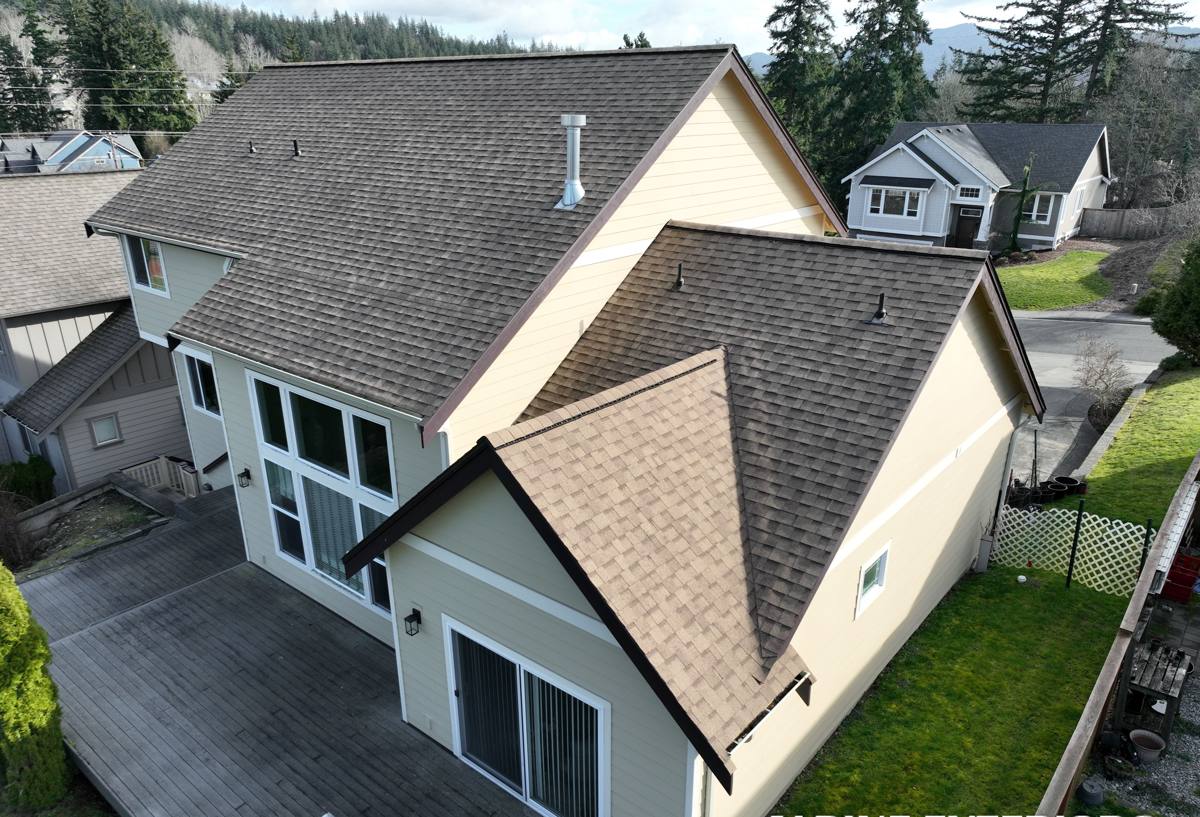
What Salt Air, Driving Rain, and Moss Do to Windows
Salt-Laden Air and Hardware
Air carrying salt content accelerates corrosion on anything metal — hinges, cranks, balance systems, and especially lower-grade fasteners or cladding. Over time that shows up as stiff or sticking hardware, streaking around metal components, and finishes that dull faster than they would further inland. It's not dramatic on any single day, but it's constant, and it's the kind of wear that separates a window that still operates smoothly at year fifteen from one that's already fighting its own hardware by year seven.
Driving Rain and Wind-Loaded Walls
Whatcom County storms don't always deliver rain straight down. Wind pushes it sideways into walls, and on a Columbia lot the angle and force of that wind-driven rain can vary a lot from one elevation of the same house to another, depending on orientation and how exposed a given wall is. Windows facing the prevailing weather need flashing and sealing details that assume real water pressure at the sill and jambs, not just a bead of caulk and good intentions. A window itself can be excellent and still leak if the opening around it wasn't built to shed water correctly.
A Long Moss and Mildew Season
Cool, damp stretches that last for months are exactly what moss and mildew need, and that season runs long in this part of Whatcom County. On windows, that shows up less as moss on the glass itself and more as mildew staining on sills, trim, and the caulk lines around the frame — areas that stay damp longer than the rest of the wall and don't get much direct sun to dry them out. Sills that pool water instead of shedding it are the most common failure point we see.
Signs a Columbia Home Needs Window Attention
- Fogging or a hazy film between the panes of a double-pane window, which means the seal has failed and the insulating gas has escaped
- Sashes that stick, drag, or won't stay up without a prop
- Visible gaps, soft wood, or paint failure around the frame or sill
- Drafts near the window even when it's fully latched
- Water staining on interior trim or the wall below a window after a hard rain
- Hardware that's stiff, corroded, or won't fully lock
- Condensation on the interior glass that shows up more in cold, damp stretches
Any one of these on its own might just mean a tune-up or resealing. Several at once, or a window that's failed in more than one of these ways, usually means the unit has reached the end of its useful life and replacement is the more honest recommendation than another round of caulk and patch.
What Correct Window Installation Actually Requires
The window itself only does half the job. The other half is the opening it sits in, and that's where most of the long-term water problems we get called out to fix actually start. On a Columbia property, where wind-driven rain and salt exposure are both part of the picture, we build every installation around a few non-negotiables:
Flashing and Water Management
Proper flashing at the sill, jambs, and head — installed in the correct shingled sequence so water is always directed outward and downward, never trapped behind the window or funneled into the wall assembly. This is the single most common point of failure we find on older or poorly installed windows, and it's invisible once the trim goes back on, which is exactly why it has to be done right the first time.
Sill Pan Protection
A sill pan creates a secondary barrier under the window that catches any water that gets past the primary seal and directs it back outside instead of into the wall framing. On a wind-exposed Columbia elevation, this extra layer of protection is the difference between a minor leak that never reaches the framing and one that quietly rots a sill plate over several winters before anyone notices.
Air Sealing and Insulation
The gap between the window frame and the rough opening needs to be sealed and insulated correctly — not stuffed with excess fiberglass, which can hold moisture, but filled with a product suited to that space and backed up with proper air sealing at the interior and exterior. Done right, this cuts drafts and helps the window perform at its rated efficiency instead of losing energy through the gaps around it.
Hardware and Finish Selection
Given the salt content in the air around Columbia, we lean toward corrosion-resistant hardware and finishes rather than the base-grade options that look identical on a showroom floor but degrade faster in this environment. It's a small line-item difference that pays off over the life of the window.
New Construction vs. Retrofit Installation
Not every window job is the same kind of job, and the method matters as much as the product.
| Installation Type | Best Fit | What It Involves |
|---|---|---|
| Full-frame (new construction) replacement | Windows with visible rot, failed flashing, or damaged framing underneath | Removal down to the rough opening, full flashing rebuild, sill pan, new trim — the most thorough option and the right one whenever the wall assembly itself needs attention |
| Insert (retrofit) replacement | Sound existing frames with no rot or water damage, where only the sash and glass have failed | New window unit installed into the existing frame; faster and less invasive, but only appropriate when the original frame and flashing are still in good condition |
| Repair or reseal | Otherwise healthy windows with a failed seal, worn weatherstripping, or minor caulk failure | Targeted fix rather than replacement — the right call when the frame, flashing, and glass are all still sound |
We'll tell you honestly which category a given window falls into. If an insert replacement is genuinely the right call, that's what we'll recommend — a full-frame job costs more and isn't the better option just because it's more thorough. The reverse is also true: if we open up a window and find rot or failed flashing behind it, an insert replacement would just seal a problem behind new trim instead of fixing it.
Our Process for Columbia Window Installation Jobs
- On-site assessment: We look at the existing windows, the wall assembly around them, and the specific exposure of each elevation of the house — a north-facing wall and a wind-exposed wall on the same home can need different attention.
- Honest scope and pricing: You get a clear picture of what's actually needed — insert versus full-frame, how many openings, what the flashing situation looks like — before any work starts.
- Removal and opening inspection: Once old windows come out, we check the rough opening and existing flashing for hidden rot or water damage before anything new goes in. This is where problems that caulk was hiding for years finally show themselves.
- Flashing, sill pan, and window installation: Installed to manufacturer specification, with attention to the sequencing that actually sheds water rather than trapping it.
- Air sealing, insulation, and trim: Proper sealing at the interior and exterior, finished trim work that matches the rest of the home.
- Final walkthrough: Every window operates, locks, and seals the way it should before we consider the job finished.
Checklist: What to Confirm Before Hiring for Window Work
- Does the crew explain flashing and sill pan details, or just talk about the window brand?
- Are they distinguishing between insert and full-frame replacement, or defaulting to whichever is easier for them?
- Do they inspect the rough opening for hidden rot before installing new windows?
- Can they explain why a given hardware or glass package fits this specific property's exposure?
- Is the warranty covering both the product and the labor, or just the manufacturer's unit warranty?
Why Local Experience in Columbia Matters
Window installation looks similar on paper everywhere — remove the old unit, flash the opening, set the new one, seal it up. What actually separates a job that lasts twenty-plus years from one that leaks in five is judgment about exposure, and that judgment comes from having worked this specific area repeatedly. A crew that's installed windows across a range of Columbia-area lots knows which elevations tend to take the worst of the wind-driven rain, how much of a factor the salt air really is on hardware choice, and where moss and mildew tend to concentrate on a sill compared to a drier inland property. That's not something a general contractor picks up from a single job in the area — it's built from repetition in this exact environment.
Get a Straight Answer on Your Windows
If you're dealing with drafty, foggy, or hard-to-operate windows on a Columbia-area home, or you're just not sure whether what you have needs a reseal, an insert replacement, or a full-frame job, we're glad to take a look and give you a straight answer. Reach out for a free, no-pressure estimate using the form below — we'll assess your specific windows and exposure and tell you honestly what they need, not just what's easiest to sell.