 Sudden Valley
 Windows on Yew Street Take a Different Kind of Beating
Homes along Yew Street in Sudden Valley deal with a climate that's harder on windows than most homeowners realize. The marine air that moves through Whatcom County carries salt that works its way into hardware and finishes over time. Driving rain — the kind that comes in sideways off the water and not just straight down — finds every gap in flashing and trim that a fair-weather installation would never expose. And the long, damp moss season that defines this part of Washington keeps window sills, tracks, and exterior trim wet for weeks at a stretch, which is exactly the environment wood rot and seal failure need to get started.
None of that means Yew Street needs exotic windows. It means the installation has to be done correctly the first time — proper flashing, proper sealant, proper flashing sequence around the rough opening — because a window that's slightly off on Yew Street fails faster than the same window installed the same way in a drier part of the state. We've replaced enough poorly-installed windows in this neighborhood to know exactly where the shortcuts get taken.
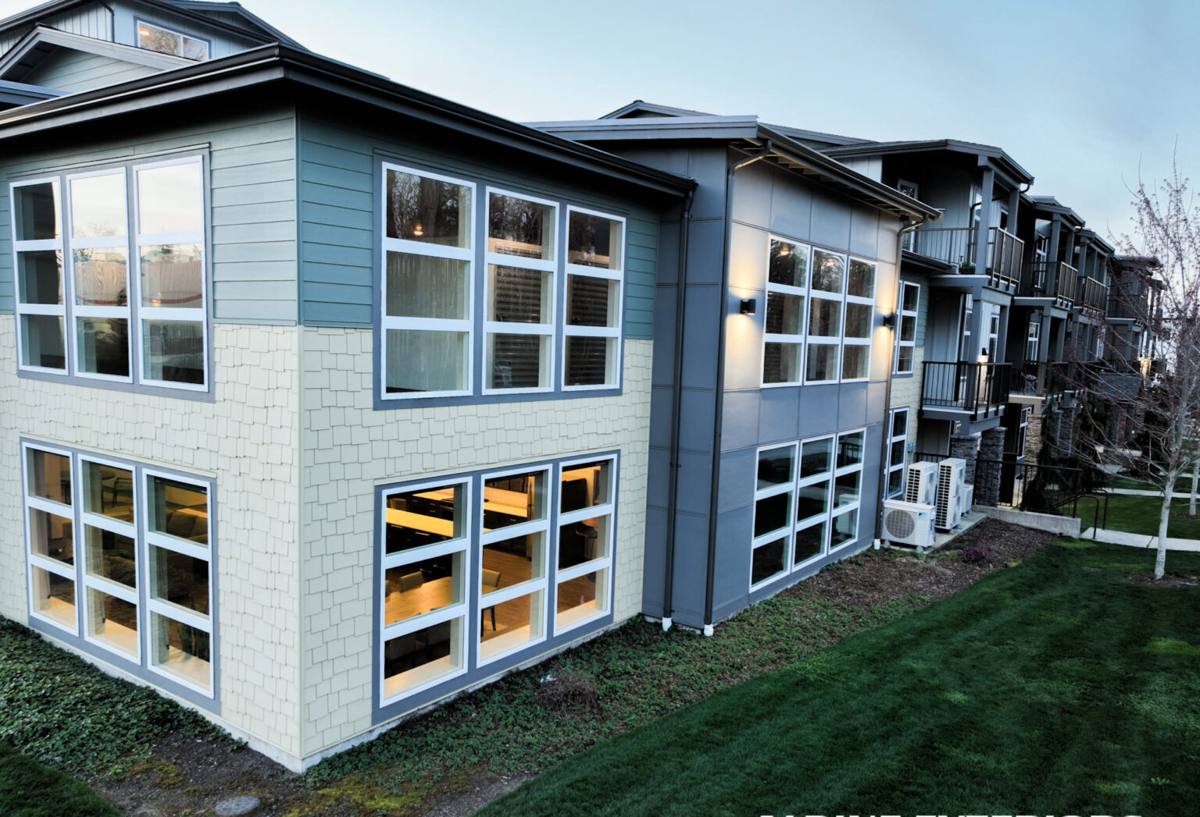
What "Correct" Actually Means for a Window Installation
A window installation isn't just popping a new unit into an old opening. Done right, it's a sequence, and skipping a step doesn't show up as a problem this year — it shows up in three to five years as rot, drafts, or a foggy sealed unit.
Removing the Old Window Without Damaging the Opening
Old windows, especially original wood units, are often nailed and caulked into the framing in ways that aren't obvious until you start pulling trim. Rushing this step cracks siding, tears house wrap, and can hide existing water damage in the framing that needs to be dealt with before a new window ever goes in. We check the sill and jack studs for soft or discolored wood every time — on a Sudden Valley home, that's not optional.
Flashing and the Moisture Barrier
This is the step that matters most in a climate with driving rain. Flashing tape and sill pans need to be layered correctly — bottom first, sides next, top last, shingle-style — so water is always directed out and down, never trapped behind the window or wicked into the wall assembly. A window can look perfectly installed from inside the house and still be set up to fail if the flashing sequence is backwards.
Air Sealing and Insulation
The gap between the window frame and the rough opening needs to be filled with a proper low-expansion foam or backer rod and sealant — not stuffed with fiberglass insulation alone, which does nothing to stop air movement and can hold moisture against the frame. Gaps here show up as drafts in winter and higher heating bills every year after.
Choosing Windows for This Kind of Exposure
There's no single "best" window material — there's a best match for the exposure a given wall faces and what the homeowner wants to maintain. For Yew Street, we generally steer people away from raw, uncoated wood exteriors facing prevailing weather, not because wood is a bad material, but because it demands a repainting and caulk-checking schedule that most homeowners don't want to keep up with in a climate this damp. Vinyl and fiberglass frames handle the moisture and salt-air exposure with far less upkeep.
| Frame Material | How It Handles Salt Air & Moisture | Maintenance Burden |
|---|---|---|
| Vinyl | Won't rot or corrode; seams are the main watch point | Low — occasional cleaning |
| Fiberglass | Very stable, resists swelling and pitting | Low |
| Wood, exterior-clad | Good if cladding is intact; failure point is at cladding seams and cut ends | Moderate — inspect cladding joints yearly |
| Wood, unclad exterior | Most exposed to rain and moss growth on sills | High — repaint and reseal on a regular cycle |
| Aluminum | Doesn't rot but conducts cold and can pit near salt air over years | Low to moderate |
Glass matters too. Double-pane, low-E glass is the baseline we recommend for this area — it cuts heat loss and reduces the interior condensation that's common in Whatcom County homes during the wetter months. Triple-pane is worth discussing for north-facing rooms or homes closer to the lake where nighttime temperature swings are more noticeable, but it's an upgrade, not a requirement for every opening.
How We Handle a Yew Street Installation
- On-site assessment of each window opening, including a check of the sill and framing for existing moisture damage.
- Measurements taken for the specific opening — not assumed from a standard size, since older Sudden Valley homes often have settled or slightly out-of-square openings.
- Removal of the old unit with care taken to protect siding and trim.
- Any rot or damaged framing repaired before the new window goes in — this is not an upsell, it's a requirement for the new window to last.
- Sill pan and flashing installed in the correct sequence for the wall's exposure.
- New window set, shimmed level and square, and mechanically fastened per the manufacturer's instructions.
- Low-expansion foam or backer rod and sealant used to air-seal the perimeter.
- Interior and exterior trim finished, and the window operated and checked before we consider the job done.
Warning Signs Worth Acting On
If you're not sure whether your Yew Street home's windows need attention now or can wait, these are the signs we take seriously:
- Visible gaps or cracked caulk around the exterior frame
- Soft, discolored, or spongy wood at the sill or lower corners
- Condensation building up between the panes of a sealed unit (a sign the seal has failed)
- Windows that are noticeably harder to open, close, or lock than they used to be
- Moss or persistent green staining collecting on the sill or bottom trim
- A draft you can feel near the frame even when the window is fully closed
- Interior condensation or fogging on the glass during cold, damp mornings
Any one of these on its own isn't an emergency, but they tend to compound — a failed seal lets in moisture, moisture feeds rot, and rot spreads into the framing if it sits through another wet season.
What Affects the Cost of a Window Installation
We don't quote a flat per-window price over the phone, because the honest cost depends on a handful of factors specific to the house. What we can tell you is what actually drives the number up or down.
| Factor | Why It Matters |
|---|---|
| Number and size of openings | Larger and more numerous windows mean more material and labor |
| Condition of the existing framing | Rot repair adds time and material beyond the window itself |
| Frame material chosen | Vinyl, fiberglass, and clad-wood windows sit at different price points |
| Glass package | Double-pane low-E versus triple-pane or specialty glass changes unit cost |
| Installation type | A straightforward insert replacement costs less than a full-frame replacement |
| Access and second-story work | Upper-floor windows or difficult access add labor time |
As a rule of thumb, most window installation projects on homes like the ones along Yew Street land somewhere between a few hundred and a couple thousand dollars per window installed, depending on those factors — but the only accurate number comes from actually looking at your openings.
Why It Matters That We Already Work in Sudden Valley
A crew that already works Sudden Valley knows what to expect before they pull the first piece of trim. We know that the moss season here means sills need extra attention to drainage, that the marine air moving through Whatcom County works on unprotected hardware and fasteners faster than a lot of manufacturers' warranty language accounts for, and that driving rain off the water means flashing detail isn't optional trim work — it's the difference between a window that lasts twenty years and one that needs attention in five. That local familiarity isn't a marketing line; it changes how we sequence the job, what we check for before we start, and what we recommend for glass and frame material on a given wall.
Keeping New Windows Performing Once They're In
A correct installation is most of the battle, but a little upkeep keeps it that way. Rinse accumulated grit and salt film off frames and glass a couple times a year, especially after storm stretches. Keep weep holes on vinyl and fiberglass frames clear of debris and moss so water can drain as designed. Check exterior caulk lines once a year, particularly heading into the wetter months, and have any cracked or missing sealant addressed before the rain sets in rather than after. None of this takes much time, and it's far cheaper than dealing with moisture that's found its way behind the frame.
If your Yew Street home has windows that are drafty, fogged, hard to operate, or original to the house, we're glad to come take a look. The estimate is free, there's no pressure attached to it, and you'll get a straight answer about what your windows actually need — you can request one using the form below.