 Sudden Valley
 Asphalt Shingle Roofing in Acme: Built for the South Fork Valley
Acme sits inland from Bellingham, tucked into the forested foothills along the South Fork Nooksack River in Whatcom County. It's a quieter, more rural setting than our lakeside and waterfront service areas, but it still sits inside the same marine-influenced weather system that shapes roofing across this whole corner of Washington. Moist air off Bellingham Bay and the Sound pushes up the valley and into the foothills, bringing frequent, often wind-driven rain, and the surrounding tree cover keeps roof surfaces damp and shaded longer than they'd stay on a more open, in-town lot. Asphalt shingle roofing remains the most common, most cost-effective choice for homes out here, but it only performs the way it's supposed to when it's installed with this specific climate in mind, not treated the same as a roof going up in a dry, sunny region.
We install, repair, and replace asphalt shingle roofs throughout Acme, and we treat correct installation detail — underlayment, flashing, ventilation — as the difference between a roof that lasts its full rated life and one that starts showing problems a decade early.
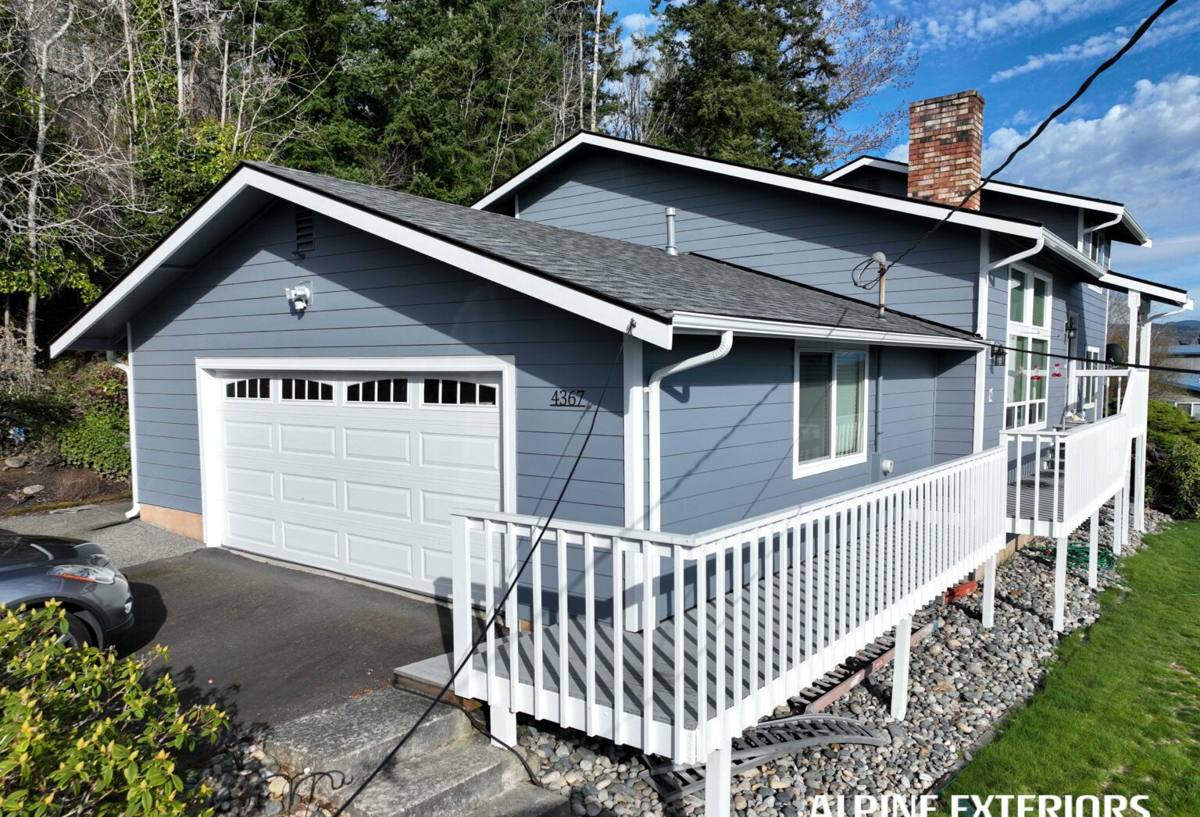
What This Climate Does to an Acme Roof
Driving Rain and Valley Wind Patterns
Rain in the South Fork valley doesn't always fall straight down. Terrain and tree cover channel wind in ways that push rain sideways into roof valleys, around chimneys and vent pipes, and up under shingle edges and flashing that aren't sealed as well as they should be. That's a heavier, more directional load than an annual rainfall number suggests, and it's exactly where a roof with weak flashing details or aging underlayment starts to leak first — often at a transition point rather than in the middle of an open shingle field.
A Long Moss and Mildew Season
Between the shade from surrounding trees and Whatcom County's mild, damp climate, moss and algae have a long growing season here. Once established, moss holds moisture against the shingle surface, works its way under shingle tabs, and over time can lift or loosen roofing that would otherwise still have years of service life left. North-facing slopes, low-slope sections, and roof areas under heavy canopy are usually the first to show it, and homes tucked well back under trees typically need more frequent attention than a comparable roof on an open lot.
Marine Air Reaching Up the Valley
Acme sits well inland, so it doesn't see the direct salt exposure of our waterfront service areas. But Whatcom County's weather moves as one system — the same moist, mildly salt-tinged air that comes off Bellingham Bay and Puget Sound rides storm fronts up the lowlands and into the foothills before it ever reaches a South Fork valley roof. It's a lighter dose than a home right on the water gets, but it still argues for corrosion-resistant fasteners and flashing rather than whatever's cheapest, especially on a roof that's also dealing with sustained dampness from shade and rainfall.
Why Asphalt Shingle Roofing Still Makes Sense Here
Asphalt shingles aren't the flashiest roofing material, but for most Acme homes they remain the most practical choice — a reasonable upfront cost, a wide range of styles and colors, and a track record that installers and insurers both understand well. The trade-off is that asphalt shingles are more sensitive to installation quality and moisture management than a smooth, non-porous material like metal. A well-built architectural shingle roof, installed with the right underlayment and ventilation for this climate, holds up for decades. A shingle roof installed to bare minimum code, without accounting for the shade and moisture this valley sees, ages faster than it should — and the shingles themselves usually aren't the reason why.
We'll walk you through whether asphalt shingle roofing is the right fit for your specific roof, or whether your pitch, sun exposure, and long-term plans point toward a different material, rather than defaulting to whatever's easiest to sell.
What a Correct Asphalt Shingle Installation Requires
Most shingle roof problems we get called out for in this climate don't trace back to bad shingles. They trace back to shortcuts underneath the shingles that don't show up until years later. On every asphalt shingle job in Acme, that means:
- Underlayment rated for sustained moisture exposure, not a bare minimum-code product
- Properly lapped and sealed flashing at every valley, chimney, vent pipe, and roof-to-wall transition
- Ice-and-water shield at eaves and valleys, where water and wind-blown debris tend to collect
- Attic and roof deck ventilation that lets trapped moisture escape rather than condense against the underside of the deck
- Corrosion-resistant fasteners and flashing metal suited to a consistently damp, marine-influenced climate
- Shingles fastened according to the manufacturer's wind-rating specification, not just wherever's fastest
None of these add much to the overall cost of a shingle roof relative to the material itself. Skipping them is what turns a twenty-five- or thirty-year roof into one that needs attention in year twelve.
Choosing the Right Shingle Product
Not every asphalt shingle is built the same. Basic three-tab shingles are the lowest-cost option but generally carry a shorter wind and wear rating. Architectural (laminated) shingles are thicker, layered, and rated for higher wind resistance and a longer service life — a meaningful advantage in a valley that sees wind-driven rain. Many major manufacturers, including GAF, Owens Corning, and CertainTeed, also offer shingle lines with algae-resistant granules, which slow the moss and algae growth this climate encourages, though no granule treatment eliminates the need for shade management and periodic cleaning altogether.
Comparing Shingle Options for an Acme Home
| Shingle Type | Wind & Moisture Performance | Moss/Algae Resistance | Typical Lifespan Here |
|---|---|---|---|
| Standard 3-tab asphalt | Lower wind rating; adequate on sheltered, lower-slope roofs | Standard granules; moss grows normally without treatment | 15-20 years |
| Architectural (laminated) asphalt | Higher wind rating; layered construction sheds wind-driven rain better | Often available with algae-resistant granule options | 25-30 years |
| Impact-rated asphalt | Reinforced for resistance to falling debris and hail | Varies by product line | 25-30 years, sometimes with insurance premium benefits |
| Premium/designer laminate | Heaviest asphalt option; strong wind performance | Usually includes algae-resistant granules | 30+ years with correct install |
For a shaded, wooded lot like a typical Acme property, we usually steer homeowners toward an architectural shingle with algae-resistant granules as the baseline, then adjust up or down based on budget, roof pitch, and how long they plan to stay in the home.
What Affects the Cost of an Acme Roofing Project
We don't quote a job over the phone, but the factors that move the price of an asphalt shingle roof up or down are consistent, and worth understanding before you start getting estimates:
| Cost Factor | Why It Matters |
|---|---|
| Roof pitch and complexity | Steeper roofs, multiple valleys, and dormers take longer and require more safety setup |
| Number of existing layers | Tear-off of old shingle layers adds labor and disposal cost versus a single-layer roof |
| Roof deck condition | Soft or water-damaged decking found during tear-off needs repair before new shingles go on |
| Ventilation upgrades | Adding or correcting intake and exhaust venting is sometimes needed to meet code and manufacturer warranty terms |
| Access and site conditions | Trees, driveway access, and how close the home is to the road affect setup and material staging |
| Shingle grade selected | Basic 3-tab, architectural, and premium laminate products carry different material costs |
We walk through each of these during the on-site estimate so the final number reflects your actual roof, not a generic square-footage guess.
Signs an Acme Roof Needs Attention
- Moss buildup in valleys or on shaded slopes that returns quickly after cleaning
- Granules collecting in gutters or at the base of downspouts
- Curling, cupping, cracking, or missing shingles, especially after a windstorm
- Water staining on interior ceilings near exterior walls or around chimneys
- Daylight visible through the roof deck when viewed from inside the attic
- Soft spots or noticeable give when the roof is walked
- Flashing that looks lifted, rusted, or missing sealant at valleys and penetrations
Any one of these is worth a professional look before another wet season passes. Caught early, most of these are a straightforward repair. Left unaddressed, several of them compound into a full tear-off and replacement.
Repair or Replace? How We Help You Decide
Not every roofing problem calls for full replacement, and we don't default to recommending one. We look at the roof's age relative to its rated lifespan, how much of the surface is affected, whether the deck underneath shows moisture damage, and how many prior repairs the roof has already had. A localized leak on an otherwise sound roof is usually a straightforward repair. A roof nearing the end of its rated life with moss-related wear spread across multiple slopes, or a deck with soft spots from long-term moisture intrusion, is more honestly addressed with a replacement than another round of patchwork that just delays the same outcome. We explain what we find and why, and lay out the real trade-offs rather than steering you toward whichever option is more profitable for us.
Our Process for an Acme Roofing Project
- On-site inspection of the existing roof, attic ventilation, and any visible interior signs of moisture, with attention to how shade and tree cover have affected different roof planes
- A clear, written scope and estimate covering material selection, underlayment, flashing details, and any deck repair contingencies before work begins
- Tear-off and deck inspection, with any soft or damaged decking repaired before new underlayment goes down
- Installation of ice-and-water shield, underlayment, flashing, and shingles to manufacturer specification, with attention to ventilation
- Final walkthrough covering what was done, warranty documentation, and basic maintenance guidance specific to a shaded, valley property
Why a Crew That Already Works Acme Matters
Acme's mix of foothill terrain, dense tree cover, and valley wind patterns doesn't behave like a roof on an open, in-town lot, and a crew that already works this area regularly understands that going in. That familiarity shows up in the details that actually matter: which roof orientations in a shaded, wooded setting like this need extra ice-and-water shield, how flashing gets lapped on a roof exposed to wind-driven rain funneling up the valley, and which fastener grade holds up best against the mix of sustained moisture and mild marine-air exposure this area sees. Those are the choices that separate a roof that needs attention again in a few years from one that goes the distance.
A Simple Checklist Before Hiring a Roofer in Acme
- Confirm they carry current Washington contractor licensing and active liability insurance
- Ask what underlayment and ice-and-water shield they use as their standard, not just the minimum required by code
- Ask how they handle flashing at valleys, chimneys, and roof-to-wall transitions, since that's where most leaks in this climate start
- Ask about experience with shaded, tree-covered roofs specifically, not just general roofing experience
- Get a clear, written scope of work and warranty terms before signing anything
If your Acme home needs a roof inspection, a repair, or you're weighing a full asphalt shingle replacement, we're glad to take a look and give you a straightforward, honest read on what it actually needs. Reach out below for a free, no-pressure estimate.