 Sudden Valley
 Composite Decking in Acme: Built for the Weather You Actually Get
Acme sits back from Bellingham Bay in the wooded, low-lying country of Whatcom County, and that setting shapes what a deck needs to survive here. Homes on tree-covered lots deal with shade that never fully dries out, needles and leaf litter that pile up on horizontal surfaces, and a rainy season that can stretch for months at a time. Add in the salt-laden air that moves through this part of Whatcom County and the moss that colonizes anything left damp long enough, and you've got conditions that are hard on a standard wood deck within a handful of years. Composite decking was built for exactly this kind of climate, but only if it's installed correctly. This page covers what that actually means for a deck built on an Acme property.
The Moss and Mildew Problem on Wood Decking
If you've owned a wood deck out here, you already know the routine: pressure-wash it every spring, watch the moss come back by fall, and eventually deal with soft or splintering boards where water sat too long. Under tree cover, boards rarely get enough sun and airflow to dry between rain events, so organic growth gets a permanent foothold. That's not a defect in the wood — it's just what happens when Pacific Northwest rain meets a horizontal wood surface in the shade, day after day, for years.
What Composite Actually Solves — and What It Doesn't
Composite boards don't rot, splinter, or need annual staining, and quality capped composite resists moss and mildew far better than wood because the surface doesn't absorb water the way wood fibers do. But composite isn't maintenance-free, and it isn't magic: it still needs to be cleaned, it still needs airflow underneath to shed moisture, and the framing holding it up is usually still wood, which absolutely can rot if it's not protected. A composite deck is only as good as the structure and detailing underneath it — that's where most of the actual problems on wooded, damp lots come from.
What Acme Properties Bring to a Decking Job
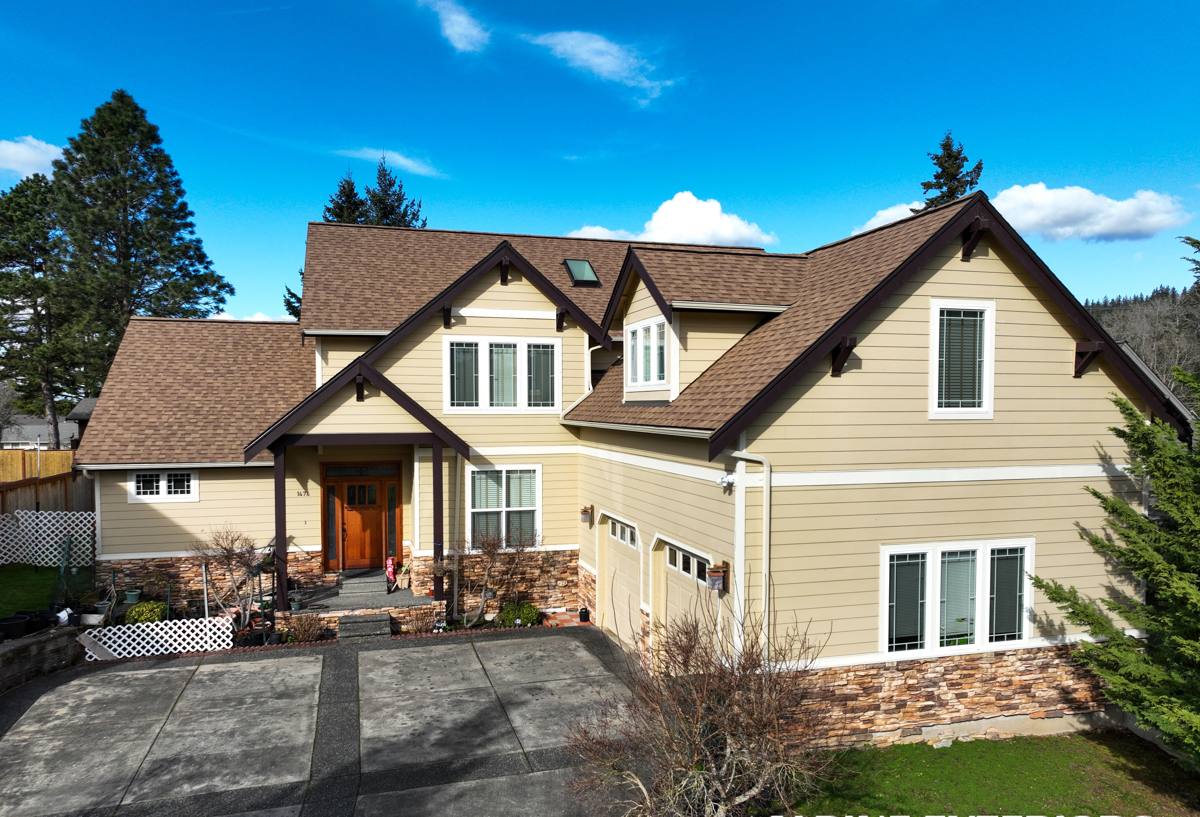
Acme is more rural than the Bellingham side of Whatcom County, and that changes the job in a few practical ways. Many properties run on private wells and septic systems, so we always confirm those locations before we dig footings or bring equipment onto the site. Driveways tend to be longer and gravel rather than paved, which affects how we stage materials and equipment. Heavy tree cover means more organic debris landing on the deck surface year-round, and it also means more shaded, slow-to-dry ground under and around the structure — a factor we account for in footing depth, drainage, and ventilation.
- Confirm well and septic locations before any digging or footing layout
- Plan for gravel or unpaved access when staging lumber, composite board, and equipment
- Account for heavy tree cover in board spacing, drainage, and expected debris buildup
- Check for low or shaded ground under the deck footprint that won't dry out on its own
- Verify property lines and setbacks on larger wooded lots where boundaries aren't always obvious
Composite Materials: What We Install and Why
Not all composite decking behaves the same way in a wet climate, and the differences matter more here than they would in a dry region.
Capped vs. Uncapped Composite
Capped composite has a polymer shell wrapped around a wood-plastic core, which keeps moisture, mold, and staining from getting into the board itself. Uncapped composite (older-generation product) exposes the wood-plastic core on all sides, and in a climate like this one it's more prone to surface mildew and moisture absorption over time. We install capped composite as our standard for exactly this reason — it's a better match for a climate that stays wet for months at a stretch.
Hidden Fastener Systems
Hidden fastener clips leave the board face free of screw holes, which matters because every exposed fastener is a spot where water can sit and eventually find its way into the board core. Hidden systems also make it easier to keep gaps between boards consistent, which is important for drainage and for letting the deck surface dry out between rain events.
| Material | Moisture Behavior | Maintenance | Typical Lifespan |
|---|---|---|---|
| Standard pressure-treated wood | Absorbs water; prone to splitting, cupping, and rot without upkeep | Annual cleaning and re-staining or sealing | 10–15 years in this climate with upkeep |
| Cedar | Naturally rot-resistant but still absorbs moisture over time | Regular cleaning and periodic sealing to hold color and resist moss | 15–20 years with consistent maintenance |
| Uncapped composite | Core can absorb moisture; more prone to surface mildew in shade | Periodic cleaning; no staining or sealing needed | 15–20 years |
| Capped composite | Sealed shell resists moisture, staining, and mold growth | Occasional washing to clear pollen, needles, and grime | 25–30 years, often backed by a manufacturer warranty |
The Substructure Is Where Decks Actually Fail
Homeowners often assume a composite deck's durability comes entirely from the boards. In our experience, the framing underneath is the more common point of failure on wooded, wet lots — and it's largely invisible until something goes wrong.
Ledger Board Flashing
Where the deck attaches to the house, the ledger board has to be flashed correctly to keep water from tracking behind the siding and into the rim joist. This is one of the most common failure points we find on older decks in this region, and it's not something you can inspect without pulling the decking or siding back — it has to be done right the first time.
Joist Protection and Drainage
Standard framing lumber, even pressure-treated, will eventually rot if water is allowed to pool on top of joists or sit against end grain. We use joist tape and proper flashing details on every build, and we design in enough slope and clearance for water to shed instead of collecting under the deck — a bigger factor here than in drier parts of the state given how long the ground stays wet.
Footings and Frost Depth
Footings need to go below the local frost line and bear on solid, undisturbed soil — not fill or organic topsoil, which is common under tree cover. On wooded Acme lots we sometimes find root systems or soft, humus-rich soil where a footing is planned, which means adjusting placement or depth before pouring.
Our Process for a Composite Deck Build
- On-site visit to assess the lot, existing structure (if replacing a deck), well/septic locations, tree cover, and drainage
- Design and material selection, including board tier, framing material, and railing style
- Permit application through Whatcom County, where required, before any work begins
- Removal of the old deck, if applicable, including proper disposal
- Framing installation with ledger flashing, joist protection, and footings set to code depth
- Composite decking installation with correct board spacing and hidden fasteners
- Railing, fascia, and trim installation
- Final walkthrough covering care and what to expect from the material over time
Permits and Local Code Considerations
Most new decks and many deck replacements in unincorporated Whatcom County require a building permit, particularly once you're above a certain height off grade or attaching structurally to the house. Requirements can shift based on deck size, height, and whether it's a repair versus new construction, so we confirm what applies to your specific project rather than assuming. We also account for the county's frost depth requirements when setting footings and make sure railing height and baluster spacing meet current code — details that matter both for safety and for resale down the road.
Cost Factors for a Composite Deck in Acme
Every deck is priced around the specifics of the site and the materials chosen, but a few factors consistently move the number more than others.
| Factor | Why It Affects Cost |
|---|---|
| Deck size and shape | More square footage and more complex framing (angles, multiple levels) increase both material and labor |
| Composite board tier | Entry-level capped composite costs less than premium lines with longer warranties and more color options |
| Framing material | Standard pressure-treated framing costs less upfront than steel or composite substructure options |
| Tear-out of an old deck | Removing and disposing of an existing structure adds labor before the new build even starts |
| Site access | Long gravel driveways, wooded lots, or difficult grading can slow material staging and equipment access |
| Railing style | Composite or metal railing systems cost more than basic wood or standard baluster rail |
We give a firm, itemized number after seeing the site — not a phone estimate — because access, existing structure condition, and ground conditions vary enough on wooded Acme lots that a generic square-footage price rarely holds up.
What Composite Decking Still Needs From You
Low-maintenance isn't the same as no-maintenance, especially under tree cover. A little regular care goes a long way toward getting the full lifespan out of the material.
- Sweep off needles, leaves, and organic debris regularly rather than letting them compost on the surface
- Wash the deck with soap and water (or a manufacturer-approved cleaner) once or twice a year to clear pollen and grime
- Keep gutters and downspouts near the deck clear so runoff isn't dumping extra water onto the structure
- Check that gaps between boards stay clear so water and debris can drain through, not build up
- Look underneath periodically for standing water or signs of moisture around the framing
- Avoid dragging heavy furniture or grills across the surface, which can scuff the cap layer over time
Why Hire a Crew That Already Works in Acme
A deck built in Acme has to deal with things a Bellingham city-lot deck usually doesn't: wells and septic fields to work around, gravel access instead of a paved driveway, heavier tree cover affecting drainage and drying time, and soil conditions shaped by decades of forest floor. A crew that's already worked wooded, semi-rural Whatcom County properties knows to ask about well and septic locations before laying out footings, knows how tree-shaded ground behaves differently than open lawn, and isn't guessing at how the county's permitting and frost-depth requirements apply to a rural lot. That experience shows up in fewer surprises mid-project and a deck that's actually built for the site it's sitting on, not a generic template.
If you're planning a new composite deck or replacing an aging wood deck on your Acme property, we're happy to come take a look and walk the site with you. There's no cost and no pressure to move forward — just a straightforward estimate based on what your property actually needs. The form below is the fastest way to get that scheduled.