 Sudden Valley
 Why Decks Wear Out Faster Around Acme
Acme sits in a wooded, low-lying stretch of Whatcom County east of Bellingham, where tall timber and steep valley walls keep the air damp long after the rain has stopped. A deck out here doesn't just deal with rainfall totals — it deals with shade that never fully dries the boards, valley fog that settles in overnight, and the same salt-laden marine air that moves through the rest of the county. Add a long moss season that can run from October into May, and you have conditions that punish decking faster than a homeowner in a sunnier, more open part of the county would expect.
None of that means a deck can't last in Acme. It means the framing, fasteners, flashing, and material choices all have to be picked with moisture in mind from the start — not patched around later. That's the difference between a deck replacement that holds up for decades and one that starts rotting at the ledger board within a few winters.
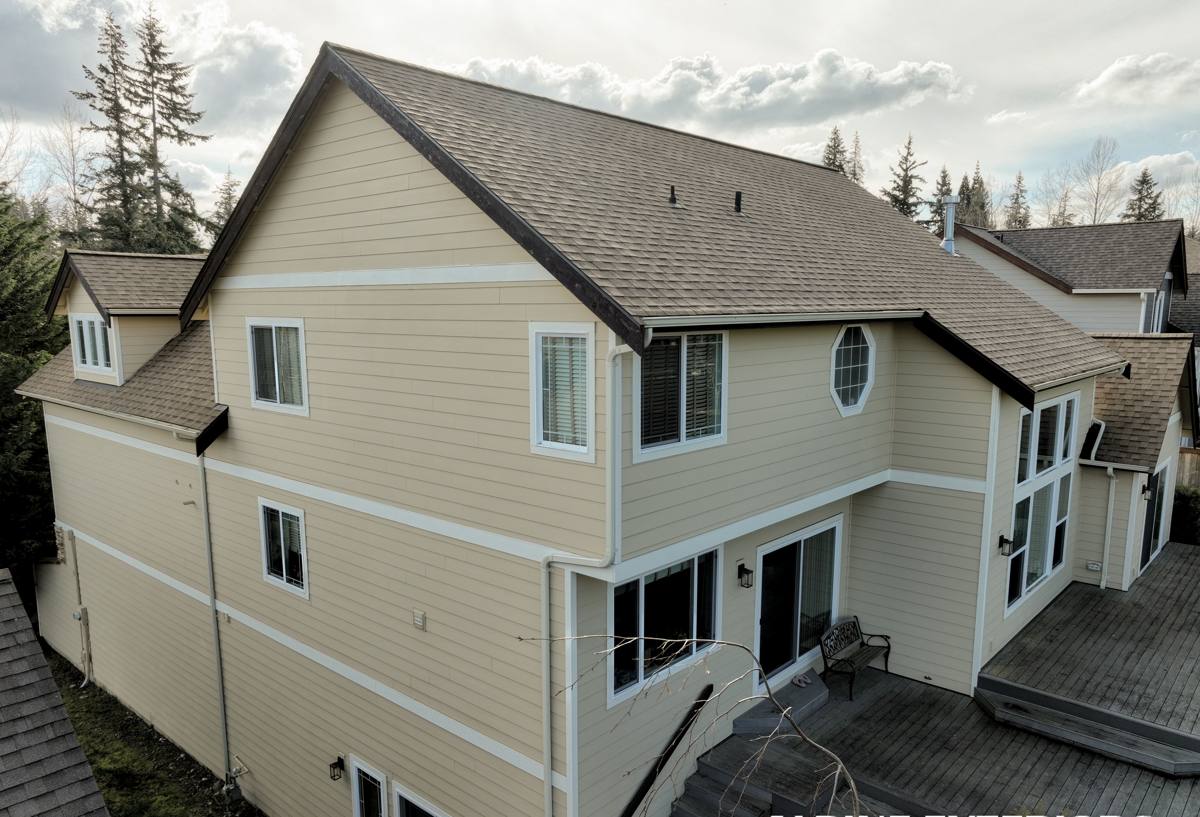
Signs a Deck Needs Replacement, Not Another Repair
Homeowners often call us after a board or two has gone soft, thinking it's a small fix. Sometimes it is. Other times the soft board is the visible symptom of a substructure that's been quietly failing underneath. Before we recommend a full replacement, we check the framing, not just the surface.
- Boards that feel spongy or spring back slowly when you step on them, especially near the house
- Persistent moss or black-green staining on the deck surface that comes back within weeks of cleaning
- Visible gaps, cupping, or splitting concentrated on the shaded side of the deck
- Rust streaks below fastener heads or around joist hangers
- Soft or discolored wood where the ledger board meets the house siding
- Railings or stair stringers that flex more than they used to
- A musty smell coming from underneath the deck, usually pointing to trapped moisture in the joist bays
If more than one or two of these show up together, patching individual boards usually just delays a bigger repair a year or two down the road. A proper inspection tells you honestly whether you're looking at a repair or a replacement.
Choosing Decking Material for a Shaded, Wet Lot
There's no single right material for every deck in Whatcom County, but there is a right way to think about it: how much shade and standing moisture will this specific deck see, and how much upkeep are you willing to put in. A deck tucked under fir and cedar canopy near Acme behaves differently than one on an open, south-facing lot closer to Sudden Valley's open water.
| Material | Moisture Behavior | Maintenance | Typical Lifespan |
|---|---|---|---|
| Pressure-treated fir/pine | Absorbs and releases moisture readily; needs to breathe and dry between rain events | Annual cleaning, periodic staining or sealing | 15–20 years with upkeep |
| Cedar | Naturally moisture- and insect-resistant, but still needs airflow underneath to prevent cupping | Cleaning plus reapplication of finish every 2–3 years | 20–25 years with upkeep |
| Composite/PVC | Doesn't absorb water into the board itself, but hidden framing underneath still needs proper drainage | Periodic washing to keep moss and pollen off the surface | 25–30+ years |
We don't push one product on every job. Composite decking costs more up front and handles a shaded, mossy lot with less scrubbing, but it's only as good as the framing and drainage underneath it — a composite deck built over a poorly ventilated substructure will still trap moisture and rot the joists even though the surface looks fine. Wood decking costs less initially and can look excellent in Acme's setting, but it demands a homeowner who will actually keep up with cleaning and sealing on a schedule, especially given the local moss season.
Where We Land on Product Choice
Our standard is to match the material to how the deck will actually be used and maintained, not to whatever has the best margin. If you want low-maintenance and plan to leave town for stretches at a time, composite earns its price. If you like real wood and are comfortable with a yearly maintenance routine, a well-built cedar or pressure-treated deck with correct ventilation underneath will serve you just as well.
What a Correct Deck Replacement Actually Involves
A deck replacement isn't just pulling up old boards and screwing down new ones. Everything that fails first — the ledger connection, the footings, the fastener choice — is underneath the surface you can see.
Ledger Board and Flashing
Most rot problems we find in this area start where the deck attaches to the house. If the ledger flashing was installed wrong, or missing, water gets behind it and works into the house's rim joist, not just the deck. We flash this connection properly every time, lapped correctly over the siding's water-resistive barrier so water sheds outward instead of soaking in.
Footings and Framing
Footings need to sit below frost depth on solid, undisturbed soil — on a hillside lot around Acme, that sometimes means digging deeper or relocating a footing entirely. We size joists and beams to current code span tables, not whatever the old deck happened to have, and we leave clearance underneath for airflow so joist bays can actually dry between rains.
Fasteners and Hardware
Galvanized fasteners that looked fine when the deck went in ten or fifteen years ago are often the reason it's failing now. We use corrosion-resistant, code-rated hardware matched to whatever decking material goes on top, since the wrong combination of treated lumber and hardware can accelerate corrosion in a wet climate like this one.
Railings and Code Compliance
Railing height, baluster spacing, and stair guard requirements are set by code, and older decks in this area frequently predate the current rules. Replacement is the right time to bring railings and stairs up to code rather than reattaching the same hardware to new boards.
Our Process, Start to Finish
- On-site inspection. We look underneath the deck, not just at the surface, and check the ledger connection, footings, and framing condition.
- Honest recommendation. We tell you plainly whether you need a full replacement, a partial rebuild, or targeted repairs, and why.
- Material walkthrough. We go over decking, railing, and hardware options based on your lot's sun and shade, not a generic sales pitch.
- Permitting. We handle the permit paperwork for the jurisdiction covering your property so the finished deck is properly inspected.
- Demolition and disposal. Old decking, framing, and fasteners are removed and hauled off site.
- Rebuild. Footings, framing, ledger flashing, decking, and railings go in to current code, with attention to drainage and airflow underneath.
- Final walkthrough. We check the finished deck with you before we consider the job done.
Cost Factors for Deck Replacement
We won't quote a number here that doesn't apply to your specific deck — size, height, substructure condition, and material all move the price. Here are the main factors that determine where a project lands.
| Factor | Why It Matters | Relative Cost Impact |
|---|---|---|
| Deck size and shape | More square footage and complex angles mean more material and labor | Moderate to High |
| Substructure condition | Rotted footings or framing found under old decking add rebuild work beyond the visible surface | Variable, sometimes significant |
| Decking material | Composite and PVC cost more per board than pressure-treated lumber | Low (wood) to High (composite/PVC) |
| Height and stairs | Multi-level decks or stairs add framing, railing, and code requirements | Moderate to High |
| Site access | Sloped or wooded lots common around Acme can complicate equipment access and material staging | Low to Moderate |
| Permit and inspection needs | Larger or elevated decks typically require permitting through the local jurisdiction | Low |
As a general guide, most full deck replacements in this region fall in a broad range depending on size and material, with composite and multi-level designs landing at the higher end. We won't know your real number until we see the deck and the ground underneath it.
Living With a New Deck Through the Moss Season
Even a well-built deck needs some seasonal attention in a climate like this one. A little upkeep goes a long way toward getting the full lifespan out of the materials you paid for.
- Sweep leaves and needles off the deck regularly in fall, especially in shaded corners where moss gets a foothold first
- Clean moss and algae off the surface at least once a year with a deck-safe cleaner, not a pressure washer set too aggressively
- Keep gutters and downspouts near the deck clear so runoff isn't draining straight onto or under it
- Check underneath the deck once a year for standing water, dark staining, or soft framing before it becomes a bigger repair
- Reseal or restain wood decking on the schedule the finish manufacturer recommends, not just when it looks faded
Why Hire a Crew That Already Works Acme and Sudden Valley
A crew that only occasionally works this side of the county has to relearn the same lessons every time: which lots hold moisture longest, where footings need to go deeper because of hillside drainage, and how much airflow a deck needs underneath to survive the moss season instead of feeding it. A crew that already works Acme and Sudden Valley regularly has made those adjustments standard practice, not an afterthought.
That local familiarity also shows up in smaller, practical ways — knowing the permitting process for the jurisdiction covering your property, understanding how a shaded, tree-lined lot around here differs from an open one closer to the water, and showing up prepared for site access that isn't always a flat, easy driveway.
If your deck is showing its age, or you just want an honest opinion on whether it needs repair or full replacement, we're happy to take a look. Fill out the form below for a free, no-pressure estimate.