 Sudden Valley
 Why Geneva's Climate Changes the Metal Roofing Conversation
Geneva sits along the Lake Whatcom shoreline near Sudden Valley, and homes here take a different kind of weather beating than houses twenty minutes inland. Whatcom County gets marine air moving in off the Sound mixed with moisture coming straight off the lake, which means roofs deal with near-constant dampness for much of the year. Add driving rain that comes in sideways during winter storms, heavy tree cover that shades large sections of most roofs for hours a day, and a moss season that can realistically run from October through May, and you have a set of conditions that will find every weak point in a roofing system within a few winters.
Metal roofing handles this environment well when it's installed correctly, but "correctly" is doing a lot of work in that sentence. A metal roof that's flashed wrong, under-vented, or fastened with the wrong pattern for this climate will fail in ways that are expensive to fix later — streaking, fastener backout, trapped condensation, moss creeping under seams. None of that is a knock on the material. It's a reminder that metal roofing is less forgiving of shortcuts than asphalt shingles, and in a wet, shaded, lake-adjacent neighborhood like Geneva, shortcuts show up fast.
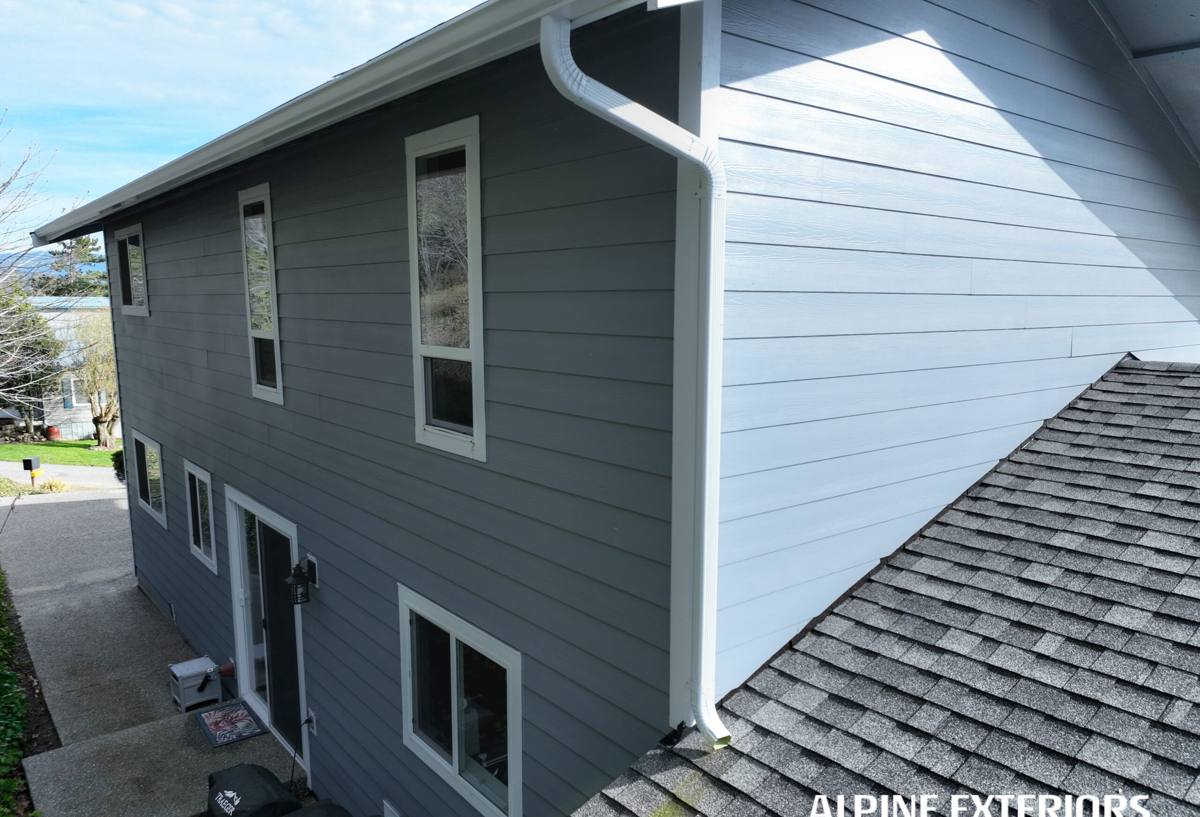
What Geneva Roofs Actually Need
Moisture Management First
The biggest threat to a roof in this part of Whatcom County isn't wind or hail — it's sustained moisture. Shaded roof sections near mature trees stay wet longer after a storm, which is exactly what moss and algae need to establish. Once moss gets a foothold at panel seams or under ridge caps, it holds water against the metal and any fasteners nearby, which is where premature corrosion and leaks start.
Wind-Driven Rain at Every Penetration
Driving rain doesn't just fall on a roof, it pushes sideways under laps, around chimneys, and into valleys. Standard flashing details that work fine in a drier climate can leak here if the laps, sealant, and underlayment aren't sized for wind-driven water rather than just gravity drainage.
Ventilation That Fights Condensation, Not Just Heat
Most roof ventilation advice is written for hot climates trying to vent heat out of the attic. In Sudden Valley and Geneva, the bigger issue is often warm, moist indoor air condensing on the underside of a cold metal roof deck in winter. Get the intake and exhaust balance wrong and you can get moisture damage from the inside of the roof assembly even with a perfect exterior installation.
What a Correct Metal Roof Installation Involves
For a climate like this, a properly built metal roof includes several layers most homeowners never see, but every one of them matters:
- Ice-and-water shield at eaves, valleys, and around all penetrations — not just the minimum code requirement, but full coverage anywhere water can pool or back up.
- High-temperature synthetic underlayment across the full deck, rated to handle the heat a metal roof can build up under direct sun between rain events.
- Proper fastening pattern matched to the panel profile and local wind exposure, not a generic spacing pulled from a manufacturer's minimum spec sheet.
- Closed-cell or vented closures at ridges and eaves so the roof breathes without letting wind-driven rain or insects in.
- Balanced intake and exhaust ventilation sized to the attic volume, not just "a ridge vent and call it done."
- Flashing details at every penetration — chimneys, skylights, plumbing stacks — built with step flashing and counterflashing rather than relying on caulk or sealant alone.
Skip any one of these and the roof will likely still look fine for a year or two. The problems that show up in this climate are almost always slow ones — moisture that gets in a little at a time and does its damage out of sight.
Comparing Metal Roofing Types for This Climate
Not every metal roofing product performs the same way under Geneva's conditions. Here's how the main options stack up on the factors that matter most for a shaded, damp, lake-adjacent property:
| Roofing Type | Moisture & Moss Resistance | Maintenance Over Time | Typical Lifespan |
|---|---|---|---|
| Standing seam steel or aluminum | Excellent — concealed fasteners, fewer entry points for moisture | Low; occasional debris and moss check | 40–60+ years |
| Exposed-fastener metal panels | Good, but fasteners can loosen and washers degrade over time | Moderate; fasteners should be inspected periodically | 25–40 years, depending on fastener upkeep |
| Stone-coated steel shingles/shakes | Good; coating helps shed moss but seams need attention | Moderate | 30–50 years |
Our professional standard on most homes in this area leans toward standing seam or a quality stone-coated steel system, simply because concealed fastening removes one of the most common long-term failure points in a climate that stays wet as often as this one does. Exposed-fastener panels aren't a bad product — they're a reasonable, lower-cost option for outbuildings and simpler roof lines — but on a primary residence facing years of driving rain and moss pressure, the reduced maintenance burden of a concealed-fastener system usually pays for itself.
Moss and Algae: The Ongoing Reality
Even a well-installed metal roof isn't immune to moss in a place like Geneva. What changes is where moss can actually cause damage. On an asphalt roof, moss roots into the granules and shingle mat itself. On metal, moss generally can't penetrate the panel, but it can still build up at seams, around fasteners, and in valleys where debris collects — and that trapped organic matter holds moisture against the surface longer than bare metal ever would on its own.
The fix isn't chemical-heavy treatment on a schedule nobody remembers to keep. It's a roof designed with fewer moss traps in the first place — proper valley width, clean seam design, and fastener placement that doesn't create low spots — combined with occasional gentle cleaning rather than pressure washing, which can strip protective coatings.
Our Process on Metal Roofing Projects in Geneva and Sudden Valley
- On-site assessment. We look at roof pitch, tree coverage, existing ventilation, and the condition of the current roof deck before recommending anything.
- Honest material recommendation. We'll tell you where a standing seam system makes sense, where exposed-fastener panels are a reasonable fit, and why — based on your roof's exposure, not a one-size answer.
- Deck and underlayment prep. Any soft or moisture-damaged decking gets addressed before a single panel goes down. Installing new metal over a compromised deck just hides a problem that will resurface.
- Full underlayment and flashing package. Ice-and-water shield at vulnerable areas, synthetic underlayment across the field, and properly stepped flashing at every penetration.
- Panel installation to spec. Fastening pattern, seam engagement, and closures matched to the product manufacturer's requirements and the wind/moisture conditions specific to this area.
- Ventilation check and correction. We verify intake and exhaust balance rather than assuming the existing setup is adequate.
- Cleanup and final walkthrough. You see the finished roof and understand what maintenance, if any, it actually needs going forward.
Why It Matters to Hire a Crew That Already Works This Area
A crew that regularly works Sudden Valley and Geneva has already seen how roofs in this specific microclimate age — which north-facing, tree-shaded sections hold moss longest, which flashing details tend to fail first under wind-driven rain off the lake, and what ventilation setups actually keep up with the moisture load here. That's different knowledge than general metal roofing experience picked up in a drier part of the state.
There's also a practical side to it. Lake-community properties in this part of Whatcom County can have steeper access, limited staging space, and septic or well systems that need to be protected during a re-roof. A crew unfamiliar with the neighborhood is more likely to cause avoidable disruption just figuring out logistics on the day of the job.
Simple Homeowner Checklist Before Hiring Anyone
- Ask for proof of current Washington contractor licensing and liability insurance, not just a business card.
- Ask specifically about metal roofing experience — not just general roofing volume.
- Get the fastening pattern, underlayment type, and ventilation plan in writing, not just a panel color and price.
- Ask how they handle existing moss or moisture damage found once the old roofing is removed.
- Confirm warranty terms in writing — both the manufacturer's material warranty and the contractor's workmanship warranty.
What Affects Metal Roofing Cost in This Area
Pricing varies with material choice, but a few local factors move the number more than homeowners expect:
| Cost Factor | Why It Matters Here |
|---|---|
| Roof pitch and complexity | Steeper pitches and multiple valleys (common on lake-view homes) take longer to flash correctly |
| Tear-off vs. overlay | Moisture-damaged decking found under old roofing often needs replacement before metal goes on |
| Panel type | Standing seam costs more upfront than exposed-fastener panels but needs less long-term upkeep |
| Snow retention and ice management | Homes near the lake with shaded, slower-melting sections may need retention systems above entries |
| Access and staging | Steeper lots or limited driveway space can affect crew time and equipment needs |
Rather than quoting a number without seeing the roof, we walk each property and explain what's driving the estimate line by line — you should understand exactly what you're paying for before you sign anything.
Get a Straight Answer for Your Roof
If you're weighing metal roofing for a home in Geneva or elsewhere around Sudden Valley, the most useful next step is a walkthrough of your actual roof — not a generic quote. We'll look at your current ventilation, flashing condition, and tree exposure, and give you a straightforward recommendation based on what your roof is dealing with. Use the form below to request a free, no-pressure estimate.