 Sudden Valley
 Why Lake Whatcom Roofs Wear Differently Than Roofs Inland
A roof around Lake Whatcom does not fail the same way, or on the same schedule, as a roof twenty miles inland. The water is right there, the tree canopy is heavy on most lots, and the air moving off the lake and up from the Salish Sea carries more moisture and salt-tinged dampness than a dry roof ever gets a chance to shed. Add Whatcom County's long, wet shoulder seasons and you get a roof that spends more months of the year damp than dry.
That combination shows up as three specific stresses: driving rain that gets pushed sideways under poorly lapped materials, a moss season that can run eight or nine months out of twelve on shaded slopes, and slow corrosion or wood softening on fasteners and decking that stay wet longer than manufacturers assume when they write their install specs. None of this means a roof here can't last its full service life — it means the installation has to account for conditions a crew working a sunny, open lot somewhere else never has to think about.
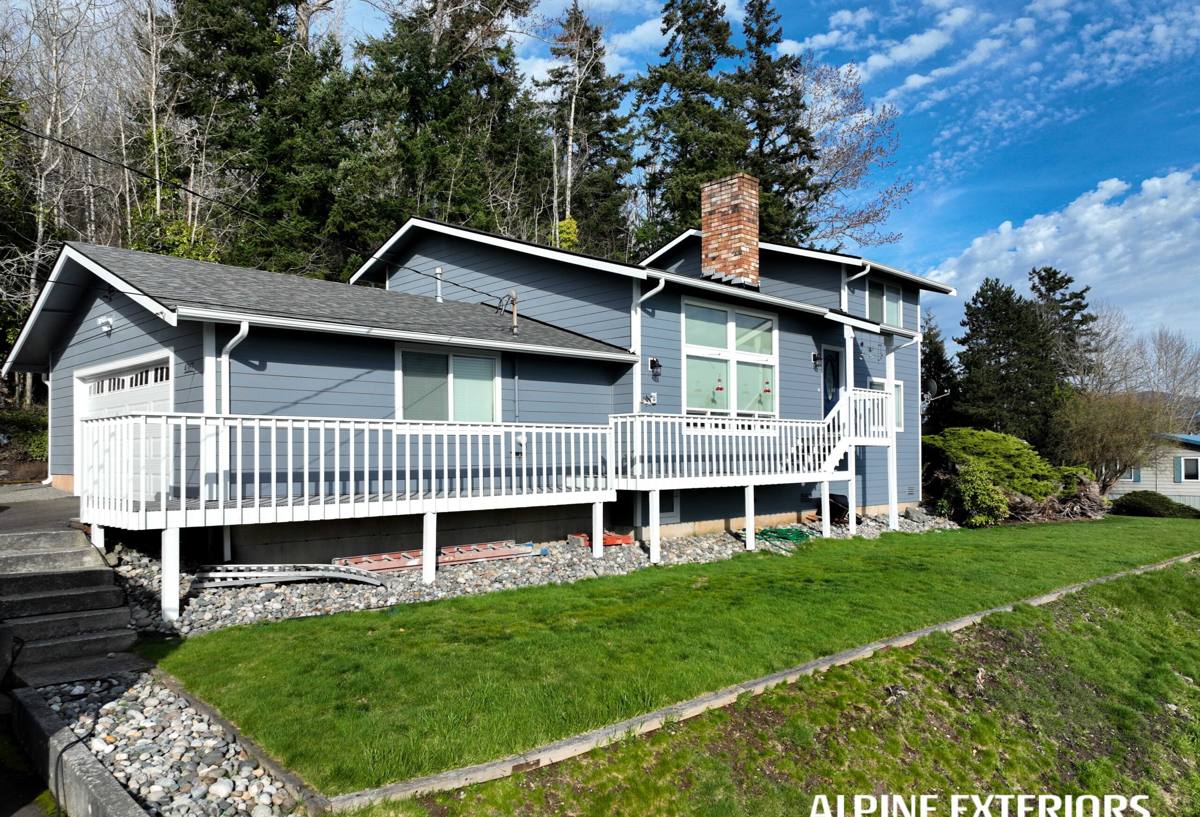
Signs a Lake Whatcom Home Needs a New Roof, Not a Repair
Repairs make sense when the damage is isolated and the roof underneath is still sound. Full replacement makes sense once the underlying materials — decking, underlayment, flashing — are compromised broadly enough that patching one area just shifts the problem to the next. On homes around the lake, moss and moisture tend to hide that line, because the surface can look patchy and mossy for years before anyone notices the deck underneath has gone soft.
- Moss or algae growth that keeps returning within a season or two of cleaning, especially on north-facing or tree-shaded slopes
- Granule loss heavy enough that you can see bare asphalt mat on shingles more than 12-15 years old
- Soft or spongy spots when walked, or visible sagging along the ridge or between rafters
- Daylight, water stains, or musty smell in the attic, particularly near valleys or chimney flashing
- Curling, cupping, or cracked shingles concentrated on the side of the roof that takes the most direct rain and wind
- Repeated leak calls to the same area even after prior patch repairs
- Fascia, soffit, or roof decking that feels soft or shows rot when probed at the eaves
If you're only seeing one or two of these, a repair or partial re-roof of that slope may still be reasonable. If you're seeing several at once, that's usually the deck telling you it has been absorbing moisture for a while.
What Full Replacement Involves
A correct tear-off and replacement on a Lake Whatcom home means stripping to the deck, not layering over old material — you cannot properly address trapped moisture, soft sheathing, or undersized ventilation from on top of an existing layer. Once the deck is exposed, any water-damaged sheathing gets cut out and replaced before anything new goes down. Skipping that step is the single most common reason a "new" roof leaks again within a few years.
Material Choices for This Microclimate
There is no universally "best" roofing material — there's a best fit for your slope, tree cover, budget, and how much upkeep you want to do. Here's how the common options actually perform under sustained damp, mossy conditions rather than in a manufacturer's brochure:
| Material | Moss/moisture behavior | Maintenance | Typical lifespan here |
|---|---|---|---|
| Architectural asphalt shingle | Good when installed with proper ventilation and zinc/copper strips on shaded slopes; moss can still take hold in heavy shade without upkeep | Periodic moss treatment and gutter clearing | 20-30 years |
| Standing seam metal | Sheds water fast, very little surface for moss to grip; performs well on the wettest slopes | Low; occasional fastener and seam check | 40-50+ years |
| Cedar shake | Attractive but holds moisture in the wood itself, which is exactly what moss and rot need; requires the most active upkeep in this climate | High — regular treatment, more frequent replacement of damaged shakes | 15-25 years with diligent care |
| Synthetic/composite shingle | Doesn't absorb moisture like wood; performs similarly to good asphalt in moss resistance | Low to moderate | 25-40 years |
We don't push cedar on heavily shaded Lake Whatcom lots as a first recommendation — not because it's a bad-looking product, but because a wood surface sitting under fir and cedar canopy in a wet climate is fighting its own material the whole time. If a homeowner wants that look and understands the maintenance commitment, we'll install it correctly; we just want that decision made with the trade-offs on the table, not discovered three years in.
Underlayment, Flashing, and Ventilation: Where Most Failures Actually Start
The shingle or metal panel is the part everyone sees, but most leaks and premature failures around here trace back to what's underneath it or where it meets something else.
Underlayment
Synthetic underlayment has largely replaced felt on jobs we do near the lake because it holds up better to the extended exposure that Pacific Northwest install schedules sometimes require, and it resists tearing in wind better than felt does. At eaves, valleys, and anywhere ice or ponding water could sit, we install a self-adhering ice-and-water membrane rather than relying on underlayment alone — cheap insurance against the driving rain this area gets in fall and winter storms.
Flashing
Step flashing at walls, chimneys, and skylights, and properly woven or metal valley flashing, is where a rushed installation shows up first as a leak. Reused or undersized flashing is one of the most common shortcuts we see when we tear off someone else's prior work.
Ventilation
A roof deck that can't breathe stays damp on the underside even if the top surface is doing its job, and a damp underside is exactly what invites rot and interior moss migration through the sheathing over time. Balanced intake at the soffits and exhaust at the ridge is not optional on a lake-adjacent, tree-shaded roof — it's one of the main things separating a 25-year roof from a 15-year roof in this climate.
Our Installation Process
- On-site inspection and estimate — we walk the roof and attic, check decking condition, ventilation, and flashing points, and give you a written scope, not a verbal guess.
- Material selection — we go over the trade-offs above based on your slope's sun/shade exposure, budget, and how the roof will be maintained.
- Tear-off — full removal to bare decking, with damaged sheathing identified and priced before it's covered up, not discovered as a surprise change order.
- Deck repair — any soft or rotted sheathing is replaced before underlayment goes down.
- Underlayment and ice/water shield — installed per the manufacturer's spec at eaves, valleys, and penetrations.
- Flashing — new step, valley, and penetration flashing throughout; we don't reuse old flashing on a full replacement.
- Roofing material installation — shingles, metal, or your chosen material, installed to manufacturer specification to keep warranty coverage intact.
- Ventilation check and correction — intake and exhaust balanced for the roof's size and pitch.
- Final walkthrough — cleanup, gutter check, and a plain-English review of what was done and what to watch for.
Why It Matters That We Already Work in Sudden Valley and Around the Lake
A crew that mostly works dry, open subdivisions elsewhere in Whatcom County will size up a Lake Whatcom roof the same way — and get the ventilation and material call wrong more often than not. Lots around the lake tend to have heavier tree cover, steeper or more irregular pitches on older homes, and access that isn't always straightforward on narrower lake-area roads. Knowing that going in changes how we bid the job, schedule the tear-off around weather windows, and stage material and disposal on tighter sites.
We also know which slopes in this specific area are chronic moss producers because of shade and airflow, not just because a homeowner "didn't clean it enough," and we design the roof — ventilation, material, and drip-edge details — to fight that instead of pretending a one-time treatment will solve it.
What Drives the Cost of a New Roof Here
| Factor | Why it moves the price |
|---|---|
| Roof size and number of planes | More squares and more valleys/hips mean more material and labor |
| Deck condition | Rotted sheathing found at tear-off adds material and labor to replace it |
| Material choice | Metal and synthetic composites cost more upfront than asphalt but need less maintenance and last longer |
| Pitch and access | Steep or hard-to-access roofs near the lake take longer and require more safety setup |
| Tear-off layers | Removing multiple existing layers costs more than a single-layer tear-off |
| Ventilation upgrades | Adding proper intake/exhaust where it's currently missing is worth the added cost long-term |
We don't publish a flat per-square price because these variables swing the real number too much to be honest about it in the abstract — a straightforward single-layer asphalt tear-off and a steep, moss-damaged multi-layer roof with rotted decking are not the same job even if they're the same size on paper. What we will do is give you a clear, itemized number after we've actually looked at your roof.
Keeping a New Roof Performing Once It's Installed
A correctly installed roof still benefits from basic upkeep in this climate — it just needs less of it than a poorly installed one.
- Keep gutters and valleys clear of needles and debris so water has a clean path off the roof
- Have shaded, moss-prone slopes checked annually rather than waiting for visible growth to spread
- Trim back tree limbs that keep a section of roof in near-constant shade and dampness
- Address any small flashing or fastener issue right away — in this rainfall, small gaps don't stay small for long
If you're weighing a repair against a full replacement, or just want an honest read on what shape your roof is really in, we're glad to come out, walk it with you, and give you a straight answer along with a free, no-pressure estimate.