 Sudden Valley
 New Roof Installation in Alger: Built for What This Climate Actually Does to a Roof
Alger sits in a part of Northwest Washington where a roof rarely gets a real break. Salt-laden air drifts in off nearby waters, rain comes in sideways as often as it comes straight down, and the wet season stretches long enough that moss doesn't just visit a roof here — it moves in and stays. We install new roofs for homes in and around Alger and Sudden Valley, and the specs we build to are shaped directly by that combination: salt exposure that accelerates corrosion on the wrong materials, driving rain that finds every weak flashing detail, and a moss season long enough to shorten the life of a roof that isn't ventilated and detailed correctly from the start.
A new roof is one of the few home improvements where the difference between "done" and "done right" doesn't show up for a few years — and by then, it's an expensive lesson. This page covers what a correct new roof installation actually requires in this climate, how our process works, and what to look for when you're hiring for it.
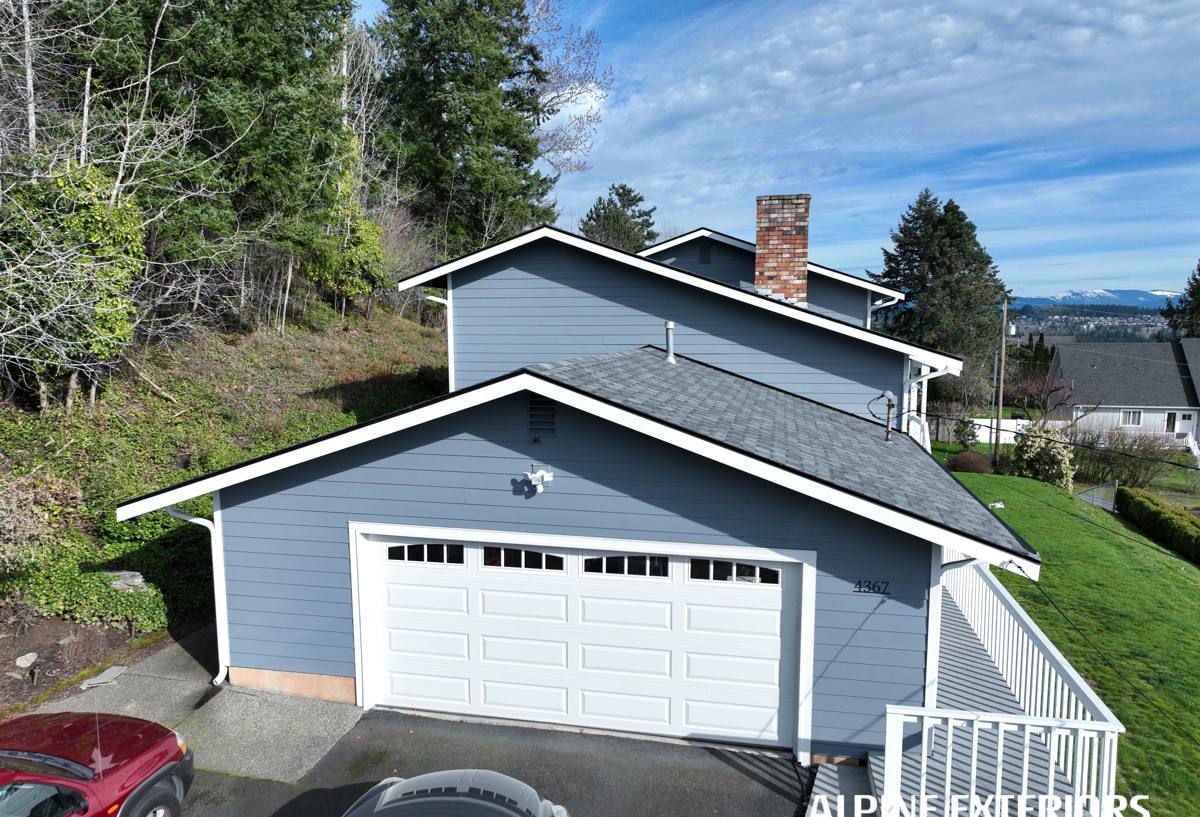
What Salt Air, Driving Rain, and Moss Do to a Roof in Alger
Salt Air and Corrosion
Homes closer to open water pick up airborne salt that settles on roofing surfaces and metal components year-round, not just during storms. Over time, that salt exposure accelerates corrosion on fasteners, flashing, and any metal roofing components that aren't rated for it. Standard galvanized fasteners can start showing rust streaks and weakening well before a roof's expected lifespan is up if they weren't specified for a coastal-influenced environment. This is one of the most overlooked details in a roof installation — the fasteners and flashing metal matter as much as the shingles or panels themselves.
Driving Rain and Wind-Driven Water
Rain in this part of Washington doesn't always fall straight down. Wind off the water can drive rain sideways into roof-to-wall transitions, valleys, and any penetration where flashing isn't lapped correctly. A roof that would perform fine in a calmer climate can leak here if the underlayment and flashing weren't installed with wind-driven rain specifically in mind. Terrain and tree cover around individual lots also change how much wind exposure a given roof plane sees, so the right detailing can vary from one elevation of a house to another, not just from one property to the next.
A Long Moss Season
Cool, damp conditions for much of the year create ideal moss-growing conditions, especially on north-facing slopes, shaded valleys, and anywhere debris collects and holds moisture against the roofing surface. Moss isn't just a cosmetic problem — as it establishes itself, it holds water against the roof deck and can lift shingle edges, and left long enough, it shortens the service life of an otherwise sound roof. A roof built for this area needs ventilation and material choices that account for a moss season that runs longer than it would in a drier climate.
What a Correct New Roof Installation Involves
Tear-Off and Deck Inspection
We don't install a new roofing system over a compromised deck. A full tear-off lets us see the actual condition of the sheathing underneath — soft spots, delaminated plywood, or water staining that points to a leak the old roof was hiding. Any damaged decking gets replaced before anything new goes down, because no roofing material, no matter how good, performs correctly over a deck that can't hold fasteners securely.
Underlayment and Water Protection
Given how much this climate depends on secondary water protection, we use synthetic underlayment rated for the exposure, with additional self-adhering ice-and-water membrane at eaves, valleys, and other vulnerable transitions. This is the layer that protects the home if wind-driven rain ever gets past the primary roofing surface, and it's not a place to cut corners on a roof that's going to face this many wet months every year.
Flashing Details
Flashing is where most roof leaks actually start, not in the field of the roofing material itself. Every penetration — chimneys, vents, skylights — and every roof-to-wall transition gets flashed and properly lapped so water is directed out and away, not channeled toward a seam. In a climate with driving rain, flashing that's "close enough" isn't close enough; it needs to be built for wind-driven water specifically.
Ventilation
Proper intake and exhaust ventilation lets the roof deck dry out between wet spells instead of staying damp for extended stretches, which matters directly for moss resistance and for the long-term health of the sheathing underneath. A roof that can't breathe holds moisture longer, and in a climate that already gives a roof a long wet season, that's the difference between a roof that lasts and one that needs early attention.
Choosing a Roofing Material for This Climate
There isn't one right answer for every home — budget, roof pitch, and the look a homeowner wants all factor in. But the material choice should be made with this specific climate in mind, not a generic recommendation.
| Material | Salt Air / Corrosion Resistance | Moss Resistance | Typical Considerations |
|---|---|---|---|
| Architectural asphalt shingles | Good, with corrosion-rated fasteners and flashing | Moderate; benefits from algae-resistant granules | Cost-effective, wide color range, proven performer when installed correctly |
| Metal roofing (standing seam) | Excellent when coated and fastened for coastal exposure | Good; smooth surface sheds moss more easily | Higher upfront cost, very long service life |
| Basic 3-tab asphalt shingles | Weaker long-term without upgraded fasteners | Lower; shorter lifespan in constant damp conditions | Lowest upfront cost, shortest expected lifespan here |
| Cedar shakes | Moderate; absorbs moisture readily | Poor without regular maintenance | High maintenance burden in a long wet season |
Whatever material a homeowner chooses, we spec corrosion-resistant fasteners and flashing across the board on Alger-area installs. It's a small cost difference at install time against a much bigger cost difference if standard hardware starts failing early because of salt exposure.
Our Installation Process
- On-site inspection and estimate: We walk the roof, check attic ventilation and any visible deck issues, and put together a written estimate based on what we actually find.
- Material selection: We go over the tradeoffs for your specific roof — pitch, exposure, budget — so the choice fits the house, not just a catalog page.
- Tear-off and deck repair: Old roofing comes off, the deck gets inspected, and any compromised sheathing is replaced.
- Underlayment and flashing installation: Ice-and-water membrane at vulnerable areas, synthetic underlayment across the field, and properly lapped flashing at every penetration and transition.
- Roofing material installation: Installed to manufacturer specification, including fastener type, spacing, and exposure.
- Ventilation check: We confirm intake and exhaust ventilation are balanced for the attic space before calling the job finished.
- Final walkthrough: We go over the completed roof with the homeowner and answer questions before wrapping up.
Signs an Alger Home May Need a New Roof
- Moss returning quickly to the same areas even after cleaning
- Granule loss showing up in gutters or at the base of downspouts
- Curling, cupping, or missing shingles, especially on wind-exposed slopes
- Soft spots underfoot near valleys, penetrations, or eaves
- Water staining on interior ceilings after heavy or wind-driven rain
- Visible rust streaking around flashing or fasteners
- Daylight visible through the roof deck from inside the attic
- A roof that's approaching or past the expected lifespan of its material
Any one of these on its own doesn't necessarily mean a full replacement is needed, but they're worth having looked at rather than waiting for the next storm to make the decision for you.
Why a Crew That Already Works Alger Matters
A roofing crew that already works this area understands the practical realities that don't show up in a general roofing guide — how much a given lot's tree cover and wind exposure change flashing and ventilation needs, how quickly moss re-establishes on a shaded slope here versus an open one, and which fastener and flashing specs actually hold up against salt-influenced air over the long run. That familiarity shows up in details that matter years down the line, not just in how the finished roof looks on installation day.
A Simple Checklist Before Hiring for a New Roof
- Ask what underlayment and ice-and-water protection they use, and where
- Confirm whether fasteners and flashing are specified for coastal/salt-air exposure
- Get the ventilation plan explained, not just the shingle brand and color
- Ask how they handle deck repair if they find damage during tear-off
- Get everything in writing, including material specifications and warranty terms
Maintenance After Installation
A correctly installed roof still benefits from periodic attention in this climate. Keeping gutters and valleys clear of debris, addressing moss growth before it spreads rather than after, and having the roof looked at after any major storm all extend the practical life of the system. We're happy to talk through a simple maintenance routine that fits your specific roof when we're on site.
If you're weighing a new roof for a home in Alger or the surrounding Sudden Valley area, we're glad to take a look and put together a straightforward, no-pressure estimate — just fill out the form below.