 Sudden Valley
 Siding Repair in Barkley: What Whatcom County Weather Does Here
Homes in and around Barkley sit in one of the wetter corners of Washington, and the exterior of a house feels it every year. Whatcom County's marine climate brings driving rain off and on for months at a stretch, salt-tinged air moves in from the coast, and the tree cover that makes this area so livable also means shade, damp ground, and a moss season that can run from fall through spring. None of that is a problem for siding that's in good condition and properly maintained. It becomes a problem fast for siding that has a crack, an open seam, a failed caulk joint, or a paint film that's given up — because in this climate, any gap in the exterior skin of a house is an invitation for water to get in and stay in.
Siding repair here isn't just cosmetic work. Done right, it's about closing off the pathways that let moisture behind the cladding, so the sheathing, framing, and insulation behind it stay dry through another wet Northwest winter. Homes tucked closer to the tree line around the greater Sudden Valley area tend to hold moisture the longest, which is exactly where we see the most repair calls.
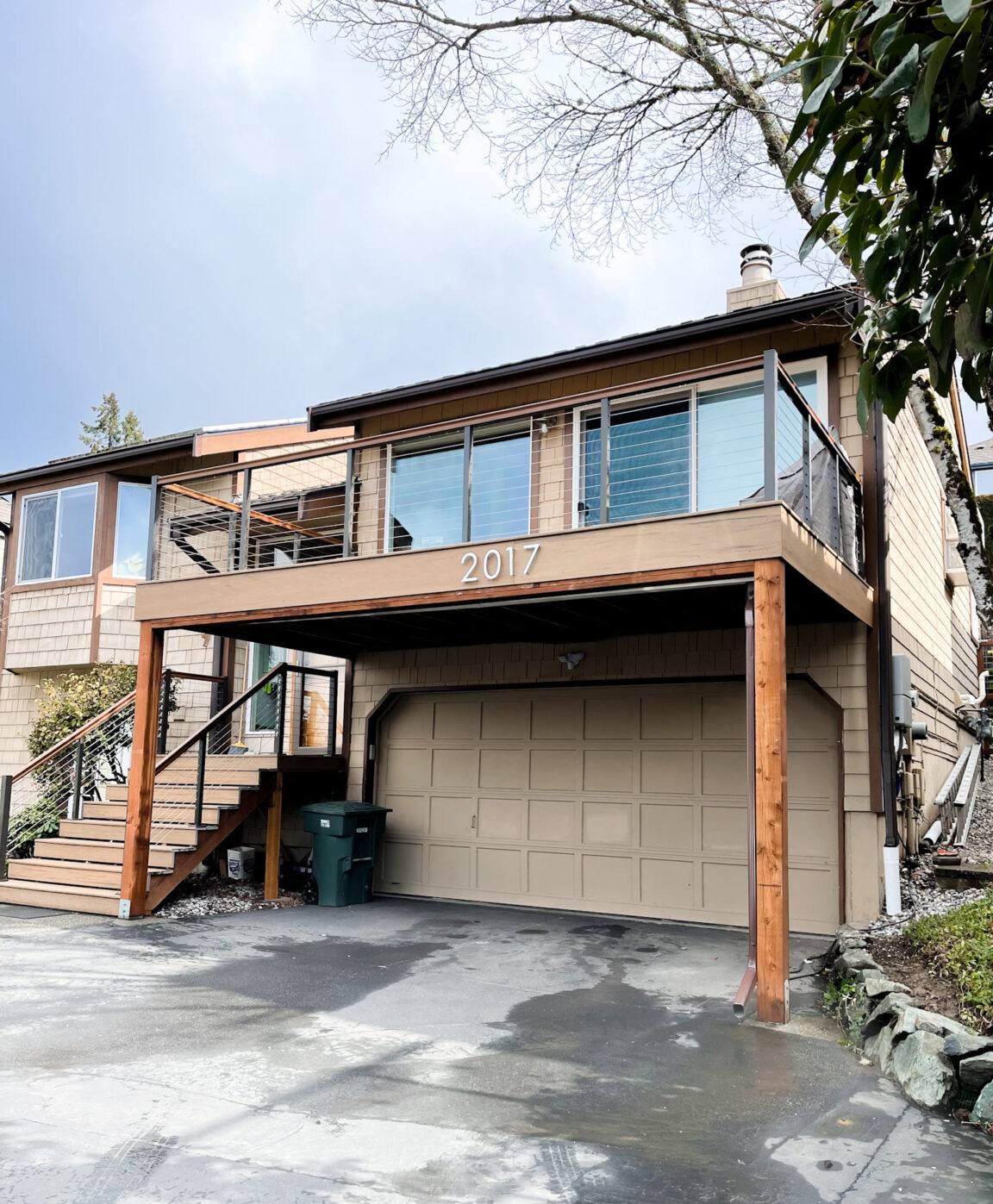
Signs Your Barkley Home Needs Siding Repair
Some damage is obvious. Some isn't, and that's usually the kind that costs the most to ignore. Walk your exterior and look for:
- Cracked, split, or warped boards, especially near corners and window trim
- Soft or spongy spots when you press on the siding by hand
- Paint that's peeling, bubbling, or chalking heavily in one area but not others
- Dark streaking, green or black growth, or a persistent musty smell along a wall
- Gaps opening up at seams, butt joints, or where siding meets trim, windows, or the foundation
- Nail heads popping out or visible fastener rust stains
- Thick moss or algae buildup that stays damp for days after rain stops
- Interior clues — a damp patch on drywall, a musty closet, peeling interior paint on an exterior wall
Any one of these on its own might be minor. Several together, or damage that's concentrated on the north or west side of the house — the sides that get the least sun and the most wind-driven rain in this part of Whatcom County — usually means water has been getting behind the siding for a while.
What a Correct Siding Repair Actually Involves
Diagnosing the Cause, Not Just the Symptom
Replacing a cracked board without figuring out why it cracked is a temporary fix. A real repair starts by finding out whether the damage is from impact, from age and UV exposure, or — most often in this climate — from trapped moisture. That means checking behind the siding where practical, looking at the condition of the housewrap or building paper, and tracing water stains back to their actual entry point, which is frequently several feet from where the damage shows up.
Water Management Comes First
Most siding failures we see in this area trace back to flashing and sealant, not the siding material itself. Correct repair means restoring proper flashing at windows, doors, and roof-to-wall intersections, re-establishing the drainage gap behind the cladding where it's been compromised, and using sealant only where it belongs — not as a substitute for flashing. Skipping this step and just swapping boards means the same failure comes back in a season or two.
Matching Material and Finish
On a factory-finished fiber cement product, a repair should be close to invisible. That means matching board profile, exposure, and — critically — color. James Hardie's ColorPlus finish is baked on at the factory in matched batches, so a competent repair uses the correct current-run color or plans the patch location so any slight variation isn't standing out on a highly visible elevation. Cut edges also need to be resealed with the right touch-up product, since an exposed, unsealed edge is a fast path for moisture into the board itself.
Repair vs. Full Replacement: How We Decide
Not every damaged section needs a wholesale re-side, and not every repair is worth doing instead of replacing a wall's worth of siding. We look at the extent of the damage, the age and condition of what's already up, and what's happening behind the siding.
| Situation | Usually Repair | Usually Replace |
|---|---|---|
| Damage extent | Isolated to one or two boards or a small area | Spread across multiple walls or elevations |
| Underlying sheathing | Dry, sound wood behind the siding | Soft, rotted, or water-stained sheathing found |
| Siding age and material | Newer Hardie board, or older siding still structurally sound | Original wood or vinyl siding at or past its service life |
| Cause of damage | One-time event: impact, isolated flashing failure | Systemic issue: poor original installation, chronic moisture |
| Color and product match | Current or recent Hardie ColorPlus line, close match available | Discontinued profile or color with no reasonable match |
We'll always tell you honestly which side of that table your house falls on before we recommend a scope of work.
Why We Repair — and Install — Only James Hardie Fiber Cement
We don't work with vinyl, LP SmartSide, Cemplank, Allura, primed spruce, or cedar, and that shapes how we approach repair calls too. Vinyl siding cracks in cold snaps and fades unevenly, and discontinued colors and profiles are common, so a clean color-matched repair is often impossible after a few years. Wood-based products like LP SmartSide and cedar depend on an intact factory or field-applied coating to keep moisture out; once that seal is compromised in a climate this wet, the substrate itself can start to swell, delaminate, or rot, and a patch doesn't fix the underlying vulnerability. Cedar looks excellent new but needs ongoing refinishing to hold up to Whatcom County's rain and shade, and skipped maintenance shows up as exactly the kind of soft, discolored boards we get called out to repair.
James Hardie fiber cement is cement, sand, and cellulose fiber — it doesn't rot, it isn't a food source for moss and algae the way wood is, and it holds its factory-applied ColorPlus finish far longer than field-applied paint. When it does need a repair, we're working with a stable, predictable material and a color-matching system that's actually designed to be replicated years later. That's a large part of why we standardized on it rather than switching materials job to job depending on what a particular house happens to have.
Our Siding Repair Process for Barkley Homes
Inspection and Honest Scope
We start by looking at the actual damage and what's around it, not just the spot you called about. That includes checking flashing, trim, and adjacent boards, because moisture problems rarely stay contained to one square foot. You get a plain-English explanation of what we found and what we recommend — repair, partial re-side, or full replacement — with our reasoning, not just a number.
The Repair Itself
Damaged material comes out, the sheathing and water-resistive barrier underneath get inspected and repaired if needed, flashing gets corrected where it's failed, and new James Hardie board goes in cut, fastened, and finished to manufacturer spec — proper fastener placement, correct gaps at joints, and sealant only where it's called for. We treat every cut edge and patch the same way we'd treat it on a brand-new install, because a repair that skips those details fails the same way the original damage did.
Cleanup and Follow-Up
We clear debris and old material from the site and walk the repair with you before we consider the job done. If the underlying cause was something ongoing — a gutter overflow, a sprinkler hitting the wall, heavy shade holding moisture — we'll tell you, because a repair only holds if the thing that caused the damage gets addressed too.
Why Hiring a Crew That Already Works Barkley Matters
Siding repair in this area isn't generic exterior work. A crew that's used to Whatcom County conditions already knows what heavy tree cover and prolonged damp does to a wall over a few years, recognizes moss and algae patterns that signal a moisture problem rather than just a cosmetic one, and is familiar with local permitting and inspection expectations for exterior work. That local familiarity means fewer surprises mid-job, a more accurate first estimate, and a repair that accounts for how this specific climate — not a generic weather profile — behaves against a house.
It also means faster response. A contractor working this area regularly can get to a Barkley call, assess it, and schedule the work without the lag of a crew coming from well outside the region — which matters when active water intrusion is involved and every additional wet week adds to the damage. A crew that's already installed and repaired Hardie siding on other homes nearby is also more likely to have a workable color match on hand rather than starting from scratch.
Cost Factors for Siding Repair in Barkley
Every repair is different, but the same handful of factors drive most of the cost difference between a simple fix and a bigger job.
| Factor | Why It Matters |
|---|---|
| Extent of hidden damage | Rotted sheathing or framing behind the siding adds carpentry work beyond the siding itself |
| Accessibility | Second-story, steep-lot, or heavily landscaped areas take longer to safely access |
| Color and profile match | Current ColorPlus colors match cleanly; older or discontinued runs may need a larger patch area |
| Flashing and water management repairs | Correcting the actual moisture source is separate labor from replacing the visible siding |
| Scope creep once opened up | Sometimes a small visible problem reveals a larger one once the wall is opened |
We'd rather find that out and tell you upfront than surprise you partway through a job.
Keeping Moss and Moisture From Coming Back
A good repair buys you time, but Whatcom County's long wet season means ongoing upkeep matters too. A few habits go a long way:
- Keep gutters clear so overflow doesn't run down the siding face
- Trim back branches and shrubs that keep siding shaded and damp against the wall
- Rinse moss and algae buildup off siding before it thickens, using a soft wash rather than high-pressure spray that can force water behind boards
- Recaulk trim and penetration points as sealant ages, before gaps open up
- Walk your exterior once or twice a year, especially after storm season, and catch small issues early
None of that replaces a proper repair where damage already exists, but it does stretch the life of the work once it's done, which matters most in a climate that gives siding so little time to fully dry out between storms.
If you're seeing damage, moss buildup, or soft spots on your Barkley home's siding, we're happy to take a look and give you a straight answer on what it needs — repair or replacement — with no pressure either way. Reach out for a free estimate and we'll walk the exterior with you.