 Sudden Valley
 Siding Built for What Columbia Actually Deals With
Homes in the Columbia area of Sudden Valley sit in one of the tougher climate zones in Whatcom County for exterior materials. You've got moisture moving in off the water almost year-round, long stretches of driving rain that push horizontally into wall assemblies, and shaded, tree-covered lots that stay damp long after the rain stops. Add in salt-laden marine air that rolls inland on a west wind, and you've got a combination that will find every weak point in a siding system within a few years if the product or the installation isn't right for it.
This page is about one job in one place: installing James Hardie fiber cement siding correctly on Columbia homes. Not a general siding overview, not a sales pitch for every product on the market — just what this climate demands, what a correct install looks like, and why it matters that the crew doing it already knows this neighborhood.
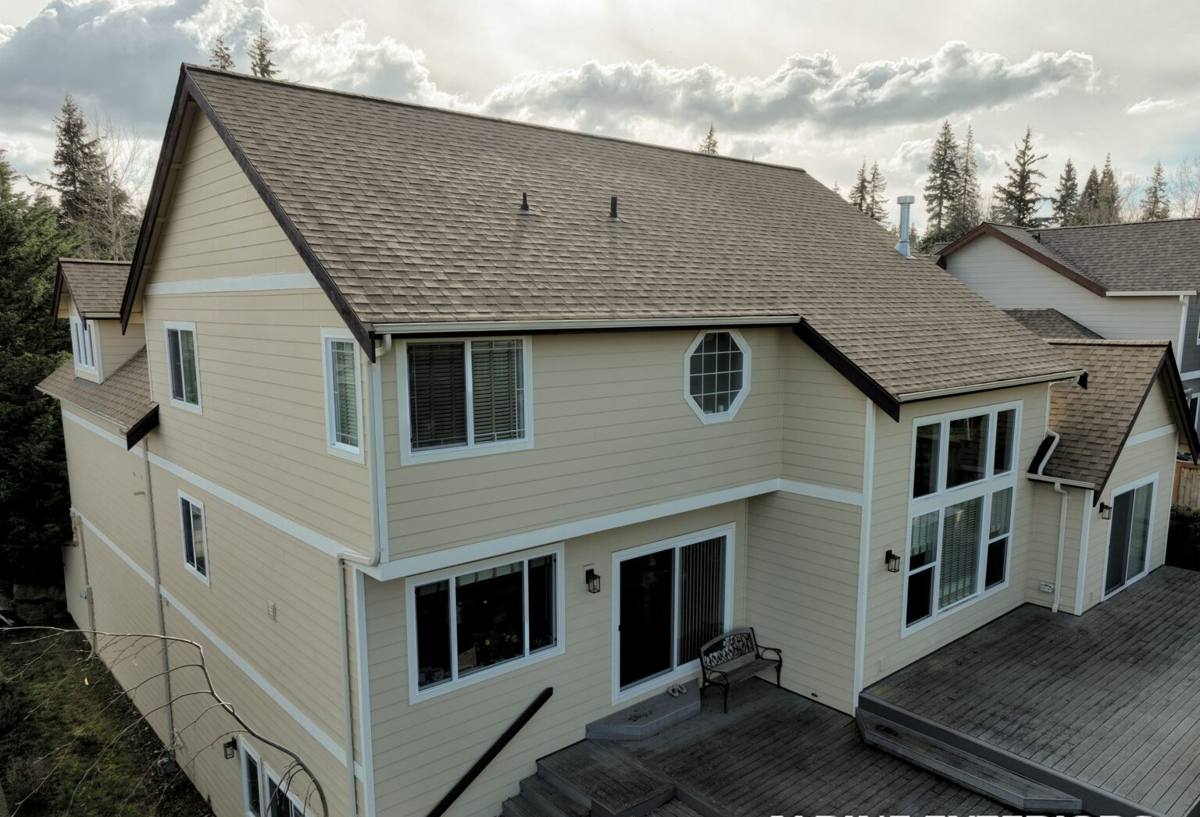
What This Climate Does to Siding Over Time
Moisture that doesn't leave
Sudden Valley's tree cover and lake-adjacent humidity mean siding here rarely gets a hard, fast dry-out after a storm. Water sits in seams, laps, and end joints longer than it would on an open, sun-exposed lot. Any material that swells, wicks, or delaminates when wet stays wet longer here than it would almost anywhere else in the county.
Moss and algae, not just cosmetic
The long moss season in this part of Whatcom County isn't only a roof problem. North-facing walls, siding under eaves, and anything shaded by fir and cedar canopy will grow moss and algae if the surface holds moisture and the finish doesn't resist it. Moss roots work into surface texture and coatings over time, which accelerates wear on materials that aren't engineered to shed it.
Salt air and driving rain together
Marine air carries fine salt that settles on exterior surfaces and accelerates corrosion of fasteners, flashing, and any exposed metal trim. Combine that with driving, wind-pushed rain and you get water forced sideways into laps and joints that a calmer climate would never test. A siding system for Columbia has to handle wind-driven moisture at the joint level, not just shed rain that falls straight down.
Why We Install Only James Hardie Fiber Cement Here
We don't offer vinyl, LP SmartSide, Cemplank, Allura, primed spruce, or raw cedar. That's not a marketing position — it's a standard we set after seeing how those products actually perform in this specific climate over years, not just on install day. Fiber cement doesn't swell with moisture, doesn't feed mold or algae the way wood-based products can, and doesn't rely on a field-applied finish that has to be maintained on a schedule to keep water out.
James Hardie's HZ5 product line is engineered specifically for climates with sustained moisture exposure — which describes Sudden Valley more accurately than it describes most of western Washington. The factory-applied ColorPlus finish is baked on under controlled conditions, which matters here because a field-painted finish in a damp, shaded environment often doesn't cure the way it would in a drier climate, leaving it more vulnerable to early failure.
Non-combustible material is a secondary benefit in this area, but it's not nothing — homes near tree cover and seasonal dry spells still carry wildfire exposure risk, and fiber cement doesn't contribute fuel load the way wood siding does.
Material Comparison for This Climate
| Material | Moisture Behavior | Moss/Algae Resistance | Maintenance Here |
|---|---|---|---|
| James Hardie Fiber Cement | Does not swell or rot; dimensionally stable when wet | Factory finish resists growth; surface doesn't feed organic material | Occasional wash; no repainting cycle with ColorPlus |
| Vinyl | Sheds bulk water but seams and laps can trap moisture behind panel | Growth on surface film in shaded, damp areas | Low, but panels can warp or fade; hidden moisture issues go unseen |
| Engineered Wood (LP-type) | Wood-based substrate; edge and joint moisture intrusion is the main failure point | Organic substrate is more susceptible if finish is compromised | Caulk and finish upkeep matters more here than in drier regions |
| Cedar / Primed Spruce | Absorbs and releases moisture; movement with humidity cycles | Untreated or lightly finished wood is highly susceptible | Refinishing on a recurring cycle; higher long-term labor cost |
This isn't a claim that other products fail everywhere — it's why we don't put them on homes in a climate that stresses exactly their weak points. Fiber cement's advantage in Columbia specifically comes down to dimensional stability under sustained damp conditions and a finish that isn't fighting moss and salt exposure on its own.
What a Correct Installation Involves
Fiber cement performs the way it's supposed to only when it's installed to manufacturer spec. Most of the siding failures we get called out to inspect in this area trace back to installation shortcuts, not the material itself.
Water management behind the siding
- Weather-resistive barrier installed and lapped correctly, not just stapled up as an afterthought
- Proper flashing at every window, door, and penetration — this is where driving rain finds its way in first
- Rain screen gap where conditions call for it, to let incidental moisture drain and the wall assembly dry
- Correct starter strip and butt joint treatment so laps don't wick water at the ends
Fastening and clearances
- Corrosion-resistant fasteners set to the correct depth — not overdriven, not underdriven
- Minimum clearance from grade, decks, and roof lines maintained per Hardie's install guide
- Caulking only where Hardie specifies it, not as a substitute for correct flashing
Field cuts and finish integrity
Every field cut exposes raw substrate that needs to be sealed per manufacturer instructions before it's closed up. Skipping this step is invisible on install day and shows up as localized failure two or three winters later — exactly the kind of long, wet winter this area gets every year.
Our Process for a Columbia Job
- Walk the exterior — we look at grade slope, existing moisture damage, roofline transitions, and how the sun and shade pattern hits each wall, since that's what determines moss and algae risk long-term.
- Check what's behind the current siding — especially on homes with wood-based siding, since trapped moisture damage isn't always visible from outside.
- Confirm water management plan — barrier, flashing details, and rain screen approach specific to that home's exposure.
- Install to Hardie spec — fastener schedule, clearances, joint treatment, and field-cut sealing, no shortcuts.
- Final walk-through — trim, caulking lines, and finish consistency checked before we call it done.
Why a Crew That Already Works This Area Matters
Sudden Valley homes aren't all built the same way, and Columbia has its share of homes with different vintages, roof pitches, and grading situations. A crew that's already worked in this specific area knows which wall orientations tend to hold moisture, where moss establishes fastest, and how the local grade and drainage patterns tend to push water against a foundation and lower wall courses. That's the kind of judgment that doesn't come from a spec sheet — it comes from having actually installed and later inspected siding on homes exposed to the same lake-adjacent, tree-covered, marine-air conditions your home deals with.
It also matters for warranty follow-through. James Hardie's transferable warranty is only as good as the installation behind it — a local crew that stands behind its own work in this climate, and that's still around and known in the area, is worth more than a distant installer with no ongoing presence here.
What to Check Before You Hire Anyone for This Job
- Are they installing to current James Hardie specifications, including fastener schedule and clearances — ask them directly, not just "do you install Hardie"
- Do they address water management (barrier, flashing, rain screen) as part of the bid, or only the visible siding
- Can they explain how they handle field-cut sealing and joint treatment
- Do they have experience with homes in shaded, damp, tree-covered lots similar to Columbia
- Is the warranty they're offering tied to correct installation, and do they stand behind their own labor separately from the manufacturer's product warranty
Maintenance Once It's Installed
Correctly installed Hardie siding in this climate is low-maintenance, not no-maintenance. An occasional gentle wash to clear early moss or algae growth before it establishes keeps the ColorPlus finish looking right for the long term. Check caulking lines and trim joints periodically, especially after a hard winter of driving rain, and address any impact damage promptly so the substrate underneath isn't left exposed through another wet season.
If you're weighing a siding replacement for a Columbia home and want a straight answer on what your walls actually need, we're glad to walk the property and give you a free, no-pressure estimate — no obligation, just what we'd actually recommend for your specific exposure.