 Sudden Valley
 Why Columbia's Climate Is Hard on Ordinary Siding
Homes in the Columbia area of Sudden Valley take a steady beating from three things at once: salt-laden air moving through Whatcom County, long stretches of driving, wind-pushed rain, and a moss season that can run most of the year in the shaded, damp spots around a house. Any one of those is manageable. Together, they shorten the life of siding that wasn't built to handle them, and they punish an installation that cut corners on flashing, gaps, or fastening.
This page is specifically about James Hardie fiber cement siding installed on Columbia homes — what the climate demands from the material, what a correct install actually involves, and why hiring a crew that already knows this area beats hiring one that's guessing.
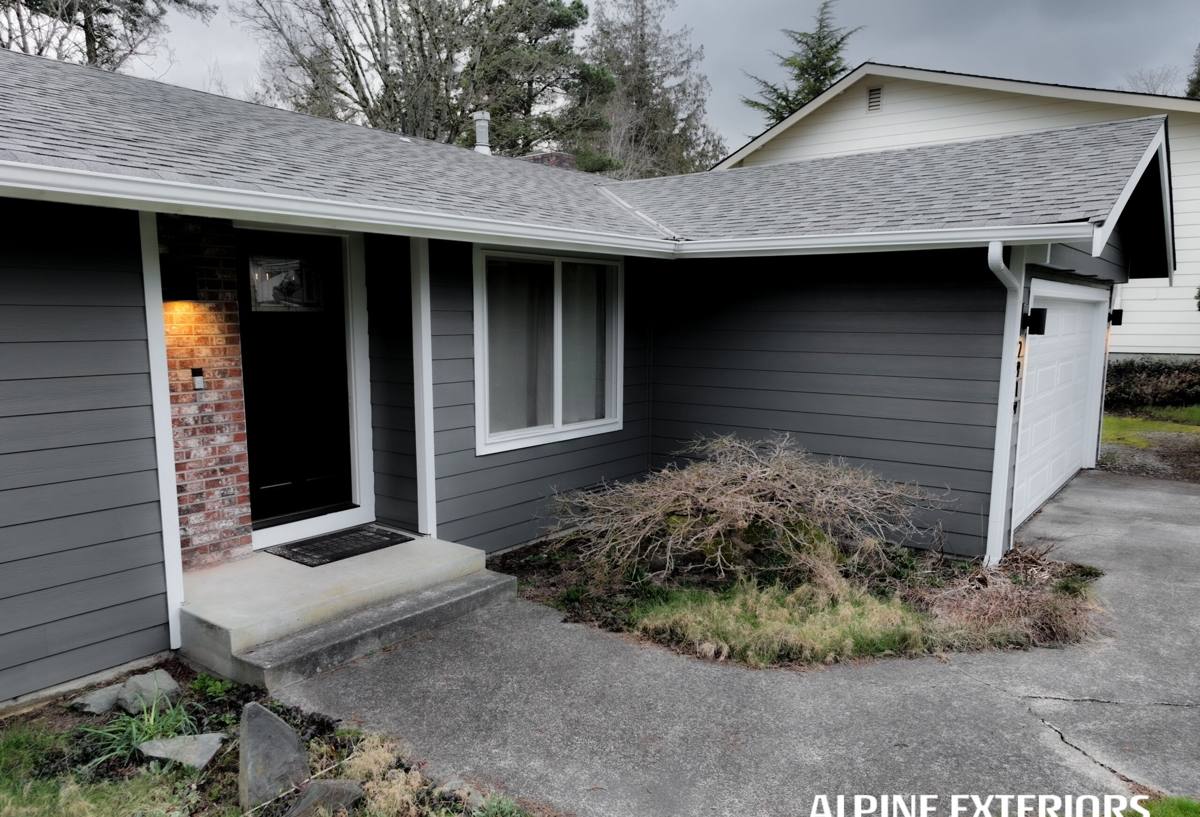
What Salt Air, Rain, and Moss Actually Do to a Wall
Salt Air
Airborne salt accelerates corrosion on anything metal — fasteners, flashing, trim edges — and it draws moisture. Siding materials that rely on paint film alone to keep moisture out tend to fail fastest in these conditions, because once the film is compromised, salt-laden moisture gets underneath and stays there.
Driving Rain
Wind-driven rain doesn't just fall on a wall, it's pushed sideways into every seam, lap, and penetration. Siding systems depend on details — laps, flashing, caulk joints, drainage gaps — to shed that water rather than trap it. A material can be excellent and still fail if those details are wrong.
A Long Moss Season
Shaded north walls, tree cover, and consistent damp conditions in Whatcom County mean moss and algae get a long runway to establish themselves. On some materials that's cosmetic. On others, sustained moisture retention under moss growth becomes a real problem for the substrate underneath.
Why James Hardie Fiber Cement Fits This Job
Fiber cement is not wood, and it's not plastic — it's cement, sand, and cellulose fiber, which means it doesn't rot, doesn't provide moss and mildew anything organic to feed on the way wood-based products can, and doesn't warp or buckle with repeated wet-dry cycling the way some other materials do over time.
Climate-Engineered Product Lines
James Hardie makes different formulations of its siding for different climate zones, because a product built for hot, humid regions isn't necessarily the right spec for the Pacific Northwest's cool, wet, freeze-thaw-influenced conditions. For Columbia and the rest of Whatcom County, we spec Hardie's climate-engineered line for this region rather than a generic, one-size-fits-all product. That distinction matters more here than in a dry climate, where almost anything holds up.
ColorPlus Factory Finish
Instead of field-painted siding, James Hardie's ColorPlus finish is baked on at the factory in a controlled environment, which gives more consistent coverage and better adhesion than paint applied on-site in variable weather. In a climate where the paint film is the first line of defense against salt air and constant moisture, that consistency is worth paying attention to.
What a Correct Installation Involves Here
The material is only half the equation. Most siding failures we get called out to inspect — regardless of brand — trace back to installation shortcuts, not the product itself. On a Columbia home, a few details matter more than they would somewhere drier:
Drainage Gap and Water-Resistive Barrier
Correct installation includes a drainage plane behind the siding and, where called for, a rain screen gap that lets any water that does get past the cladding drain and dry out instead of sitting against the sheathing. In a driving-rain climate, this is not optional extra credit — it's the difference between siding that manages incidental moisture and siding that traps it.
Flashing at Every Penetration
Windows, doors, hose bibs, light fixtures, deck ledgers — every penetration through the siding is a place water can get in if it's not flashed correctly. Caulk is a backup, not a primary defense; flashing is what actually redirects water.
Fastening and Clearances
Hardie specifies fastener type, spacing, and placement, and it specifies minimum clearances from grade, roofing, and decks. Those clearances exist specifically to limit how much standing moisture and splashback the bottom courses of siding are exposed to — which matters on a lot with limited drainage or heavy tree cover, both common around Sudden Valley.
Joint and Seam Treatment
Butt joints and trim seams are where driving rain finds its way in fastest. Correct installation treats these with the right combination of flashing, sealant rated for the exposure, and lap orientation that sheds water downward rather than catching it.
How Hardie Compares for This Climate
| Factor | James Hardie Fiber Cement | Vinyl Siding | Wood-Based Panel Siding |
|---|---|---|---|
| Moisture/rot resistance | Non-organic, doesn't rot | Won't rot, but seams can trap moisture behind panels | Vulnerable if moisture reaches the substrate |
| Moss/algae behavior | No organic material for growth to feed on; surface can be cleaned | Similar surface behavior, but seams complicate cleaning | Organic surface can support growth long-term |
| Salt air performance | Factory finish holds up well; material itself is inert | Can become brittle over years of UV and temperature swings | Finish and substrate both vulnerable to salt-driven moisture |
| Fire behavior | Non-combustible | Combustible plastic | Combustible |
| Finish longevity | Factory-applied ColorPlus finish, long warranty | Color is in the material but fades/chalks over time | Field-applied paint, needs repainting on a cycle |
This table isn't meant to be a takedown of every alternative — vinyl and wood-based siding both have legitimate uses. It's here because it's the honest reason we standardized on James Hardie for every home we side: in this specific climate, with salt air, driving rain, and a long moss season working against a wall year-round, fiber cement with a factory finish holds up with less maintenance burden over the long run.
Our Process on a Columbia Home
- Walk and assess — we look at exposure direction, roof overhangs, grade clearance, existing moisture damage, and shaded/moss-prone areas before we talk product.
- Check what's underneath — tear-off is when we find out what the current siding has been hiding. Any soft or water-damaged sheathing gets addressed before new siding goes up, not covered over.
- Install the water management system first — housewrap or building paper, flashing, and drainage gap go in before a single piece of siding is hung.
- Install to Hardie's fastening and clearance specs — not "close enough," because the specs exist for climates exactly like this one.
- Detail the trim and joints — this is where most callbacks on any siding job originate, so it's where we spend the most care.
- Final walkthrough and warranty registration — you get to see the finished work and understand what's covered and how, in writing.
Living With Hardie Siding Through a Long Moss Season
Fiber cement doesn't need much, but "not much" isn't "nothing." A little periodic attention keeps it looking right and keeps small issues from becoming bigger ones.
- Rinse siding (garden-hose pressure, not a pressure washer aimed directly at seams) once or twice a year to clear pollen, road film, and early moss growth.
- Keep gutters clear so overflow doesn't run down the wall face and feed algae growth in one concentrated stripe.
- Trim back vegetation and tree cover that keeps a wall section shaded and damp longer than the rest of the house.
- Check caulking at trim joints and penetrations every couple of years — caulk is a maintenance item even on a low-maintenance wall.
- Watch for soft spots, staining, or bubbling paint at the bottom courses near grade — that's usually a clearance or drainage issue worth catching early.
Signs Your Current Siding Is Already Losing the Fight
- Persistent moss or algae staining that comes right back after cleaning
- Soft or spongy panels, especially near the bottom of the wall or under windows
- Paint that's peeling or bubbling rather than just fading
- Visible gaps, warping, or buckling at seams and butt joints
- Musty smell or interior moisture signs on an exterior wall
Why a Crew That Already Works Columbia Matters
Siding installation isn't identical everywhere. A crew that's used to a dry inland climate can do technically fine work and still under-detail flashing and drainage because they've never had to fight driving rain and a year-round moss season. A crew that already works Sudden Valley and the rest of Whatcom County has already made the adjustments — heavier attention to drainage planes, salt-air-appropriate fastener choices, and moss-conscious siding orientation — because the climate here doesn't forgive shortcuts the way a milder one might.
That local experience also means fewer surprises during the job: knowing what tends to be hiding behind older siding in this area, understanding typical moisture patterns on shaded lots, and having already worked through the local permitting and code details that apply to exterior work in the county.
Get a Straight Answer for Your Home
Every home in Columbia sits a little differently — sun exposure, tree cover, wall orientation to prevailing wind and rain all change what your siding needs to hold up over the next few decades. If you'd like a straightforward look at your home's siding, with no pressure to sign anything on the spot, request a free estimate below and we'll walk the property with you and tell you what we actually see.