 Sudden Valley
 Decking Built for Barkley's Climate, Not Just Any Climate
Barkley sits close enough to the water and the tree cover around Sudden Valley that decks here take a specific kind of beating. Salt-tinged air off the bay corrodes hardware faster than it does further inland. Driving rain off Lake Whatcom and the Sound gets pushed sideways under railings and into board gaps. And the long moss season — realistically eight or nine months of the year in this part of Whatcom County — turns any deck surface that doesn't drain and dry properly into a green, slippery liability by the second winter.
None of that means composite decking is a bad choice for Barkley. It means the installation has to account for those conditions from the framing up, not just the board selection. A lot of the composite deck problems we get called out to fix started as a correct board choice paired with a generic installation that ignored how wet this region actually stays.
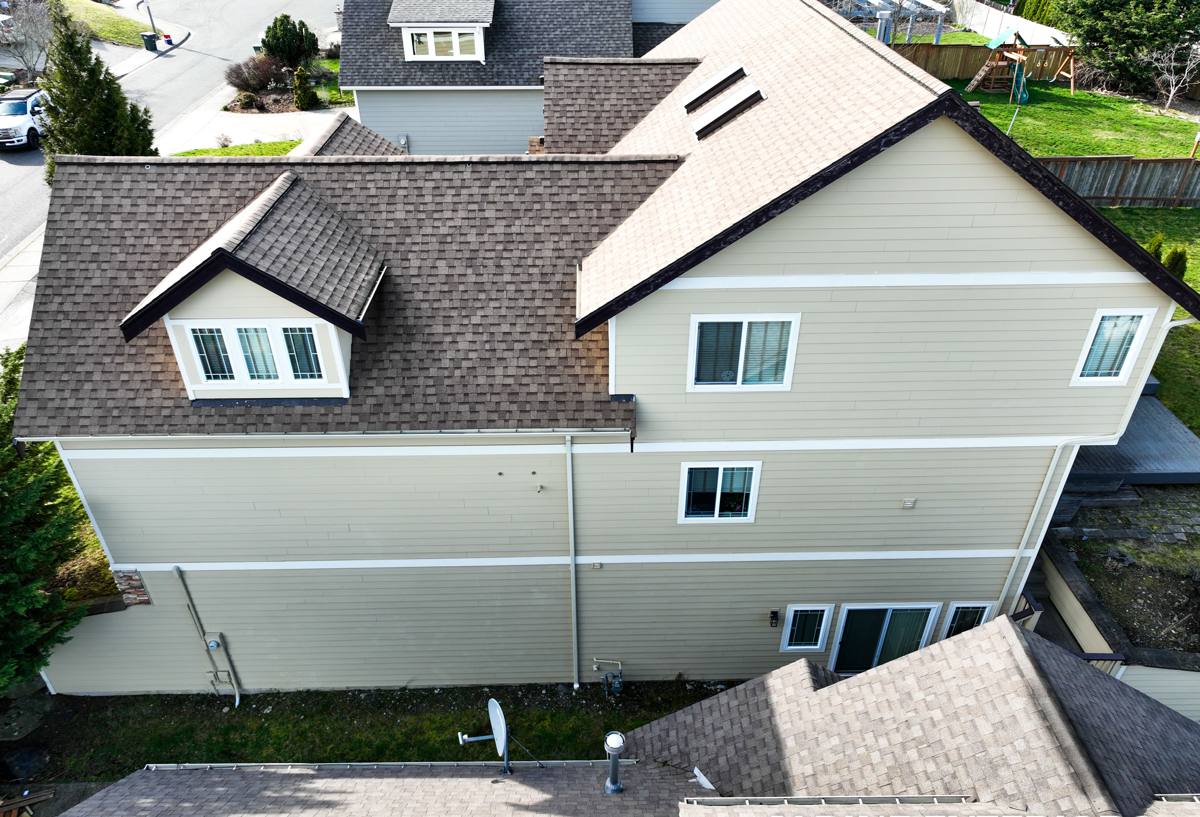
What Barkley Homes Actually Need From a Deck
Composite decking earns its reputation here because it doesn't rot, splinter, or need yearly staining the way wood does. But composite isn't waterproof, and it isn't immune to moss or mildew — it just resists them better than wood when the deck is built to shed water instead of trap it. In Barkley specifically, that means paying close attention to:
- Airflow underneath the deck so the substructure and board undersides can actually dry between rain events
- Proper board spacing and end-gapping so composite can expand and contract without buckling or trapping standing water
- Fastener and hardware selection rated for coastal/marine-adjacent exposure, not generic exterior-grade hardware
- Grading and drainage at ground level so water doesn't pool under low decks near the house foundation
- Surface texture that stays traction-safe once moss spores and algae inevitably land on it
Skip any one of these and you get the same complaints we hear around Barkley and the rest of Sudden Valley: dark streaking along board edges, a slick green film by late fall, or hardware that's rusting through within a few seasons.
Choosing the Right Composite Board
Not all composite decking behaves the same in a wet, moss-prone climate. The differences matter more here than they would in a drier region.
| Board Type | Moisture Behavior | Moss/Algae Resistance | Maintenance |
|---|---|---|---|
| Capped composite | Polymer shell sheds surface water; core stays protected as long as cut edges are sealed | Good — textured caps resist algae growth better than uncapped boards | Occasional wash-down; no staining or sealing |
| Uncapped composite | Absorbs more moisture at the surface over time | Fair — more prone to dark streaking and moss in shaded, damp areas | Needs more frequent cleaning |
| PVC decking | Fully synthetic, minimal moisture absorption | Very good | Low; higher upfront cost |
| Pressure-treated wood | Absorbs and releases moisture constantly; most prone to swelling/checking in this climate | Poor without regular sealing | Annual cleaning, sealing, or staining |
We don't push one brand as the only answer, because the right board depends on the deck's exposure — a shaded, tree-covered spot near Sudden Valley's timber needs different traction and drainage planning than a more open, wind-exposed site. What we do insist on is capped composite or PVC for anything with heavy shade or ground-level proximity, since uncapped product simply holds more moisture in a region that doesn't dry out for long stretches.
Why We're Selective About Uncapped Composite
Uncapped composite isn't a bad product — it's a maintenance trade-off. In a drier climate it performs fine with minimal upkeep. In Barkley's rain-and-moss cycle, it needs more frequent cleaning to keep the surface from staining and going slick, so we're upfront with homeowners about that difference before they buy rather than after.
What a Correct Installation Actually Involves
Composite decking fails at the install, not the material, more often than people expect. Here's what we build into every Barkley composite deck:
Substructure and Framing
Joist spacing follows the manufacturer's spec for the specific board — composite typically needs tighter spacing than wood decking, and cutting that corner is one of the most common causes of bounce and premature sagging. We also flash and tape joists to keep standing water off the framing lumber itself, since a composite deck surface can look perfect for years while the wood underneath it quietly rots.
Ventilation and Ground Clearance
Low decks near grade need enough clearance and, where that's not possible, additional venting so air actually moves underneath. This is one of the biggest differences between a deck that stays dry through a Whatcom County winter and one that develops a moss and mildew problem on the underside within a year or two.
Fastening
Hidden fastener systems and screws rated for coastal exposure resist the corrosion that plain exterior-grade hardware picks up from salt-tinged air near the water. We don't mix hardware grades on a single deck — consistent, correctly rated fasteners throughout is what keeps streaking and rust spotting from showing up on light-colored board surfaces down the road.
Board Gapping and Expansion
Composite expands and contracts more than people assume, especially with our temperature swings between damp winters and warm, dry stretches in summer. Correct end-gapping and picture-frame detailing prevent the buckling and lipping that shows up when boards are installed tight in cool weather and then push against each other once things warm up.
Our Process for a Barkley Composite Deck
- On-site assessment of grade, drainage, sun/shade exposure, and existing structure (for replacement or re-decking projects)
- Board and color selection walk-through, including a straightforward conversation about maintenance trade-offs for the specific spot on your property
- Framing inspection or rebuild, with joist spacing and flashing matched to the chosen board
- Ventilation check — adding clearance or vents where the deck sits low to grade
- Installation with coastal-rated hardware and manufacturer-specified fastening method
- Final walkthrough covering drainage, gap tolerances, and basic seasonal care specific to this climate
Moss, Mildew, and Long-Term Upkeep
Even a well-built composite deck in Barkley will see some algae or moss activity eventually — that's just the reality of a long, wet moss season this close to the water and tree cover. The difference a correct install makes is how easily that gets managed. A deck with good airflow and a capped board typically needs nothing more than an occasional rinse and a soft-bristle scrub with mild soap. A deck with poor drainage or uncapped boards in a shaded spot can need much more frequent attention to stay safe underfoot.
- Rinse debris and organic buildup off the surface a few times a year, more often under trees
- Keep gutters and downspouts directed away from the deck, not onto it
- Trim back overhanging branches where practical to cut down on shade and leaf litter
- Check board ends and fastener points once a year for early streaking or corrosion signs
- Clear debris from underneath the deck periodically so ventilation isn't blocked
What Drives the Cost
| Factor | Why It Matters in Barkley |
|---|---|
| Board grade (uncapped vs. capped vs. PVC) | Higher-grade boards cost more upfront but reduce moisture and moss-related maintenance over time |
| Substructure condition | Older or ground-level decks often need framing repair or added ventilation before decking goes down |
| Hardware spec | Coastal-rated fasteners and hidden fastener systems cost more than standard hardware but resist corrosion far longer |
| Deck size and layout | Picture-framing, angled boards, and multi-level designs add labor beyond a simple rectangular deck |
| Site access and grading | Drainage corrections at ground level add cost but prevent water pooling under the deck |
We'd rather walk a homeowner through these trade-offs honestly and give a broad, realistic range than quote a number that ignores what the site actually needs.
What to Check Before Hiring a Deck Contractor in Barkley
- Do they ask about drainage, shade, and ground clearance, or only about board color?
- Do they specify hardware rated for coastal/marine exposure, or just "exterior grade"?
- Do they explain manufacturer-required joist spacing for the specific composite product?
- Are they licensed and insured to work in Whatcom County?
- Do they have experience with decks in wet, moss-prone, tree-covered sites like those around Sudden Valley — not just decking in general?
Why Local Experience in Barkley Matters
A crew that already works this area knows which spots in Barkley hold moisture longest, where moss takes over fastest, and how the salt air factors into hardware choices — without needing to relearn it on your project. That local knowledge shows up in fewer callbacks: correct joist spacing the first time, ventilation planned for the actual site instead of a generic spec sheet, and hardware chosen for this climate instead of whatever's standard elsewhere. It's the difference between a deck that needs attention in three years and one that just needs an occasional rinse for the next couple of decades.
If you're weighing a new composite deck or replacing worn-out decking in Barkley, we're happy to walk the site, talk through board options honestly, and put together a free, no-pressure estimate. Use the form below to get started.