 Sudden Valley
 Cordata's Climate Is Hard on Siding — Here's Why
Cordata sits close enough to the water and low enough in the Whatcom County fog belt that its homes take a steady, three-part beating: salt-tinged marine air, driving wind-blown rain off the Strait, and a moss season that can stretch from October into April. None of these on their own would wreck a siding job. Together, over years, they expose every shortcut a crew took the day the siding went up.
Salt air corrodes exposed fasteners and thin metal trim faster than inland installs ever see. Driving rain doesn't fall straight down here — it hits siding at an angle, which means anything that relies on face-sealing (caulk alone, no drainage plane) eventually lets water behind the cladding. And moss doesn't just grow on roofs; it colonizes north-facing walls, gutters, and any horizontal trim ledge that stays damp, holding moisture against the substrate long after a storm has passed.
Siding that isn't engineered and installed with all three of these in mind doesn't fail dramatically. It fails quietly — swelling at the bottom courses, staining under window heads, soft trim nobody notices until a repaint reveals rot underneath. That's the failure pattern we see most often on older Cordata homes, regardless of what brand of siding was originally installed.
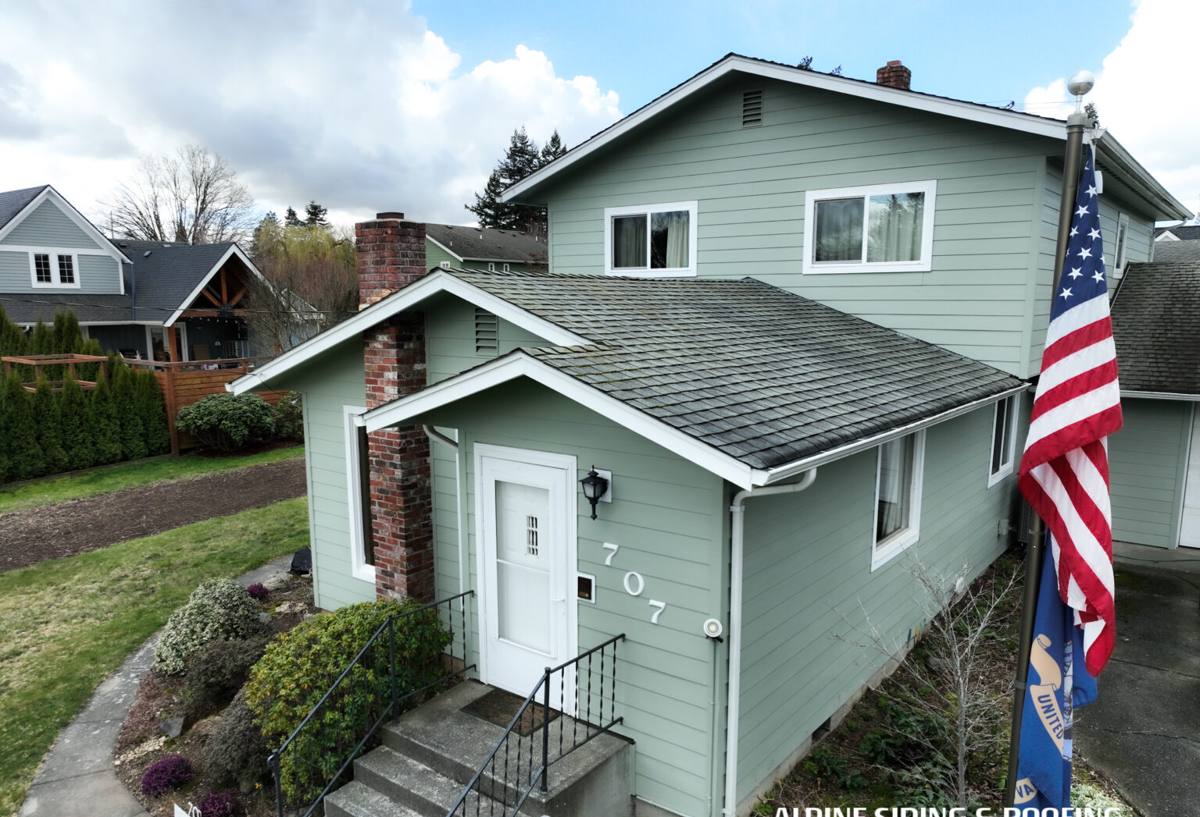
What Correct Fiber Cement Installation Actually Involves
Fiber cement siding is only as good as the water management system behind it. The board itself resists moisture, rot, and pests far better than wood-based alternatives, but a bad install can still trap water and cause problems — just more slowly than it would with a lesser product. Here's what has to happen underneath, not just what you see from the curb.
Drainage Plane and Weather-Resistive Barrier
Every wall needs a continuous weather-resistive barrier lapped correctly — upper courses over lower, always shingle-style so water sheds outward instead of behind the seams. On a house exposed to driving rain, we also install a drainage gap behind the siding wherever the wall assembly calls for it, so any moisture that does get past the cladding has somewhere to go besides the sheathing.
Flashing at Every Penetration
Windows, doors, hose bibs, light fixtures, deck ledgers — every penetration through the siding plane is a place water will find if it's not flashed correctly. This is the single most common corner cut on older installs we open up in this area, and it's almost always the reason for hidden rot at window corners.
Fastening and Clearances
James Hardie specifies exact fastener types, spacing, and penetration depth, plus minimum clearances from grade, roof lines, and horizontal surfaces like decks and patios. Skipping the clearance specs is common because it looks fine on install day — it's only after a wet winter or two that the bottom edge starts wicking moisture.
Caulking — Used Correctly, Not as a Crutch
Caulk should seal specific joints, not compensate for missing flashing or gaps that should have been lapped instead. We caulk where the manufacturer specifies it and nowhere else, because caulk is a maintenance item — it will eventually need to be replaced, and a house that depends on it structurally has a built-in failure point.
Why We Install Only James Hardie
We standardized on James Hardie fiber cement for every job we do, including here in Cordata, and we don't install vinyl, LP SmartSide, Cemplank, Allura, primed spruce, or cedar. That's not a marketing position — it's a decision based on what holds up in this climate with the least ongoing maintenance burden for the homeowner.
Non-Combustible and Climate-Engineered
Hardie board is fiber cement — it doesn't burn, and it doesn't feed pests or fungus the way wood-based siding can. James Hardie also engineers its HZ5 product line specifically for wetter, humid climates, which describes Cordata and the rest of Whatcom County well. That engineering shows up in the board's moisture and swelling resistance, not just its marketing.
ColorPlus Factory Finish
Hardie's ColorPlus finish is baked on at the factory under controlled conditions, which gives a more consistent, longer-lasting color than field-applied paint — and it comes with its own finish warranty separate from the product warranty. In a salt-air environment, factory-cured finish resists fading and chalking noticeably better than a job-site paint job.
Warranty That Actually Transfers
Hardie backs its siding with a long-term, transferable limited warranty. That transferability matters in a market where homes change hands — it protects the investment for whoever owns the house next, not just the person who paid for the siding.
Fiber Cement vs. the Alternatives
Homeowners in Cordata often ask us to compare Hardie fiber cement against other products they've seen quoted elsewhere. Here's an honest breakdown of the trade-offs, not a sales pitch.
| Material | Moisture Behavior | Maintenance | Fire Resistance | Typical Lifespan |
|---|---|---|---|---|
| James Hardie fiber cement | Excellent when installed to spec; engineered for wet climates | Low — factory finish, occasional wash | Non-combustible | 30-50+ years |
| Vinyl siding | Sheds water but can warp/crack in temperature swings; seams can trap moisture | Low, but color fades and can't be repainted well | Combustible, can melt near heat sources | 20-30 years |
| LP SmartSide / engineered wood | Wood-based core is more sensitive to sustained moisture exposure | Moderate — edge sealing and paint upkeep matter | Combustible | 25-30 years with maintenance |
| Cedar / primed spruce | Natural wood movement; prone to rot without diligent upkeep | High — regular repainting/staining required | Combustible | 15-25 years, maintenance-dependent |
Every product on that list has a place in the market. We simply don't think any of them hold up as well as Hardie fiber cement against the specific combination of salt air, driving rain, and moss that Cordata homes deal with year after year.
Our Process on a Cordata Job
The steps don't change much from house to house, but the details we watch for are shaped by working in this area repeatedly.
1. Inspection and Water Damage Check
Before we quote anything, we look at what's happening underneath the existing siding — especially at window heads, bottom courses near grade, and any north-facing wall that stays shaded and damp longer through moss season. This tells us whether it's a straightforward re-side or whether sheathing repair needs to be priced in.
2. Tear-Off and Substrate Assessment
We remove the old siding down to the sheathing so nothing gets covered up and hidden again. Any soft or water-damaged sheathing gets replaced before anything new goes on — installing fiber cement over a compromised substrate defeats the purpose of upgrading.
3. Weather Barrier and Flashing
New weather-resistive barrier, correctly lapped, plus flashing at every window, door, and penetration. This is the step that determines whether the siding performs for 30+ years or starts showing problems in five.
4. Hardie Board Installation
Installed to James Hardie's fastening schedule and clearance specs, with attention to the details that matter most in driving rain — proper overlaps, correct gaps at trim, and no shortcuts at inside/outside corners.
5. Trim, Caulk, and Final Walkthrough
Trim and caulk are finished per spec, and we walk the job with the homeowner before calling it done — pointing out where flashing and drainage details are so there's a clear record of what's behind the finished wall.
What Drives the Cost
Every Cordata home is different, so we won't quote a number without seeing the house, but these are the factors that actually move the price.
| Cost Factor | Why It Matters |
|---|---|
| Existing wall condition | Hidden rot or damaged sheathing found during tear-off adds repair scope |
| Home size and wall complexity | More corners, gables, and trim details mean more labor per square foot |
| Siding profile chosen | Lap width, panel vs. plank, and trim style affect material cost |
| ColorPlus vs. field paint | Factory finish costs more upfront but removes a future repainting cycle |
| Access and site conditions | Slopes, tight lot lines, or landscaping affect staging and labor time |
Signs a Cordata Home Needs Siding Attention
Most siding problems in this area show up gradually. Worth checking for:
- Soft or spongy spots when you press near the bottom courses or under windows
- Persistent moss or dark streaking on north-facing or shaded walls
- Paint that's bubbling, peeling, or chalking faster than the rest of the house
- Visible gaps or cracking at caulked joints and trim corners
- Warping, bowing, or separation at panel seams
- Rising energy bills that might point to compromised insulation behind the wall
- Rust staining running down from fasteners or metal trim
Why Hiring a Crew That Already Works Cordata Matters
A lot of siding failures we get called to inspect weren't installed by bad crews — they were installed by capable crews using specs written for a drier climate, or by crews unfamiliar with how aggressively moss and driving rain expose gaps in flashing and drainage. Working repeatedly in Whatcom County means we've already seen where those gaps show up here specifically, and we build around them by default rather than learning it on your house.
We also know this area well enough to set realistic expectations — moss season timing, how sun exposure varies wall to wall on a given lot, and what kind of wind-driven rain angle a particular side of a house is going to take year after year. That local pattern recognition is part of what a correct installation actually depends on, not just the brand of board going up.
If your Cordata home's siding is showing its age, or you're planning ahead for a re-side, we're happy to take a look and give you a straightforward, no-pressure estimate — just fill out the form below.