 Sudden Valley
 Building a Deck That Actually Holds Up at Lake Whatcom
Lake Whatcom homes get more use out of a deck than almost any other part of the house. It's where morning coffee happens looking out at the water, where the grill lives, where guests end up standing even when there's a perfectly good living room ten feet away. A deck here isn't a luxury add-on — it's functional square footage that has to perform in a demanding climate, not just look good on the day it's finished.
That climate is the whole reason a "generic deck" doesn't work well long-term in Sudden Valley. Whatcom County sees a long, wet shoulder season, persistent humidity off the lake itself, and moisture that lingers under tree canopy far longer than it would on an open, sun-exposed lot. Add in the driving rain that comes through in fall and winter storms, and you've got conditions that will find every weak point in a deck's design within a few years if it wasn't built for them.
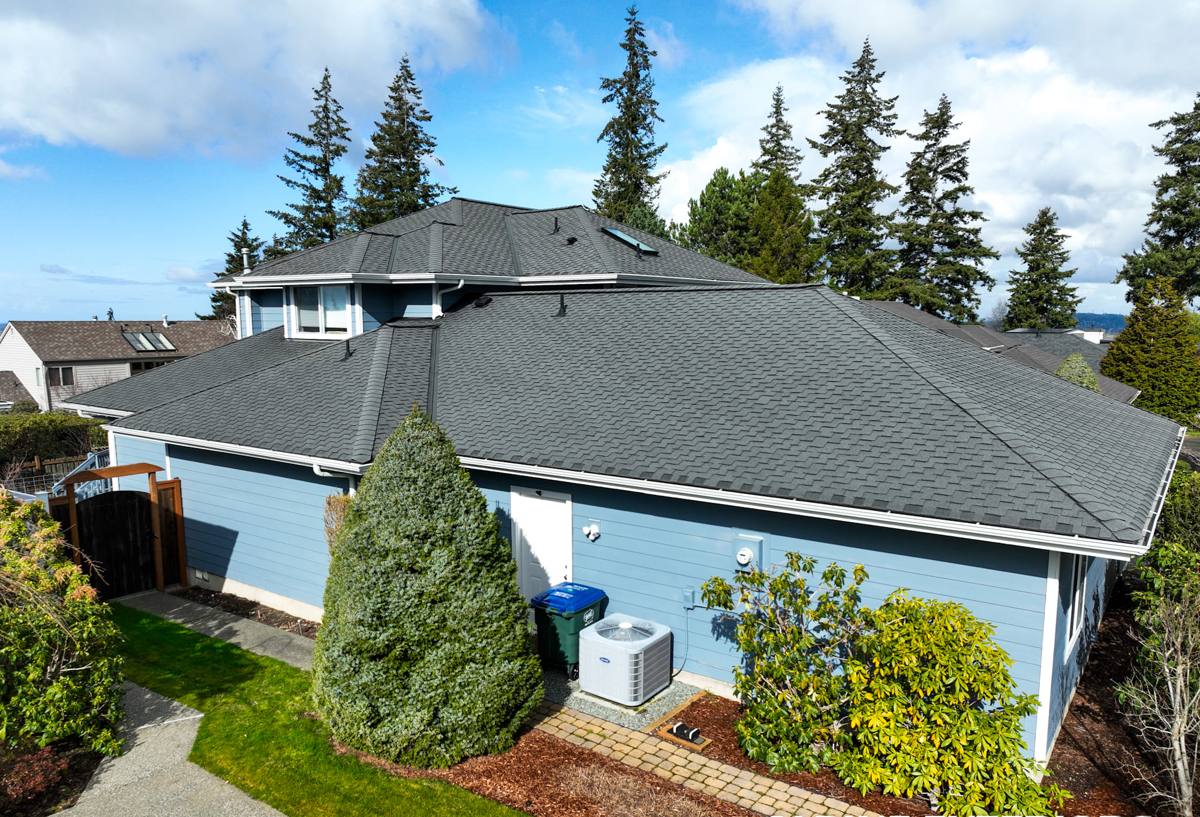
What Lake Whatcom's Climate Does to an Ordinary Deck
We've worked on enough decks around the lake to see the same failure patterns repeat themselves. They're predictable, and they're avoidable if the deck is designed with this specific environment in mind from the start.
Moisture and Moss
Lake-adjacent lots tend to hold humidity longer than properties further inland, and many Sudden Valley homes sit under mature evergreen canopy that keeps decking shaded and damp well after a storm has passed elsewhere. That combination is exactly what moss and algae need to take hold. Once moss establishes on decking boards, it holds moisture against the wood surface, and that's when rot starts — often before it's visible from the top.
Driving Rain and Water Intrusion
Rain in this region doesn't always fall straight down. Wind-driven rain gets pushed sideways into ledger connections, under railing posts, and into any gap where flashing was skipped or done poorly. A deck that looks solid can still have water working its way into the structural connection points where the deck meets the house — the single most common source of expensive hidden damage we find on older decks in this area.
Freeze-Thaw Cycling
Whatcom County doesn't get brutal winters, but it does get repeated cycles of freezing and thawing through the colder months. Water that's soaked into end grain, fastener holes, or checked wood expands when it freezes, which widens cracks a little more each cycle. Over several seasons, that's how small surface checks turn into structural splits.
What a Correctly Built Deck Needs Here
None of this means a deck at Lake Whatcom has to be high-maintenance or short-lived — it means the details that don't matter as much in a drier climate matter a great deal here.
- Proper ledger flashing where the deck attaches to the house, so wind-driven rain can't work its way behind the band board
- Gapped decking with real drainage beneath the surface, not just between boards, so water doesn't pool on joists
- Joist tape or a comparable moisture barrier on top of every joist, protecting the one part of the frame that's hardest to inspect once decking is installed
- Stainless or coated corrosion-resistant fasteners throughout, since standard hardware corrodes faster in a consistently damp environment
- Post bases that keep wood off concrete or grade, cutting off the most direct path for moisture to wick into structural posts
- Railing and stair connections sealed at every penetration, since these are common points where water sneaks in unnoticed
Skip any one of these and the deck can still look fine going up. The problem shows up two, five, or eight years later, usually as soft decking, a stained ceiling on a covered patio below, or a railing post that's gone spongy at the base.
Decking Material: What Actually Makes Sense for This Lake
There's no single right answer for every homeowner, but there is a right way to think about it. The choice comes down to how much upkeep you're willing to do versus what you're willing to pay upfront.
| Material | How It Handles This Climate | Maintenance Reality |
|---|---|---|
| Pressure-treated wood | Solid performer if detailed and sealed correctly; most vulnerable to moss and moisture without upkeep | Needs cleaning and re-sealing every 1-2 years to resist moss and staining |
| Cedar | Naturally moisture- and insect-resistant, ages well with the lake setting | Benefits from periodic cleaning and an oil or stain refresh to hold its color |
| Composite decking | Handles moisture and moss growth better than wood since it doesn't absorb water the same way | Low upkeep, but still needs occasional washing — algae can grow on any surface left damp and shaded |
| PVC decking | Fully synthetic, essentially unaffected by moisture absorption or rot | Lowest maintenance of the group; higher upfront cost |
We're honest with clients about trade-offs rather than pushing one product. A shaded, lakeside lot under heavy tree cover is a tougher environment for any wood species, and we'll tell you that plainly during the estimate rather than after the deck is built.
Design Choices That Matter More at Lake Whatcom
Grading and Airflow Under the Deck
A deck built low to the ground with poor airflow underneath traps moisture and speeds up moss growth on the underside of boards, even when the top surface is dry. Where the site allows it, we build in enough clearance and grade the ground below to shed water away from posts and footings, not toward them.
Sun and Shade Balance
Many Lake Whatcom lots have gorgeous tree cover, but shade that never lets a deck dry out is the single biggest driver of moss problems we see. We'll talk through selective clearance where it makes sense, and in cases where shade can't be reduced, we lean harder on materials and finishes suited to staying damp longer.
Stairs and Slope
Lake-facing lots are often sloped, which means stairs and multi-level decks are common. Every stair stringer and landing connection is another spot where water can collect if it isn't detailed correctly, so these get the same flashing and fastener attention as the main deck structure — not treated as an afterthought.
Our Process for a Lake Whatcom Deck Project
- On-site assessment — we look at sun exposure, tree cover, slope, drainage patterns, and how the deck will tie into the house before we talk design.
- Design and material discussion — we walk through decking and railing options honestly, including maintenance expectations for each, so there are no surprises later.
- Permitting — decks tied to structures or built above a certain height typically require a permit in Whatcom County; we handle that process as part of the job.
- Structural build — footings, framing, ledger flashing, and joist protection go in first, with every connection point detailed for this climate before a single decking board is installed.
- Decking, railing, and finish work — surface materials go on last, along with any staining, sealing, or finish treatments the material calls for.
- Final walkthrough — we go over the finished deck with you, including what maintenance (if any) it'll need going forward.
A Quick Homeowner Checklist
If you're evaluating an existing deck at your Lake Whatcom property, or thinking through what to ask for in a new build, this covers the basics worth checking:
- Is there visible moss or dark staining on the decking surface or underside?
- Does water pool anywhere on the deck surface instead of draining off?
- Is the ledger board area (where the deck meets the house) showing any staining or soft wood?
- Are fasteners rusted, streaking, or backing out of the decking boards?
- Is there airflow underneath the deck, or is it built low and tight to the ground?
- Do stair stringers and railing posts feel solid, with no give at the base?
If more than one or two of these raise a flag, it's worth having someone look at the structure before it becomes a bigger repair.
Why Local Experience on Lake Whatcom Specifically Matters
A deck built for a dry, open lot on the other side of the county doesn't need the same attention to flashing, drainage, and material selection that a shaded, lake-adjacent property in Sudden Valley does. Crews who haven't worked this specific microclimate can miss the details that matter most here — not because the work is careless, but because the failure points at Lake Whatcom aren't the same ones you'd plan around elsewhere.
We build decks around Sudden Valley and the rest of the Lake Whatcom area regularly, and the lessons from one project carry into the next: where moss tends to establish first, which slopes need extra drainage attention, how much clearance a shaded lot really needs underneath the frame. That's the kind of knowledge that only comes from working the same lake, season after season.
Get a Straight Answer on Your Deck Project
Whether you're planning a new deck, replacing an aging one, or just want an honest read on what a lake-adjacent build actually requires, we're happy to walk your property and talk through it. Reach out for a free, no-pressure estimate using the form below.