 Sudden Valley
 Decks Built for Silver Beach's Weather, Not Just Its View
Silver Beach sits close to the water, which is exactly why a deck built here needs more thought than one built a few miles inland. Homes in this part of Sudden Valley and Whatcom County deal with driving rain off the water, near-constant humidity, and a moss season that can run from October well into spring. Add in the coastal-influenced moisture that settles into wood grain and metal hardware, and you have a climate that will find every weak point in a deck within a few years if the build wasn't planned for it.
We're not describing a generic Pacific Northwest deck problem here. We're describing what actually happens to decks on this stretch of shoreline: green growth on shaded boards by the second winter, fasteners that bleed rust stains into decking, and railing posts that loosen because water pooled where it shouldn't have. A correctly built deck in Silver Beach accounts for all of that from the framing up, not just at the surface.
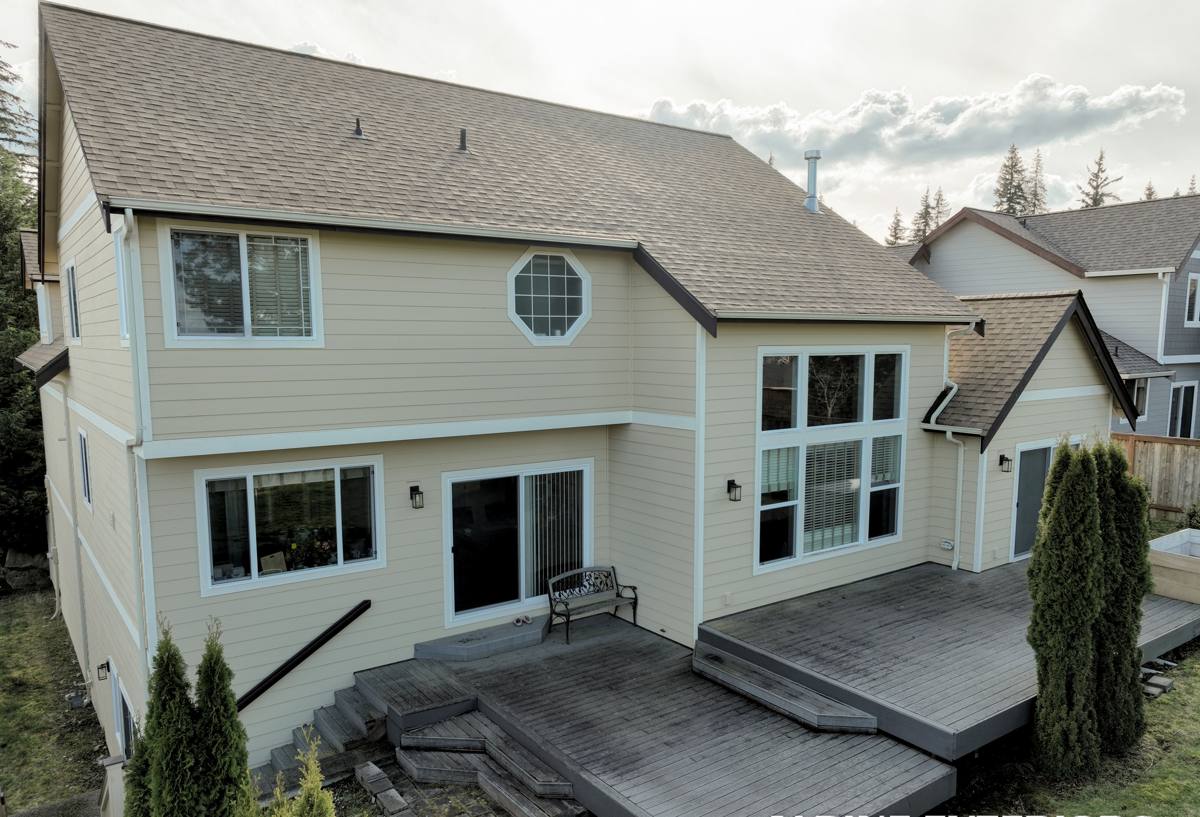
What Local Homes Actually Need From a Deck
Most of the decks we get called out to repair in this area didn't fail because of bad luck. They failed because they were built to a generic spec instead of a Whatcom County one. The three things that matter most here:
Drainage first, everything else second
Standing water is the enemy. Decking with poor gapping, ledger boards without proper flashing, and framing without a slight pitch away from the house all trap moisture that has nowhere to go. In a climate with this much annual rainfall, drainage isn't a nice-to-have detail — it's the difference between a deck that lasts 20 years and one that needs structural repair in 8.
Airflow under and around the deck
Moss and algae need shade and stagnant moisture to take hold. Decks tucked close to grade, boxed in with solid skirting, or shaded heavily by trees near the water hold moisture longer and grow moss faster. Good design leaves the underside of the deck able to breathe.
Hardware that won't corrode from the inside out
This is the one homeowners notice last and regret most. Standard fasteners look fine for a year or two, then start bleeding rust through the decking and weakening at the connection point. In a coastal-influenced, high-moisture area, this isn't optional — it's a materials decision made on day one.
Choosing the Right Decking Material for This Climate
There's no single "best" decking material — there's a best material for your budget, your maintenance appetite, and how exposed your specific lot is to rain and shade. Here's how the common options actually perform in Silver Beach conditions:
| Material | Moisture Behavior | Moss/Algae Resistance | Maintenance | Typical Lifespan Here |
|---|---|---|---|---|
| Pressure-treated wood | Absorbs and releases moisture with the seasons; prone to cupping if not sealed regularly | Low — needs regular cleaning and treatment | Annual cleaning, re-sealing every 1-2 years | 10-15 years with upkeep |
| Cedar | Naturally moisture-resistant but still needs sealing in this climate | Moderate | Sealing every 1-2 years, moss removal | 15-20 years with upkeep |
| Composite decking | Doesn't absorb water like wood; shaded/damp spots can still grow surface algae | Moderate to good depending on the product's cap layer | Periodic washing, no sealing required | 25-30+ years |
| PVC decking | Essentially non-absorbent | Best of the common options | Occasional washing | 25-30+ years, often longer |
Composite and PVC cost more up front than pressure-treated wood, but for shaded, water-adjacent lots — which describes a lot of Silver Beach — the reduced maintenance and moss resistance usually pay for themselves in avoided labor and fewer repairs. That said, if you want the look and feel of real wood and are willing to stay on top of sealing and cleaning, cedar or treated lumber can still be the right call. We'll walk through the honest trade-offs for your specific lot rather than push one product across the board.
Framing and Structure: Where Decks Actually Fail
The decking surface is what you see, but the framing underneath is what determines whether the deck is safe and long-lasting. This is the part of the job that gets skipped or rushed on lower-bid builds, and it's the part that causes the most expensive failures later.
Ledger board attachment and flashing
Where the deck attaches to the house is the single most common point of water intrusion and structural failure. Proper flashing that directs water away from the house band board — not just a bead of caulk — is non-negotiable in a climate that sees this much rain.
Joist spacing and hardware-rated connections
Joist hangers, structural screws, and post bases rated for exterior and ground-contact use matter more here than in drier climates. We use hardware rated for the moisture exposure this area actually gets, not the minimum a code inspector will pass.
Post footings below frost and set for drainage
Footings need to be set below frost depth and designed so water doesn't collect around the post base. A footing that traps water against untreated post ends is a slow-motion failure that won't show up for a few years — and then shows up as a wobbly deck.
Our Custom Deck Process
- On-site assessment. We look at your lot's specific exposure — how much shade it gets, how close it sits to grade, drainage patterns, and how the existing structure (if any) has held up.
- Material and layout conversation. We talk through decking material, railing style, and layout based on how you actually use the space, not just what looks good in a brochure.
- Permitting. We handle the permit process for the build, sized and documented to meet Whatcom County requirements.
- Framing built for this climate. Ledger flashing, joist hardware, footing placement, and airflow underneath are all planned before a single decking board goes down.
- Decking, railing, and finish work. Fasteners, railing hardware, and any sealing or capping are chosen to match the decking material and the site's moisture exposure.
- Walkthrough. We go over the finished deck with you, including what maintenance it actually needs and on what schedule.
Railings, Fasteners, and Hardware for Wet Climates
Railings take a lot of abuse in this climate — they're exposed on all sides, they're handled constantly, and post connections are a common failure point when the wrong hardware is used. We spec stainless or coated fasteners rated for exterior, high-moisture use at every connection point, not just where it's visible. The same goes for hidden fastener systems on composite and PVC decking: a hidden fastener that isn't rated for the moisture load will corrode and let boards shift long before the decking itself wears out.
Maintenance a Silver Beach Deck Actually Needs
Even a well-built deck needs some upkeep in this climate. Here's the realistic checklist we give homeowners:
- Clear leaves and debris from between boards and off the surface before fall rains set in
- Rinse or lightly scrub moss and algae from shaded areas once or twice a year, before it establishes
- Check railing posts and stair connections annually for movement
- For wood decking, inspect the seal coat each spring and reapply as needed — don't wait until it visibly fails
- Keep gutters and downspouts near the deck clear so runoff isn't dumping extra water onto or under it
- Trim back overhanging branches that keep sections of the deck shaded and damp
Permits and Practical Considerations
Deck projects in Whatcom County typically require a permit once you're past a certain size or height, and Sudden Valley's community guidelines may add their own layer on top of the county's requirements. We handle that process as part of the job so you're not the one tracking down paperwork. If your lot has specific drainage or setback questions because of its proximity to the water, that's part of the on-site assessment before we finalize a design.
Why Hire a Crew That Already Works Silver Beach
A deck built to a generic spec sheet can look identical to one built for this climate — for about the first year. The difference shows up in year three, five, and ten: in whether the ledger board is still dry, whether the hardware is rusting through the decking, and whether moss has taken over the shaded corners. Crews who work this stretch of Sudden Valley and the surrounding Whatcom County shoreline regularly know which details matter here because they've seen what happens when those details get skipped. That's not a marketing point — it's the reason a deck built for Silver Beach's rain, shade, and moisture patterns outlasts one that wasn't.
If you're planning a new deck or replacing one that's showing its age, we're happy to come take a look and talk through options — no pressure, no obligation. Use the form below to request a free estimate.