 Sudden Valley
 Decks Built for Sunnyland's Weather, Not Just Its Views
A deck in Sunnyland has to earn its keep almost every month of the year. Between the driving rain that rolls in off the water, the salt-laden air, and a moss season that can stretch from fall clear into late spring, this part of Whatcom County is genuinely hard on outdoor structures. A deck built to a generic spec sheet — the kind you'd see in a catalog design meant for a drier climate — will show problems here years before it should: soft spots at the ledger, black streaking on the boards, corroded fasteners, rot hiding under a surface that still looks fine. Sudden Valley Siding builds and repairs decks specifically for this environment, and that shows up in the details most contractors skip.
This page covers what a deck actually needs to hold up in Sunnyland, what a correct build looks like from the ground up, and how we run the job from first visit to final walkthrough.
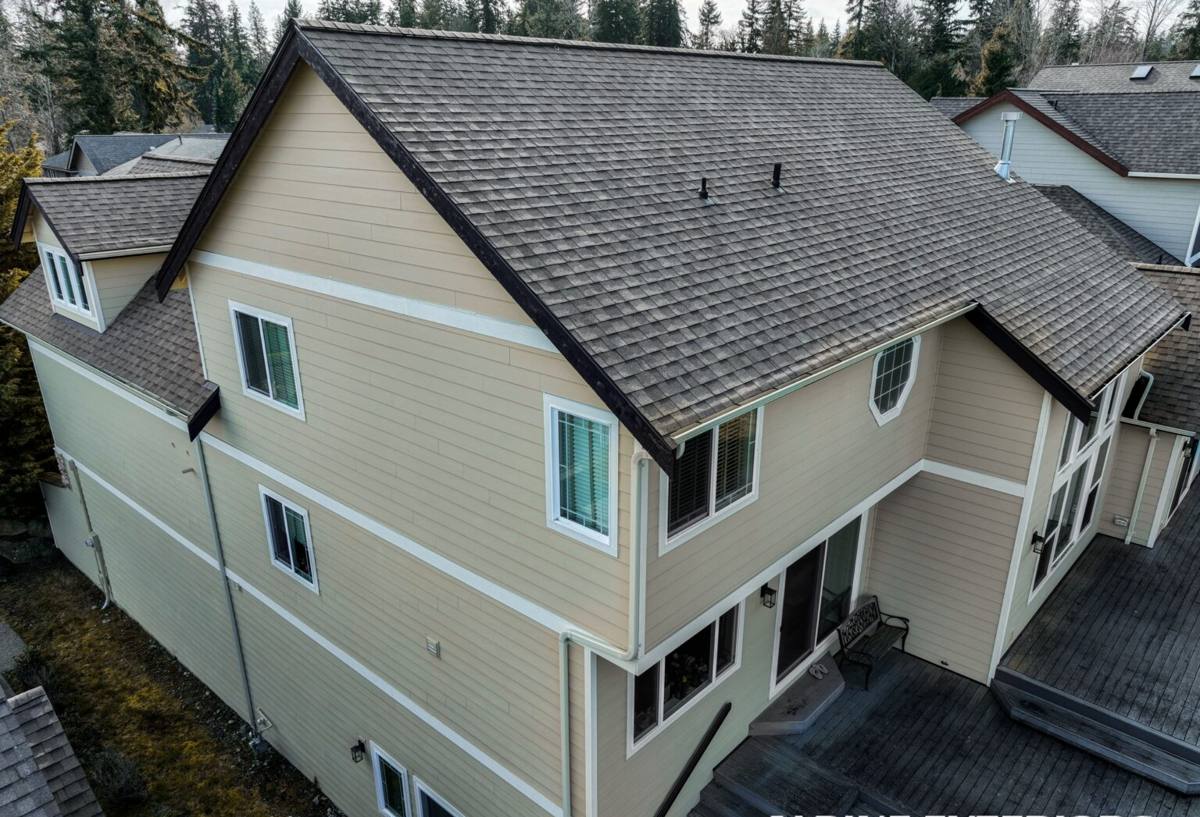
What Local Conditions Actually Do to a Deck
It helps to understand the specific mechanisms at work, because they drive every decision below.
Constant Moisture
Whatcom County doesn't get occasional downpours so much as long stretches of steady, driving rain. Water finds its way into end grain, fastener holes, and any spot where two pieces of wood meet without a gap to drain and dry. Once moisture gets trapped, it stays trapped — our winters are mild but damp, so wood doesn't get the hard freeze-and-dry cycle that pushes water back out the way it might in a drier climate.
Moss and Algae
A deck surface that stays shaded and damp for months at a time is exactly what moss and algae need to take hold. Beyond looking bad, a mossy deck surface is slick and holds moisture against the wood or composite cap longer than an open, well-drained surface would.
Salt Air and Corrosion
Sunnyland's proximity to the water means fasteners, brackets, and structural hardware are exposed to salt-laden air, not just rain. Standard galvanized fasteners can start corroding faster here than the same hardware would inland. Once a fastener corrodes, it loses holding strength long before it looks obviously bad from the outside.
UV and Temperature Swings
We don't get the brutal summer heat that cooks decking elsewhere, but the swings between wet mornings and sun-exposed afternoons still stress wood fibers and finish coatings over time, especially on south- and west-facing decks.
Decking Material Options for This Climate
There's no single "best" decking material — the right call depends on budget, maintenance appetite, and how exposed the deck is. Here's how the common options actually perform in Sunnyland's conditions:
| Material | How It Handles Our Climate | Maintenance | Typical Lifespan Here |
|---|---|---|---|
| Pressure-treated lumber | Good rot resistance when properly sealed; needs re-staining to shed water well | Annual cleaning, re-sealing every 2-3 years | 15-20 years with upkeep |
| Cedar | Naturally decay-resistant, handles moisture well, but greys and can stain from moss without maintenance | Cleaning and finish renewal every 1-2 years | 20-25 years with upkeep |
| Composite decking | Won't rot or absorb moisture into the board itself; can still get slick with algae film on top | Periodic cleaning, no sealing or staining | 25-30+ years |
| PVC/capped polymer | Fully sealed surface, best resistance to moisture and staining of the options here | Occasional washing | 25-30+ years |
We'll walk through these trade-offs honestly during your estimate — a lower-maintenance material costs more up front but saves real time and money over the life of the deck in a climate this wet.
What a Correctly Built Deck Requires Here
Material choice matters, but most deck failures we get called out to repair trace back to construction details, not the decking itself. In Sunnyland's conditions, we treat the following as non-negotiable:
Ledger Board Flashing
Where the deck attaches to the house is the single most common failure point in this climate. Proper metal flashing, correctly lapped with the house's water-resistive barrier, keeps rain from working its way behind the ledger board and into the rim joist or wall framing. This is invisible once the deck is built, which is exactly why it's the detail worth checking a contractor's work on.
Joist Protection Tape
Covering the tops of the joists with a self-adhering waterproof membrane before the decking goes down keeps standing water off the framing lumber where it would otherwise sit and slowly rot the wood from the inside out — a problem that often isn't visible until the deck surface itself starts to fail.
Footings and Drainage
Footings need to be sized and set to the correct depth for the soil conditions on your lot, with the post base kept clear of standing water. Poor drainage around footings is a slow, quiet way for a deck's structural support to weaken over years.
Fastener and Hardware Selection
Given the salt air in this area, we use stainless steel or coated fasteners and structural connectors rated for coastal or high-corrosion environments, not the minimum-grade hardware that's fine in a drier inland climate.
Board Spacing and Airflow
Decking boards need consistent gaps for water to drain through rather than pool on the surface, and the space underneath the deck needs enough airflow to let framing dry out between rain events instead of staying damp for weeks at a stretch.
Railings, Stairs, and Code Requirements
Any deck built above a certain height needs a code-compliant guardrail, and most jurisdictions in Whatcom County require a permit for new deck construction or significant rebuilds. Requirements we build to as standard practice include:
- Guardrails at the required height for any walking surface above the code threshold
- Baluster spacing tight enough that a code-sized sphere can't pass through
- Graspable handrails on stairs with more than a few risers
- Stair stringers and treads sized for the load and span, not just eyeballed
- Structural connections at the ledger and posts that meet current code, not legacy toe-nailing
We handle permitting as part of the job so you're not left chasing paperwork or discovering after the fact that a rebuild needs to be pulled up to code.
Our Process for a Sunnyland Deck Project
- Site visit and assessment. We look at your lot's drainage, sun and shade exposure, existing structure if it's a rebuild, and how the deck ties into the house.
- Design and material selection. We talk through layout, decking material, and railing style against your budget and how much upkeep you actually want to do long-term.
- Written estimate. A clear scope and price before any work starts — no surprise change orders for things that should have been caught up front.
- Permitting. We pull the required permit and build to the inspected standard, not around it.
- Demolition (if applicable). Old decking, framing, and any hidden rot get removed and assessed before we build on top of anything.
- Framing and flashing. Ledger flashing, joist protection, footings, and structural framing go in first — the parts you won't see again once the surface is down.
- Decking, railings, and stairs. Surface material and railings installed to spec, with attention to drainage gaps and fastener placement.
- Final walkthrough. We go over the finished deck with you, including basic care guidance specific to the material you chose.
Maintenance That Actually Matters in This Climate
A well-built deck still needs some seasonal attention here. This isn't a long list — it's the handful of things that make the real difference given how much rain and shade this area gets:
- Sweep debris off the surface regularly, especially in fall, so wet leaves don't sit against the decking
- Clean moss and algae off the surface at least once a year, ideally before it has a chance to stain or get slick
- Check and clear drainage gaps between boards so water isn't pooling anywhere
- Inspect ledger flashing and railing connections annually for any sign of movement or moisture
- Re-seal or re-stain wood decking on the schedule appropriate to that material — don't wait until it's already graying and absorbing water
- Keep any nearby vegetation trimmed back so the deck surface gets some sun and airflow to dry out between rains
Why a Crew That Already Works in Sunnyland Matters
Deck-building fundamentals are the same everywhere, but the details that keep a deck lasting in Sunnyland's climate — flashing choices, fastener grade, drainage planning, permit requirements in this part of Whatcom County — come from having actually built and repaired decks in these exact conditions. We're not learning this climate on your project. Sudden Valley Siding works throughout the Sudden Valley and Sunnyland area regularly, which means faster response for estimates, familiarity with what tends to fail on decks here, and a crew that's already accounted for the salt air and long moss season before we ever cut the first board.
If you're planning a new deck or need an honest look at whether an existing one is still sound, we're glad to come take a look. Reach out for a free, no-pressure estimate using the form below.