 Sudden Valley
 Windows Built for Columbia's Weather, Not Just Its Openings
Homes in the Columbia area near Sudden Valley sit close enough to the water and the tree line that they take a different kind of weather beating than a house twenty minutes inland. Salt-laden air off the lake and nearby Puget Sound waters works on metal hardware and finishes year-round. Driving rain off Whatcom County's winter storms pushes water sideways into gaps that would stay dry in a calmer climate. And the long, wet moss season here doesn't stop at your roof — it colonizes window sills, tracks, and any horizontal trim ledge that stays damp for weeks at a stretch. Custom windows, sized and detailed for the actual openings in your home rather than forced into a stock size, are one of the few upgrades that address all three problems at once.
"Custom" doesn't have to mean unusual shapes or high-end architectural glass, though we do that too. For most Columbia homeowners it simply means windows built to fit openings that don't match modern standard sizes — common in older post-and-beam construction, additions built over multiple decades, or homes that have settled slightly over the years. Forcing a stock window into an out-of-square or odd-dimension opening is exactly how leaks and drafts start, no matter how good the window itself is.
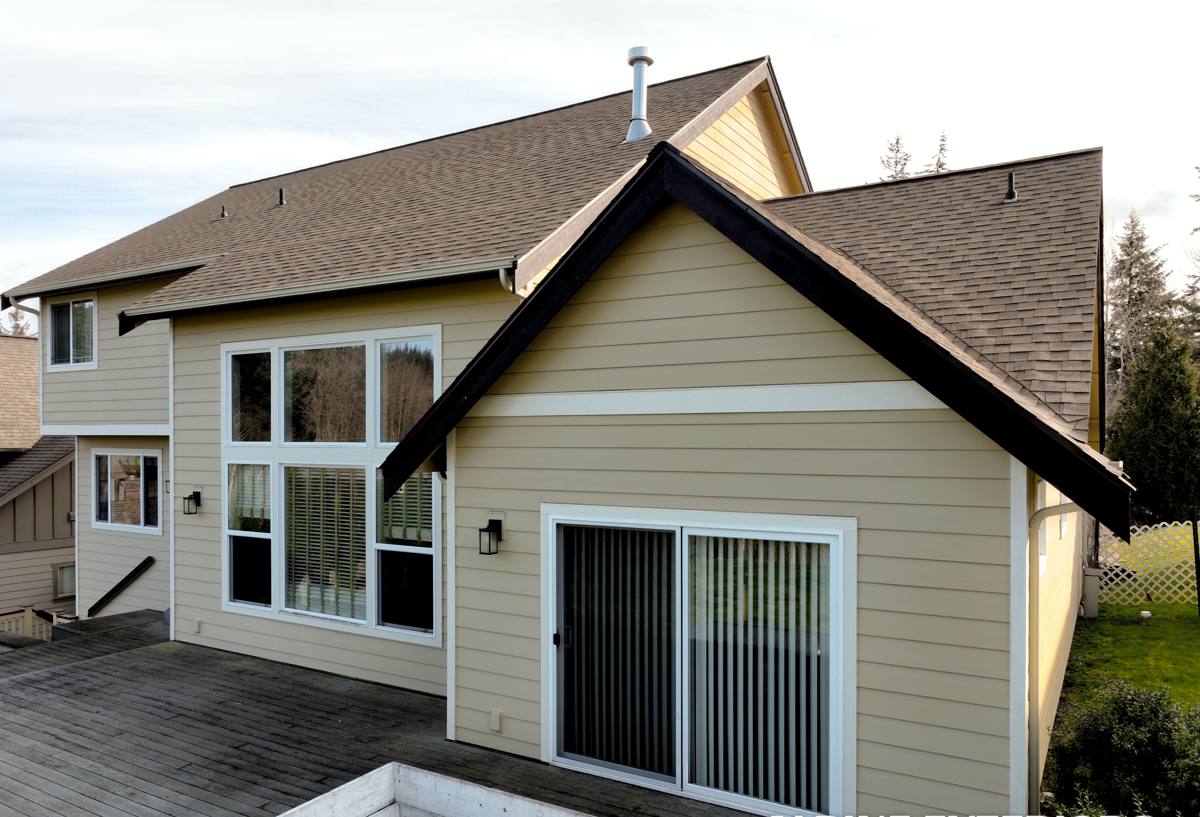
What Local Homes Actually Need From a Window
Before we talk product lines, it helps to be clear about what a window in this part of Whatcom County is actually being asked to do:
- Shed wind-driven rain without relying on caulk alone to keep water out
- Resist corrosion on hardware, screens, and cladding from salt-influenced air
- Hold a tight seal through repeated wet/dry and freeze/thaw cycling each winter
- Discourage moss and algae growth on sills and horizontal surfaces
- Keep condensation off interior glass during our long cool, damp stretches
- Perform for 20+ years without the frame degrading from constant moisture exposure
A window that checks these boxes on paper but is installed with generic, one-size-fits-all flashing and sealant will still fail early here. The product and the installation have to be matched to the site.
Frame Materials — What Holds Up in This Climate
We install several frame materials, and each has a real trade-off. We don't push one product line as the answer for every home; we size the choice to the home's exposure, budget, and how it's being used.
| Material | Moisture & Salt-Air Behavior | Maintenance | Typical Fit |
|---|---|---|---|
| Vinyl | Won't corrode or rot; performs well in coastal-influenced air | Low — occasional cleaning | Budget-conscious replacements, rental properties |
| Fiberglass | Excellent — dimensionally stable through wet/dry cycling, resists warping | Low | Homes with heavy rain and temperature swing exposure |
| Wood-clad (aluminum or fiberglass exterior) | Good if cladding and flashing details are correct; the wood core is protected from weather | Moderate — interior wood may need periodic finish work | Homes wanting a traditional wood interior look |
| Solid wood, unclad | Requires diligent upkeep in this climate; moisture exposure at end grain and sills is the main failure point | High | Historic-style homes where owners commit to regular maintenance |
| Aluminum, uninsulated | Conducts cold and can sweat/condense in our damp winters; thermally broken versions perform much better | Low | Modern designs, sunrooms, thermally broken units only |
For most Columbia homes we lean toward vinyl or fiberglass frames with argon-filled, low-E glazing, simply because they shrug off the salt air and rain exposure with the least ongoing maintenance. Where a homeowner wants the look of real wood on the interior, wood-clad units let us keep that appearance while putting a weather-resistant material on the exterior face that actually meets the weather.
Glazing Choices That Matter Here
Double-pane, argon-filled, low-E glass is the baseline we recommend for this area — it cuts condensation risk on cool, humid days and helps with heating costs through our long wet season. Triple-pane is worth discussing for north-facing rooms or homes closer to the water where wind exposure is higher, but it adds weight and cost, so we size that recommendation to the specific opening rather than specifying it across the board.
The Installation Details That Actually Prevent Leaks
Most window failures we're called out to repair aren't a bad window — they're a window installed without the flashing and drainage details that this climate demands. Custom work means getting these right for the specific opening, not applying a generic checklist:
Flashing and Water Management
Every opening gets a sill pan or sloped sill flashing so any water that gets past the exterior seal drains back out instead of pooling against the framing. Head flashing and side flashing are integrated with the home's existing weather-resistive barrier in proper shingle-lap order — water always has to be directed down and out, never trapped behind the window.
Sealant Is a Backup, Not the Primary Barrier
Caulk and sealant fail over time, especially with the wet/dry cycling typical of a Whatcom County winter. We treat sealant as a secondary defense behind proper flashing and drainage, not the main line of protection. A window that depends entirely on a bead of caulk to stay dry is a window that will eventually leak.
Fastening and Shimming for True, Square Openings
Older and settled homes rarely have perfectly square openings. We shim and fasten to bring the window into true regardless of what the surrounding framing is doing, so the sash operates smoothly and the seal compresses evenly all the way around — an uneven seal is a guaranteed draft and eventual leak point.
Insulation Without Overfilling
The gap between the window frame and the rough opening gets filled with a low-expansion foam or backer rod and sealant — never packed tight with fiberglass, which does little to stop air movement, and never overfilled with high-expansion foam, which can bow the frame and bind the sash.
Our Process
- On-site assessment. We measure every opening individually — no assuming a standard size — and check for rot, settling, or drainage issues in the existing framing before quoting anything.
- Product selection. We walk through frame material, glazing, and hardware options based on the exposure of that specific wall (south and west-facing walls near the water usually need more rain resistance than sheltered north walls).
- Custom fabrication or ordering. Non-standard openings get built-to-size units rather than trim-to-fit compromises.
- Removal and inspection. When we pull the old window, we inspect the sill and framing for hidden moisture damage — common in this climate — and repair it before anything new goes in.
- Installation with full flashing detail. Sill pan, flashing integration, shimming, low-expansion insulation, and sealant, in that order.
- Interior and exterior finish. Trim, caulk lines, and touch-up work finished to match the home.
- Walkthrough. We operate every sash with you and point out anything you should watch for during the first heavy rain.
Signs Your Current Windows Are Already Failing
Because this climate hides moisture problems behind trim and siding, window failure often shows up as small symptoms long before there's an obvious leak. Worth checking for:
- Fogging or condensation trapped between panes (a sign the seal has failed)
- Soft or discolored wood at the sill or interior trim
- Moss or algae buildup on the exterior sill that keeps coming back
- Drafts you can feel with a hand near the frame on a windy day
- Sashes that stick, won't stay open, or don't latch flush anymore
- Peeling paint or bubbling finish on interior trim near the glass
- Noticeably higher heating bills without another clear cause
Any one of these on its own isn't necessarily an emergency, but two or more on the same window usually means water is already getting into the frame or wall cavity.
Cost Factors to Expect
Every custom window job prices out differently, but the variables are consistent. Rather than quote a number that won't apply to your home, here's what actually drives the range:
| Factor | Why It Matters |
|---|---|
| Opening size and shape | Non-standard or oversized openings require custom fabrication rather than stock units |
| Frame material | Vinyl is typically the most economical; fiberglass and wood-clad cost more upfront but often less over time in maintenance |
| Number of window panes and glazing package | Triple-pane and specialty low-E coatings add cost but pay back in comfort and reduced condensation |
| Condition of the existing opening | Hidden rot or framing damage found during removal adds repair scope beyond the window itself |
| Access and site conditions | Upper-story or hard-to-access openings take more labor time |
| Trim and finish work | Matching existing interior or exterior trim profiles can add finish carpentry to the job |
Why a Crew That Already Works Columbia Matters
We already know how this specific stretch of Whatcom County behaves — which walls take the worst of the driving rain, how fast moss reestablishes on a north-facing sill, and what the salt-influenced air does to hardware that isn't rated for it. That local knowledge shows up in small decisions during a job: which flashing detail to prioritize on a west wall, when triple-pane is worth the added cost versus when it isn't, and which frame materials are worth the extra upfront spend on a home this close to the water. A crew installing windows here for the first time is learning these lessons on your house. We'd rather bring the lessons with us.
Maintenance That Extends the Life of a Custom Window
A properly installed window in this climate still benefits from basic upkeep:
- Clear debris and moss from sills and tracks each season, especially after fall leaf drop
- Check exterior caulk lines annually and touch up any cracking before winter rains set in
- Operate every sash a few times a year so hardware doesn't seize from disuse
- Watch for early condensation between panes — it's cheaper to address a failing seal than a rotted frame
If you're weighing custom windows for a home in Columbia or elsewhere around Sudden Valley, we're happy to take a look and walk through what your specific openings actually need — no pressure, no generic upsell. Use the form below to request a free estimate.