 Sudden Valley
 Deck Building in Acme: What the Climate Actually Demands
Acme sits in one of the wetter, greener pockets of Whatcom County, and any deck built here has to earn its keep against a long, damp season rather than a few weeks of summer rain. Homes in and around Acme tend to be surrounded by mature trees, which means more shade, more standing moisture on deck boards, and a steady supply of organic debris that feeds moss and algae if a deck isn't built and finished to shed water properly. Add in the driving rain that comes through this part of Washington for much of the year, and you have a climate that punishes any shortcut in framing, fastening, or finishing.
We've built and repaired decks throughout this stretch of Whatcom County long enough to know that the decks which last aren't the ones with the fanciest railings — they're the ones where the framing was pitched correctly, the ledger board was flashed right, and the decking material was chosen with this specific climate in mind, not a showroom in a drier region.
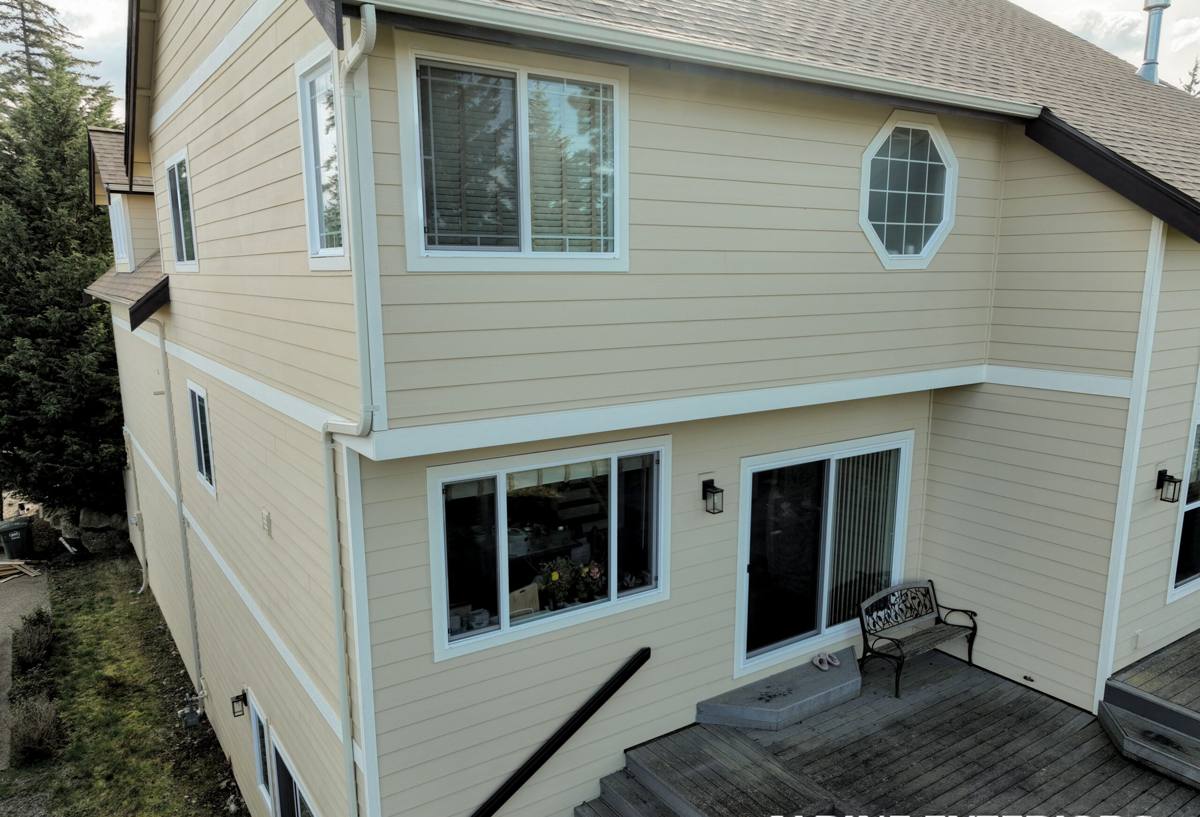
Why a Generic Deck Build Doesn't Work Here
A deck design that performs fine in a dry inland climate can fail quietly in Acme within a few seasons. The problems we see most often on decks that weren't built for this environment:
- Ledger boards that weren't flashed or sealed properly, letting water track into the house framing behind the deck
- Joists and beams with no gap or drainage path, trapping moisture and speeding up rot from the inside out
- Decking laid tight with no room to expand, cup, or shed water, which turns into standing puddles and moss
- Under-deck areas left dark, damp, and unventilated — a moss and mildew factory shaded by tree cover
- Fasteners and hardware that aren't rated for constant moisture exposure, leading to rust streaks and loosening boards
None of these are exotic failures. They're the predictable result of building a deck the same way you'd build one somewhere with a dry summer and a mild, short winter. Whatcom County isn't that climate, and Acme's tree cover and moisture load make it less forgiving than even nearby lower-elevation neighborhoods.
What a Properly Built Deck Looks Like in Acme
Framing and Structure
We frame decks with pressure-treated lumber rated for ground contact where posts and beams are involved, and we pay close attention to joist spacing and beam sizing so the structure doesn't flex or sag once it's carrying furniture, planters, and foot traffic in wet, swollen wood conditions. Every ledger connection to the house gets proper flashing and a water-shedding detail — this is the single most common failure point we find when we're called out to repair someone else's deck, and it's the easiest to get right the first time.
Drainage and Airflow
Water needs somewhere to go. We build in consistent decking gaps, pitch the frame slightly away from the house, and where the site allows it, keep the underside of the deck ventilated rather than boxed in tight. A deck that can dry out between rain events sheds moss and mildew far better than one that stays damp for days at a time under a shade canopy.
Fasteners and Hardware
We use coated or stainless fasteners and structural hardware rated for exterior, high-moisture use. Cutting corners here shows up as rust bleed and loosening connections within a couple of wet seasons — a cheap place to save money that costs a lot more later.
Decking Material Choices for This Climate
There's no single "best" decking material for every home — it depends on your budget, how much maintenance you want to take on, and how much shade and moisture your specific lot gets. Here's how the common options actually perform in a climate like Acme's:
| Material | Moisture & Moss Behavior | Maintenance | Typical Lifespan Here |
|---|---|---|---|
| Pressure-treated wood | Absorbs moisture readily; needs a sealed finish to resist moss and gray staining | Annual cleaning and periodic re-staining or sealing | 15–20 years with upkeep |
| Cedar | Naturally moisture- and insect-resistant, but still needs finish protection in constant shade | Periodic cleaning and re-oiling to keep color and resistance | 15–25 years with upkeep |
| Composite decking | Doesn't absorb water like wood, but can still grow surface moss/algae in deep shade if not cleaned | Occasional washing; no staining or sealing required | 25–30+ years, manufacturer-dependent |
| PVC decking | Fully non-absorbent; best resistance to moisture-driven rot and staining | Lowest maintenance; occasional cleaning | 25–30+ years, manufacturer-dependent |
For heavily shaded lots — which describes a lot of Acme properties — we lean toward recommending composite or PVC decking when the budget allows, simply because they hold up better against the constant moisture and organic debris without the upkeep cycle wood requires. That said, plenty of homeowners are happy maintaining a cedar or treated wood deck if they're willing to clean and reseal it on a schedule, and we'll build either one to last if that's your preference.
Railings, Stairs, and Finish Details
Railings and stair stringers see the same moisture exposure as the decking itself, sometimes worse, since they don't always get the same airflow. We match railing material to the decking choice — wood railings on a wood deck, composite or metal railing systems paired with composite or PVC decking — and we make sure stair stringers are either pressure-treated or protected hardware-side so the connection points don't become the first thing to fail.
Fascia boards, post wraps, and any trim details get the same moisture-first treatment. It's common for a deck to look finished and clean while the fascia board hides moisture damage behind it — we build so that doesn't happen, and we check it on repair calls too.
Our Deck Building Process
- On-site assessment: We walk your Acme property, look at drainage, tree cover, sun exposure, and how the deck will tie into the house, and talk through what you actually want to use the space for.
- Design and material selection: We go over decking, railing, and layout options honestly, including the maintenance trade-offs of each, so you're choosing based on real information, not a sales pitch.
- Permitting: Most new decks and many rebuilds in Whatcom County require a permit, and we handle that process as part of the job.
- Site prep and framing: Footings, posts, beams, and joists go in with the drainage and ventilation details built in from the start, not added as an afterthought.
- Decking, railing, and finish work: Boards, railings, stairs, and any trim get installed with attention to the gaps, flashing, and fastener choices that actually matter in this climate.
- Final walkthrough: We go over the finished deck with you, including basic care guidance specific to whatever material you chose.
Repairs, Rebuilds, and Moss Removal
Not every project in Acme is a new deck. We also get called for decks that are structurally sound but suffering from years of moss buildup, or decks where the framing needs attention but the homeowner wants to keep the existing footprint. In those cases we assess what's actually salvageable — ledger flashing and framing issues get fixed properly rather than patched, and we'll tell you plainly if a full rebuild is the more honest long-term answer versus a repair that just delays the same problem.
Moss and algae buildup on an otherwise sound deck is usually a maintenance and drainage issue, not a materials failure, and it's often fixable without replacing the whole structure. We'll tell you which situation you're actually in before any work starts.
A Quick Homeowner Checklist
Before you call anyone about a new deck or a deck repair in Acme, it helps to know what to look at first:
- Is there visible moss, dark staining, or soft spots anywhere on the decking or stairs?
- Does water pool on the deck surface after rain instead of draining off the edges?
- Is the area where the deck meets the house showing any staining, gaps, or soft trim?
- Are railing posts or stair stringers loose or wobbly when you push on them?
- Is the underside of the deck damp, dark, or showing rust streaks from fasteners?
Any one of these is worth a look before it becomes a bigger repair, especially heading into another wet Whatcom County winter.
Why Hire a Crew That Already Works in Acme
Acme isn't a big city market, and that's exactly why local building experience matters here. We already know how shaded, tree-covered lots in this part of the county behave, how much moisture load a deck needs to be built to handle, and which material and framing choices actually hold up versus which ones look fine on day one and fail quietly by year three. That's not something you get from a crew that mostly builds decks in a drier, more open part of the state and treats Acme as just another stop on the route.
If you're planning a new deck, a rebuild, or you want an honest look at a deck that's showing its age, we're happy to come out, take a real look at your site, and give you a straightforward estimate with no pressure attached.