 Sudden Valley
 Building a Deck That Actually Holds Up in Cordata
A deck in Cordata has a harder job than most homeowners realize. It's not just outdoor furniture on posts — it's a structure that sits exposed to Whatcom County's wet season for months at a stretch, catches salt-laden air rolling in off the water, and spends a good part of the year fighting moss and algae for control of its own surface. A deck built the way it would be built in a dry climate simply doesn't last here. One built with this specific area's weather in mind can go decades without becoming a maintenance headache or a safety liability.
We build and repair decks for homeowners around Sudden Valley and the surrounding Whatcom County communities, and Cordata jobs come with a consistent set of demands: proper drainage under and around the structure, fastener and framing choices that resist corrosion, and surface materials that don't turn into a skating rink under a layer of wet moss every winter. This page covers what a correctly built deck looks like for this specific area, and what our process involves from first look to final walkthrough.
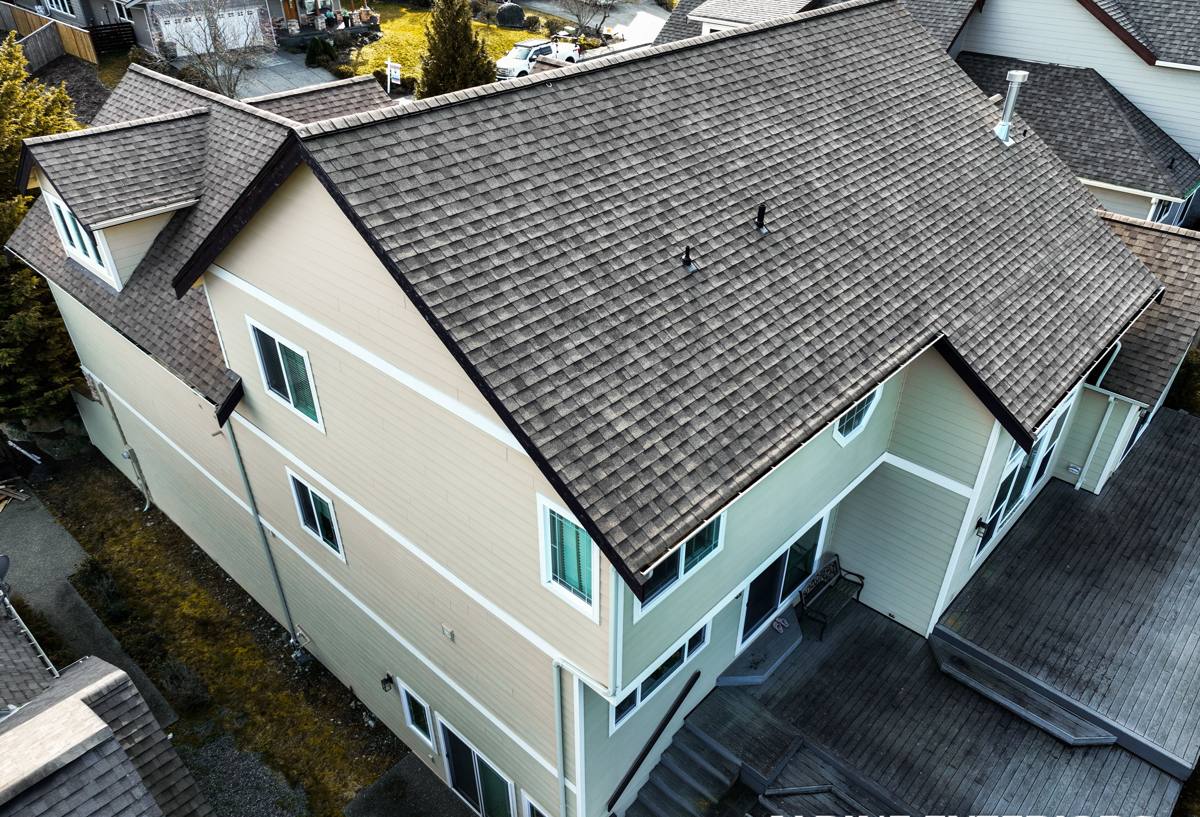
What This Climate Does to a Deck Over Time
Three conditions do most of the damage to decks in this part of Washington, and they compound each other:
Driving Rain
Long stretches of rain, often blown sideways by wind off the water, get water into places a dry-climate deck design never has to account for — end grain, fastener heads, the underside of ledger boards, and any spot where two pieces of material meet without a gap for water to escape. Standing water and trapped moisture are the single biggest reason decks fail early, not sun exposure or foot traffic.
Salt Air
Airborne salt accelerates corrosion in anything metal — fasteners, brackets, joist hangers, railing hardware. A fastener that would last thirty years inland can start rusting and staining the surrounding wood in a fraction of that time here. Once a fastener starts to corrode, it loses holding strength quietly, long before it looks obviously bad.
Long Moss Season
Cool, damp, and shaded conditions for much of the year are exactly what moss and algae need to take hold. On a deck surface, moss isn't just cosmetic — it holds moisture against the wood or composite decking, and it turns stairs and walking surfaces slick and genuinely dangerous, especially on sloped lots common around Sudden Valley and Cordata.
None of these are exotic problems. They're the normal, predictable behavior of Whatcom County weather on an outdoor structure. The fix isn't complicated either — it's building with the right materials, the right details, and the right slope and airflow from day one.
What a Correctly Built Deck Includes
A deck that's going to hold up here isn't defined by one product choice — it's a set of decisions that all work together.
- Corrosion-resistant fasteners and hardware throughout, including hidden fastener systems and joist hangers rated for exterior and coastal-influenced exposure — not just at the visible surface.
- Proper flashing at the ledger board where the deck attaches to the house, since this is the single most common point of hidden rot on older decks.
- Gapped decking boards and correct joist spacing so water sheds through the surface instead of pooling on top of it.
- Slope built into the framing (not relied on from the decking alone) to move water away from the house foundation.
- Ventilation underneath the deck so the framing can dry out between rain events instead of staying damp for weeks at a time.
- Surface material chosen for slip resistance when wet, not just appearance in a showroom.
Decking Material Choices for This Area
There's no single "right" material for every Cordata project — it depends on budget, how much upkeep you want to do, and how the deck sits relative to shade, slope, and sun exposure. Here's how the common options actually compare under local conditions:
| Material | Moisture & Moss Resistance | Maintenance | Typical Lifespan Here |
|---|---|---|---|
| Pressure-treated lumber | Good if sealed regularly; end grain still vulnerable | Annual cleaning and re-sealing recommended | 15–20 years with upkeep |
| Cedar | Naturally moderate rot resistance; still needs sealing | Periodic cleaning and finish maintenance | 15–25 years with upkeep |
| Composite decking | Very good; doesn't absorb water like wood | Low — periodic washing to clear moss/algae film | 25–30+ years, manufacturer-dependent |
| PVC decking | Excellent; fully moisture-resistant | Lowest — occasional rinse | 25–30+ years, manufacturer-dependent |
Composite and PVC decking have become popular around Sudden Valley specifically because they take the moss-and-moisture cycle mostly out of the maintenance equation. Wood decks aren't a bad choice — they cost less up front and plenty of homeowners like the look — but they do ask for real, ongoing maintenance to keep pace with the driving rain and moss season here. We'll walk you through the honest trade-offs for your specific project rather than push one product line.
Framing and Substructure — Where Most Deck Failures Actually Start
Homeowners often focus on the decking surface because it's what they see, but the framing underneath is what determines whether a deck is safe. In this climate, the framing takes the worst of the moisture exposure because it's shaded, low to the ground, and slower to dry than the exposed top surface.
When we build or rebuild a deck in Cordata, the substructure gets the same attention as the visible surface:
- Joists and beams sized and spaced to code, with load requirements specific to the deck's use (furniture, hot tub, gathering space)
- Post bases set to keep wood off standing water and concrete
- Metal connectors matched to the fastener and lumber treatment being used, to avoid galvanic corrosion between dissimilar metals
- Footings sized for our soil conditions and frost depth
A deck that looks great on top but was framed with mismatched hardware or undersized footings is a problem waiting for the wrong rainy season to show up.
Our Process for a Cordata Deck Project
1. On-Site Assessment
We look at the whole picture, not just the footprint you have in mind — slope of the yard, drainage patterns, sun and shade exposure, proximity to the house, and (for replacement projects) the condition of any existing structure.
2. Design and Material Selection
We talk through decking material, railing style, and layout based on how you'll actually use the space, then give you a clear, honest breakdown of cost and maintenance trade-offs for each option — no upsell on materials that don't fit your budget or your priorities.
3. Permitting
Deck projects above certain sizes or heights typically require a permit in Whatcom County. We handle that process so you're not the one tracking down inspections.
4. Construction
Framing first, with every connection point built to resist the moisture and salt exposure specific to this area, then decking, railing, and stairs. We build in the drainage and ventilation details from the start — they're far harder to add after the fact.
5. Final Walkthrough
We go over the finished deck with you, including basic care guidance specific to whatever material you chose, so you know what upkeep (if any) to expect going into the wet season.
Why Local Experience Matters for This Job
A deck built by a crew that's never dealt with a full Whatcom County rainy season will make decisions that look fine on paper and fail in practice — undersized ventilation gaps, standard fasteners in a salt-air zone, decking laid flat with no real drainage slope. We build decks in this specific area regularly, which means we've already seen how these structures age here, not just how they look on installation day.
That local track record shows up in small decisions: which hardware actually holds up near the water, how much slope a deck really needs on a Cordata lot, and which materials are worth the extra upfront cost because they'll save you a moss-scrubbing routine every spring. None of that comes from a manufacturer's spec sheet — it comes from building and maintaining decks in this exact climate.
Signs Your Existing Deck Needs Attention
If you already have a deck, a few warning signs are worth acting on before they become a safety issue:
- Soft or spongy spots underfoot, especially near the house or stair landings
- Rust staining streaking down from fastener heads or hardware
- Persistent moss or algae that comes back within weeks of cleaning
- Gaps opening up between the ledger board and the house siding
- Railings that feel loose or flex under pressure
- Standing water that doesn't drain within an hour or two after rain stops
Any of these can usually be addressed with targeted repair rather than a full rebuild, but they're worth a professional look before the next wet season.
Get a Straight Answer About Your Deck Project
Whether you're planning a new deck, replacing an aging one, or just want an honest assessment of what shape yours is in, we're glad to take a look. There's no pressure and no obligation — just a clear read on what your Cordata property needs and what it would take to get it done right. Fill out the form below for a free estimate.