 Sudden Valley
 Asphalt Shingle Roofing Built for Deming's Weather, Not Just Any Weather
Deming sits in a stretch of Whatcom County where the roof over your head does real work. You're close enough to the water and the lowland river valleys to catch salt-laden air off the Sound, far enough into the foothills to get heavier rain shadows off the Cascades, and shaded enough by fir and cedar canopy in a lot of yards that moss gets a head start every fall. An asphalt shingle roof installed the same way it would be in a dry inland town doesn't hold up the same way out here. It needs the right materials, the right ventilation, and the right underlayment detailing from day one.
We work on roofs throughout the Sudden Valley area, and Deming is part of that regular route. That matters more than it sounds — a crew that already knows how moss builds up on north-facing slopes in this specific pocket of the county, how much wind-driven rain a roof edge takes off the open fields nearby, and which valleys and penetrations fail first on older Whatcom County homes isn't guessing. They're applying what they've already seen work and fail on roofs a few miles from yours.
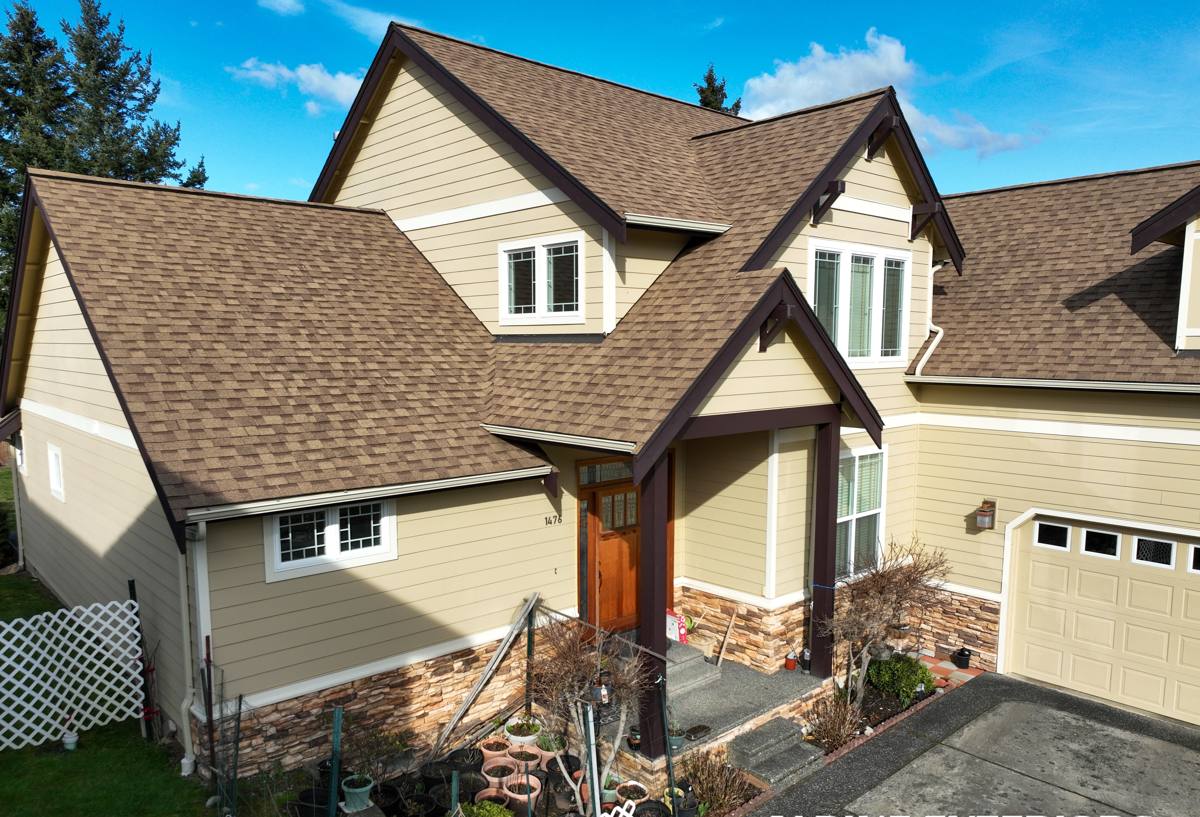
What Deming's Climate Actually Does to a Shingle Roof
Moss and Organic Growth
Whatcom County's long wet season, combined with tree cover common on Deming properties, means moss isn't a cosmetic nuisance — it's a moisture problem. Moss holds water against the shingle surface far longer than open air would, and its root structure works into the granule layer and eventually the mat underneath. Left unchecked over several seasons, moss growth is one of the leading reasons asphalt shingle roofs in this area fail early, well before their rated lifespan.
Driving Rain and Wind
Storms coming off the Sound or funneling through the valley don't always fall straight down. Wind-driven rain gets pushed sideways under shingle tabs, into exposed nail heads, and along poorly sealed valleys and flashing. A roof that only handles vertical rainfall well will still leak in a sideways storm if the underlayment and flashing details weren't built for it.
Salt Air and Material Aging
Even well inland from the immediate coastline, salt-bearing air moving through the region accelerates the breakdown of metal flashing, fasteners, and vent components faster than it would in a dry climate. Cheap or mismatched metal on a roof here corrodes years before the shingles themselves are due for replacement, and once flashing fails, water finds its way in regardless of how good the shingles are.
Temperature Swings and Freeze-Thaw
Whatcom County doesn't get brutal winters, but it gets enough freeze-thaw cycling — cold nights followed by wet, warmer days — to stress any water that's found its way under a shingle. Trapped moisture that freezes and expands is what turns a small leak into a rotted deck.
What a Correct Asphalt Shingle Job Looks Like Out Here
A roof that's actually built for this climate isn't about buying a fancier shingle. It's about getting every layer underneath the shingle right, because that's where most Deming-area roofing failures actually start.
- Ice-and-water shield at eaves, valleys, and around every penetration — not just the code minimum, but extended coverage where wind-driven rain is likely to push water uphill under the shingle.
- Synthetic underlayment across the full deck, chosen for water resistance and tear strength rather than the cheapest roll available.
- Balanced attic ventilation — intake at the eaves and exhaust at the ridge — so moisture from inside the house doesn't condense against the underside of the roof deck and rot it from below.
- Corrosion-resistant flashing at every valley, chimney, skylight, and wall intersection, sized and lapped so water sheds outward instead of finding a seam.
- Proper nailing pattern and shingle exposure matched to the manufacturer's wind rating, not just "close enough."
- Starter strip and drip edge installed correctly at every eave and rake, which is one of the most commonly skipped details on lower-quality installs.
Skip any one of those and the shingles on top can look fine for a few years while the roof underneath is already failing.
Choosing the Right Shingle for a Deming Roof
Not every asphalt shingle product handles this region's moss, moisture, and wind the same way. We install algae-resistant shingles as standard on Deming homes — the copper- or zinc-infused granules built into the shingle actively slow moss and algae regrowth, which matters far more here than in a drier climate. Beyond that, the right product usually comes down to matching the shingle's wind rating and weight to your roof's exposure and slope, and matching its warranty structure to how long you plan to stay in the home.
| Shingle Type | Best For | Trade-Offs in This Climate |
|---|---|---|
| 3-Tab Standard | Budget-conscious re-roofs, simple roof lines | Lower wind rating and thinner mat; moss and algae resistance usually not included unless specified |
| Architectural / Dimensional | Most Deming homes; the current standard for durability and appearance | Heavier mat and better wind rating; algae-resistant granules typically standard or available |
| Premium/Designer Architectural | Steep or highly visible roof planes, longer-term ownership | Best wind and impact ratings, longest warranties; higher upfront cost |
For most Deming properties, a mid-to-upper architectural shingle with algae resistance strikes the right balance between upfront cost and how much maintenance and premature aging you avoid over the roof's life.
How We Approach a Deming Roofing Project
1. On-Site Assessment
We walk the roof and the attic, not just the roof. Ventilation problems, past leak staining, deck condition, and existing flashing all get checked before we talk products. A roof estimate that skips the attic is an incomplete estimate.
2. Honest Scope and Options
We'll tell you plainly if you're a candidate for a straightforward re-roof over a sound deck versus a full tear-off, and what's driving that recommendation — deck condition, layer count, or code requirements. We won't upsell work the roof doesn't need, and we won't downplay work it does.
3. Tear-Off and Deck Repair
Old shingles come off down to the deck so we can actually see what's underneath — soft spots, past water damage, or nailing issues that a re-cover would just bury. Any damaged sheathing gets replaced before anything new goes down.
4. Underlayment, Flashing, and Ventilation First
This is where a roof's real weather resistance is decided, and it's where we spend the time other crews are tempted to rush. Ice-and-water membrane, synthetic underlayment, new flashing, and a properly balanced intake/exhaust system go in before a single shingle is nailed.
5. Shingle Installation
Installed to manufacturer spec for nailing pattern, exposure, and starter courses — the details that determine whether your wind and weather warranty actually holds up if you ever need it.
6. Final Walkthrough
We walk the finished roof and the property with you, including cleanup, before we consider the job done.
Signs a Deming Roof Needs Attention
- Moss visible on north- or shade-facing slopes, especially in mats rather than scattered patches
- Granules collecting in gutters or at downspout outlets
- Shingle edges curling, cupping, or lifting at the tabs
- Dark streaking that doesn't wash off with light rain
- Daylight visible through the roof deck from inside the attic
- Soft or spongy spots when walked, or sagging along the roof line
- Flashing around chimneys, skylights, or vents that looks rusted, lifted, or gapped
Any one of these on its own isn't necessarily an emergency, but they're worth a look before the next wet season turns a small issue into a deck repair.
Maintenance That Actually Matters Here
Asphalt shingle roofs in Whatcom County last longer with a small amount of regular attention rather than none at all. Keeping gutters clear so water doesn't back up under the eaves, having moss treated or gently removed before it establishes a root mat, and trimming back tree limbs that keep a section of roof shaded and damp all season all go a long way. None of this is expensive compared to what an early full roof failure costs.
Why a Local Crew Makes a Difference
Roofing crews unfamiliar with this area sometimes treat Deming like any other job site — same underlayment spec, same ventilation assumptions, same shingle line regardless of tree cover or exposure. A crew that regularly works the Sudden Valley area already knows which roof orientations in this pocket of Whatcom County hold moss longest, how much wind exposure a given roof line actually sees, and which detailing mistakes show up first on local homes because we've been called back to fix other crews' versions of them. That local pattern recognition is worth more than a lower bid from a crew that's never worked this stretch of the county before.
If you're weighing a repair versus a full replacement, or just want a straight read on where your Deming roof stands, we're happy to take a look. The estimate is free, there's no pressure, and you'll get a plain answer about what your roof actually needs — use the form below to get started.