 Sudden Valley
 Decks Built for Fairhaven's Coastal Conditions
Fairhaven sits close enough to the water that salt air, wind-driven rain, and long stretches of damp shade are just part of owning a home here. A deck built without those conditions in mind will show it fast — soft spots at the ledger board, black streaks on the boards, hardware that rusts before its time, and a walking surface that turns slick the moment the temperature drops. Building a deck correctly in this part of Whatcom County isn't about upgrading to the fanciest materials available. It's about matching the structure, fasteners, and finish to what the climate actually does to a deck year after year.
We build and repair custom decks for homes throughout Sudden Valley and the surrounding Whatcom County area, and Fairhaven's exposure to marine air and moisture is one of the more demanding environments we work in. That local experience shapes every recommendation we make — from footing depth to board spacing to which fasteners we trust.
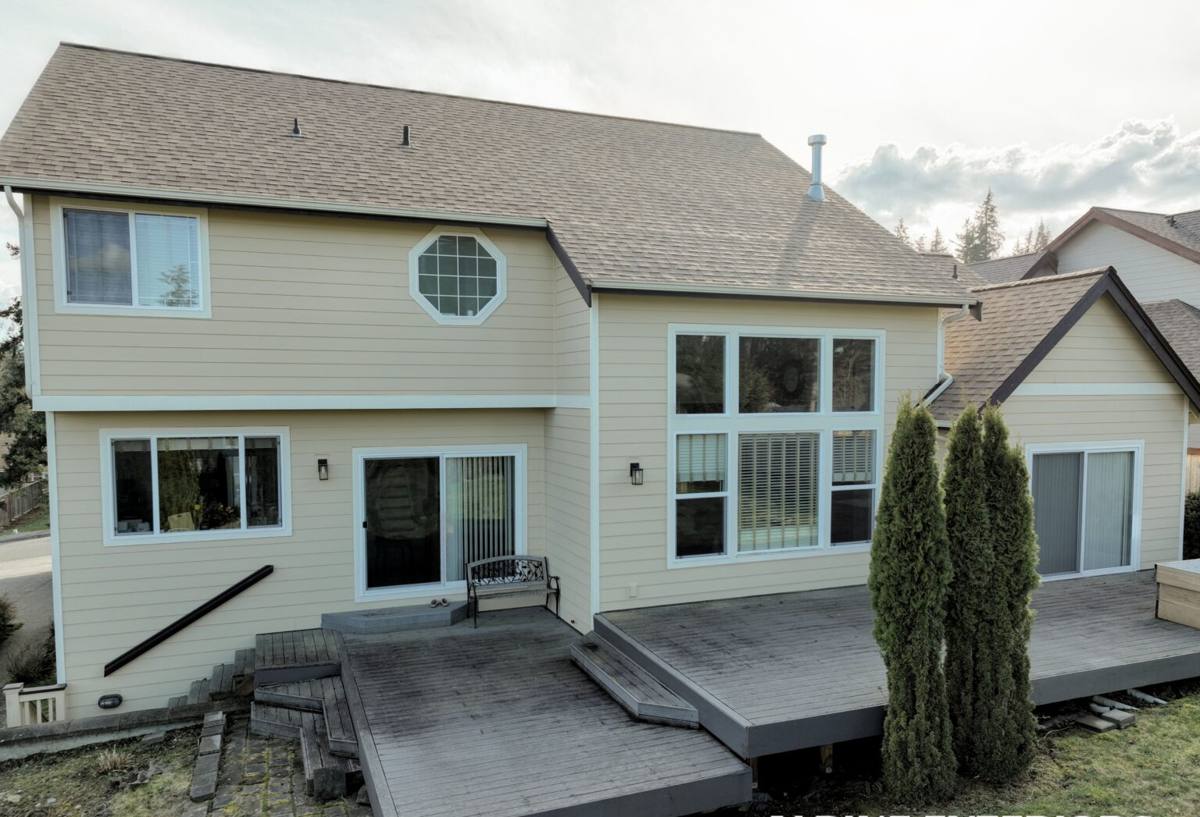
What Fairhaven's Climate Does to an Unprotected Deck
Salt Air and Metal Fatigue
Proximity to saltwater accelerates corrosion on anything metal — joist hangers, screws, bolts, and railing brackets included. Standard galvanized hardware can start showing rust streaks within a few seasons in a salt-air environment, and once hardware corrodes, it weakens long before the wood around it shows obvious damage. This is one of the most common issues we find when we're called out to look at a deck that's "just a few years old" but already has staining or a spongy feel near connection points.
Driving Rain and Moisture Intrusion
Wind-driven rain doesn't just fall straight down — it gets pushed sideways into ledger boards, under poorly flashed connections, and into end grain that isn't sealed. Once moisture gets trapped against a house band board or inside a joist, rot can develop out of sight, under the decking, long before it's visible from above.
Moss, Algae, and a Long Damp Season
Whatcom County's extended wet season means decks here spend months at a time in shade and standing moisture, which is exactly what moss and algae need to take hold. Beyond the cosmetic issue, a moss-covered deck surface is a genuine slip hazard, and moss holds moisture against the wood surface far longer than open air would, speeding up wear on the board itself.
What a Correctly Built Deck Requires Here
A deck that's going to hold up to Fairhaven conditions needs attention in a few specific places that a lower-cost build often skips:
- Proper ledger board flashing that sheds water away from the house rather than trapping it against the band board
- Corrosion-resistant fasteners and connectors rated for the moisture and salt exposure typical of this area, not generic interior-grade hardware
- Footings set to the correct frost depth and bearing on solid, undisturbed soil — not just poured on top of whatever was already there
- Adequate airflow underneath the deck so the framing can dry out between rain events instead of staying damp for weeks
- Board spacing and drainage detailing that lets water run off the surface instead of pooling
- A surface material and finish chosen with moss and algae growth in mind, not just appearance on install day
Decking Material Options for This Environment
There's no single "best" decking material for every home — the right choice depends on budget, maintenance appetite, and how much sun versus shade the deck actually gets. Here's how the common options compare for a Fairhaven property:
| Material | Moisture & Moss Resistance | Maintenance | Typical Lifespan |
|---|---|---|---|
| Pressure-treated wood | Good if sealed regularly; end grain and fasteners are the weak points | Annual cleaning and re-sealing recommended | 15-20 years with upkeep |
| Cedar | Naturally moisture-resistant, but surface still needs treatment against algae | Periodic staining/sealing to maintain color and protection | 15-20 years with upkeep |
| Composite decking | Very good — dense, low-absorption surface resists moisture and staining | Occasional washing, no sealing or staining needed | 25-30 years, manufacturer-dependent |
| PVC/capped polymer | Excellent — fully sealed surface, best resistance to moss and algae staining | Lowest maintenance of the group | 25-30+ years, manufacturer-dependent |
We don't push homeowners toward the most expensive option by default. If you want the traditional look and feel of real wood and are willing to keep up with sealing every year or two, a well-built cedar or pressure-treated deck can serve you well in this climate. If low maintenance matters more than budget, composite or capped polymer decking removes most of the moss and moisture headaches at the cost of a higher upfront price.
Framing and Structure: Where Most Deck Failures Actually Start
Most deck problems we're called to fix aren't failures of the decking boards themselves — they're failures underneath, in the framing, connections, and footings that homeowners never see. A deck surface can look brand new while the structure underneath is quietly deteriorating. That's why we spend as much time on the parts of the deck you'll never look at as we do on the parts you'll walk on:
Ledger Board Connection
This is where the deck attaches to the house, and it's the single most common source of hidden water damage. Correct flashing here — installed in the right order relative to the house's own weather barrier — is non-negotiable in a climate that gets this much driving rain.
Footings and Posts
Footings need to reach below frost depth and bear on soil that hasn't been disturbed or backfilled. Post bases should keep the post itself off the concrete and out of standing water, since end grain sitting in moisture is one of the fastest ways to rot a post from the bottom up.
Joists and Hardware
Joist hangers, structural screws, and any exposed metal connectors should be rated for the exposure they're going to see. In a salt-air, high-moisture environment, cutting corners on hardware grade is one of the most expensive mistakes to fix later, because it usually means opening the deck back up.
Railings, Stairs, and Surface Details
Railings and stairs take a different kind of abuse — they're handled constantly, exposed on all sides, and often the first place people notice wear. Metal railing components need the same corrosion resistance as the structural hardware underneath the deck. Stair treads benefit from a textured or grooved surface, since a smooth board that's fine in July can turn dangerously slick during the long wet stretch of the year. We also pay attention to gaps and drainage at stair landings, since these low, often-shaded areas are prone to moss buildup if water has nowhere to go.
Our Process for a Fairhaven Deck Project
- On-site assessment — we look at sun exposure, drainage patterns, existing structure (for rebuilds), and how the deck will actually be used before recommending anything
- Design and material selection — we walk through the tradeoffs in the table above based on your budget and maintenance preferences, not a one-size-fits-all pitch
- Permitting — most deck work in this area requires permits, particularly for anything attached to the house or built above a certain height; we handle this as part of the project
- Framing and structural work — footings, posts, ledger flashing, and joists installed to hold up to local moisture and salt exposure
- Decking, railing, and finish work — surface installation, railing systems, and any sealing or staining the material requires
- Final walkthrough — we go over maintenance expectations specific to the material you chose, so there are no surprises in year two or three
Maintenance That Actually Matters in This Climate
Whatever material you choose, a few maintenance habits make the biggest difference in a Fairhaven-area climate:
- Clear leaves and debris regularly, especially in shaded corners where moisture and moss build up fastest
- Rinse or lightly scrub the surface periodically during the wet season to keep algae from taking hold
- Check railing posts and stair connections annually for looseness, which can signal hardware corrosion underneath
- Re-seal or re-stain wood decking on the schedule the product actually calls for, not just when it looks faded
- Keep gutters and downspouts near the deck clear so runoff isn't dumping extra water onto or under the structure
Why It Matters to Hire a Crew That Already Works in This Area
A deck built to a generic national spec sheet often isn't built for what Whatcom County actually throws at it. Contractors who don't regularly work in coastal, high-rainfall conditions may not think twice about standard fastener grades, minimal ledger flashing, or footing depth assumptions that work fine in a drier climate but fall short here. We build and repair decks throughout the Sudden Valley and greater Whatcom County area, and that regular exposure to local conditions — the salt air, the driving rain, the long moss season — directly shapes the material and construction choices we recommend. It's the difference between a deck that looks right on installation day and one that's still structurally sound a decade later.
Get a Straightforward Estimate
If you're planning a new deck or need an honest look at one that's showing its age, we're happy to come take a look. There's no pressure and no obligation — just a straightforward assessment of what your deck needs and what it would take to get it right. Use the form below to request a free estimate.