 Sudden Valley
 Lake Whatcom's Climate Is Harder on Siding Than It Looks
Homes around Lake Whatcom sit in a pocket of Whatcom County that gets more moisture exposure than people expect. The lake itself throws humidity into the air year-round, the surrounding tree cover keeps a lot of siding in shade for most of the day, and the marine weather that moves through this part of Western Washington brings driving rain on a wind, not just straight-down rain. Add in a moss season that can run from fall through spring, and you have a set of conditions that will find every weakness in a siding product or an installation shortcut, usually within a few years, not a few decades.
This isn't a generic "siding wears out" page. It's specifically about what fiber cement siding needs to do on a Lake Whatcom home, and what a crew that works this neighborhood regularly does differently than a crew driving in from somewhere with a drier climate.
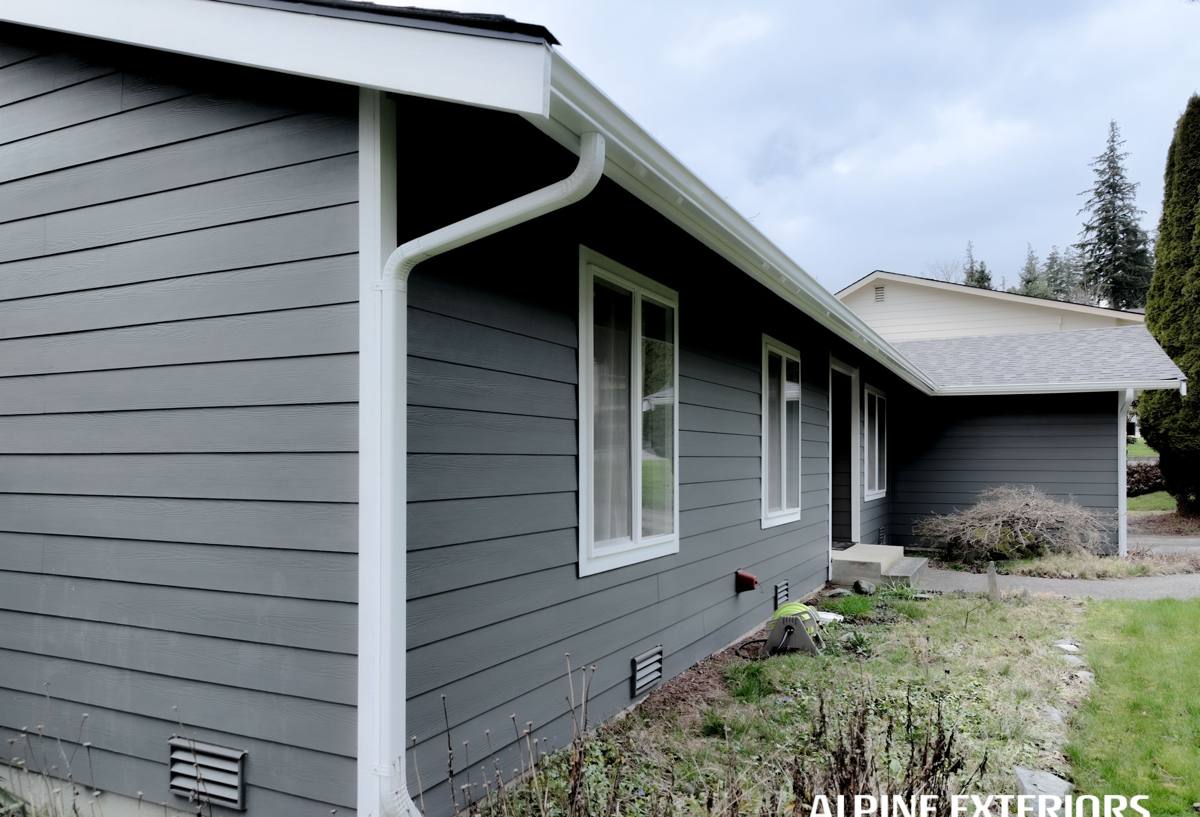
Why We Only Install James Hardie Fiber Cement
We install James Hardie products exclusively — no vinyl, no LP SmartSide, no Cemplank, no Allura, no primed wood siding. That's not a marketing position, it's a standard we hold because of what we see on lake-adjacent, shaded, high-moisture homes over time.
What Fiber Cement Handles That Other Products Struggle With
Fiber cement is non-combustible, dimensionally stable, and doesn't rely on a factory or field paint film alone to keep water out the way wood-based products do. James Hardie's ColorPlus finish is baked on and warrantied against fading and chipping in a way that field-applied paint on other substrates isn't. In a shaded, damp environment like much of Sudden Valley, that matters more than it would on a dry, sun-exposed lot, because shade means slower drying and paint film breaks down faster where it can't fully dry between rain events.
Why We Don't Install the Alternatives Here
Vinyl expands and contracts with temperature swings and can warp or gap over time, which opens paths for wind-driven rain to get behind it — a real risk on lake-facing elevations that catch weather. Wood-based and engineered wood products (including LP SmartSide) depend on an intact paint film and consistent maintenance to keep moisture out of the substrate; in a climate with this much sustained dampness and shade, that's a maintenance burden we don't think is fair to hand a homeowner. We're not saying these products fail on every home everywhere — we're saying that for this specific climate, we've standardized on the product that gives the best long-term odds with the least ongoing babysitting.
What Correct Installation Actually Involves Here
Fiber cement siding is only as good as the water management system behind it. This is where most of the difference between a siding job that lasts and one that fails early actually happens — and it's invisible once the siding is up.
Moisture Management Behind the Panels
Every install starts with a drainable weather-resistive barrier and, where the wall assembly calls for it, a rainscreen gap that lets any moisture that does get past the siding drain and dry out instead of sitting against the sheathing. On shaded, tree-covered lots around the lake, that drainage plane is doing real work most of the year — it's not a checkbox.
Flashing and Penetrations
Windows, doors, deck ledgers, hose bibs, and vent penetrations are where water actually gets in. Flashing has to be installed shingle-style — each layer overlapping the one below it — so water is always directed outward and down, never trapped. This is the detail work that separates a correct install from a fast one.
Fastening and Clearances
James Hardie specifies fastener type, spacing, and embedment for a reason — under-driven or over-driven nails, wrong fastener material, or skipped clearances at grade, roof lines, and decks all create entry points for moisture. We also hold the manufacturer's minimum clearance from grade, roofing, and horizontal surfaces, which on sloped lake lots sometimes means adjusting details other crews skip past.
Caulking and Joint Treatment
Butt joints, trim intersections, and panel seams get treated per manufacturer spec with the right sealant — not just caulked shut everywhere, since some joints are designed to allow drainage rather than be sealed solid. Sealing the wrong joint traps water instead of releasing it.
How We Run a Lake Whatcom Project
Site Assessment
We walk the home and note sun exposure per elevation, tree cover, roofline drainage, grade slope toward the foundation, and any existing moisture or moss staining on the current siding. On lake lots this often shows a clear pattern — the north and lake-facing walls need different attention than the road-facing side.
Tear-Off and Sheathing Check
Once the old siding is off, we inspect the sheathing before anything new goes up. Any soft or water-damaged sheathing gets replaced — covering it back up with new siding doesn't fix a problem, it just hides it for a while longer.
Weather Barrier and Rainscreen
We install the drainage plane and rainscreen system appropriate to the wall assembly, then flash every penetration before a single piece of Hardie board goes on.
Siding Install and Finish
Panels, fasteners, and joints go in to James Hardie's published specifications, with ColorPlus finish handled carefully to avoid touch-up paint that doesn't match the factory finish. We clean up fully and walk the job with the homeowner before we call it done.
Moss, Shade, and the Long Wet Season
Moss doesn't just grow on roofs around Lake Whatcom — it will colonize any siding surface that stays damp and shaded long enough, especially on north-facing walls tucked under tree canopy. Fiber cement doesn't feed moss the way wood does, but moss and organic buildup can still sit on any siding surface and hold moisture against it if it's never cleaned off. The difference is what happens underneath: on properly installed fiber cement with a working drainage plane, surface moss is a cosmetic problem you rinse off. On a product with a compromised paint film or trapped moisture path, the same moss buildup can be a sign of a bigger problem developing behind the wall.
| Factor | James Hardie Fiber Cement | Vinyl | Engineered Wood |
|---|---|---|---|
| Moisture tolerance in shaded, damp areas | High — non-combustible, dimensionally stable | Moderate — can warp, gaps let water behind it | Depends heavily on paint film staying intact |
| Finish longevity | Factory-baked ColorPlus, long warranty on finish | Color is through-body but can fade/chalk | Field-painted, needs recoating over time |
| Maintenance in moss/moisture-prone spots | Periodic rinse-off | Periodic rinse-off, watch for warping | Rinse plus repaint/caulk maintenance cycle |
| Fire resistance | Non-combustible | Combustible | Combustible |
Why It Matters That We Already Work This Neighborhood
A crew that only shows up in Sudden Valley once knows the manufacturer's spec sheet. A crew that works Lake Whatcom homes regularly knows which elevations on which lot orientations take the worst of the driving rain, where moss builds up fastest, and which older homes in the area were built with wall assemblies that need extra attention before new siding goes on. That local pattern recognition doesn't replace following the install spec — it's what tells us where to slow down and double-check before we get there.
What Affects the Cost of a Fiber Cement Project Here
| Cost Factor | Why It Matters on Lake Whatcom Homes |
|---|---|
| Sheathing condition | Shaded, damp walls are more likely to need sheathing repair once old siding comes off |
| Elevation and access | Sloped lake lots and tree-close walls can add scaffolding or staging time |
| Trim and detail complexity | Homes with more windows, dormers, or roof-to-wall intersections need more flashing labor |
| Product line and profile | HardiePlank lap, HardiePanel, and shingle-style profiles carry different material and labor costs |
| Color and finish | ColorPlus factory finishes vs. field-painted primed board affect both cost and long-term maintenance |
We give exact numbers only after we've walked a specific home — broad ranges before that aren't useful to anyone.
Before You Get Quotes: A Homeowner's Checklist
- Ask whether the contractor is a James Hardie-focused installer or splits time across multiple siding brands
- Ask specifically about their rainscreen and drainage plane approach for shaded, damp walls
- Ask how they handle sheathing repair if it's found once old siding is removed, and how that's priced
- Ask to see their flashing detail approach around windows, doors, and deck ledgers
- Ask about fastener spec and whether they follow manufacturer fastening requirements exactly
- Ask how ColorPlus or field-painted finish options compare for your specific elevations
- Ask what their warranty covers versus what James Hardie's product warranty covers separately
Get a Straight Look at Your Home
If moss buildup, soft spots, fading, or gapping have you wondering whether your current siding is doing its job, we're glad to come take a look. There's no pressure and no sales script — just a straightforward assessment of what your home actually needs. Use the form below to request a free estimate.