 Sudden Valley
 Why Geneva Roofs Wear on Their Own Schedule
Geneva sits close enough to open water and heavy tree cover that its roofs don't age the same way a roof does twenty miles inland. Between the salt-tinged air coming off the water, the driving rain that Whatcom County gets for months at a stretch, and shaded lots that stay damp long after a storm passes, asphalt shingles here are working harder than the manufacturer's warranty paperwork assumes. A roof that would coast along fine in a dry, open subdivision can show granule loss, moss colonies, or soft decking years ahead of schedule in this pocket of Sudden Valley.
Salt Air and Metal Components
It's not just the shingles. Nail heads, drip edge, flashing, and roof vents are all metal, and salt-laden moisture speeds up corrosion on anything that isn't properly coated or the right alloy for the exposure. We see this most on older homes where standard fasteners or bargain flashing were used instead of corrosion-resistant hardware — the shingles themselves can still look fine while the metal underneath them is failing.
Moss Season and Shaded Lots
Geneva's tree canopy is part of what makes the neighborhood pleasant to live in, but it also means north-facing slopes and shaded valleys stay wet for days after rain. That's exactly the environment moss needs to get established. Once moss takes hold at shingle edges and in valleys, it holds moisture against the roof deck, lifts shingle tabs, and accelerates the exact kind of wear that shortens a roof's life. Moss season here isn't a two-week nuisance — it's closer to a six-month condition on shaded roofs.
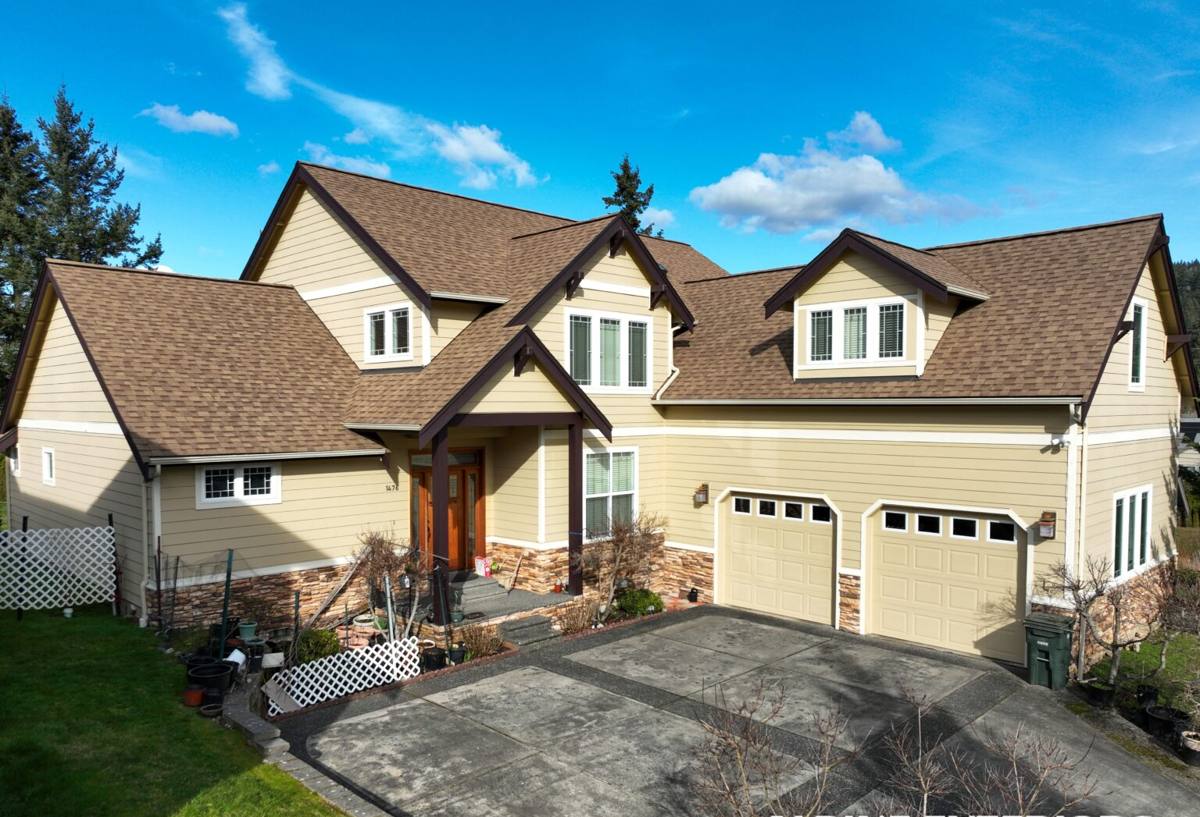
What a Correct Asphalt Shingle Roof Actually Involves
Asphalt shingle roofing looks simple from the ground, and a lot of the mistakes we get called to fix are hidden under the shingles themselves. A correct installation for this climate has a few non-negotiable layers.
Underlayment and Water Protection
Standard felt underlayment is the minimum, not the goal. Given how much wind-driven rain Whatcom County sees, we install synthetic underlayment for its tear resistance and water shedding, and we add self-adhered ice-and-water membrane at eaves, valleys, and any low-slope transitions — the spots where wind can push rain sideways under the shingle line. This is the layer that keeps a roof dry when a shingle eventually gets damaged or lifted; skipping it is how a small leak becomes a rotted deck.
Ventilation That Matches the House
A shingle roof that's sealed up tight without balanced intake and exhaust ventilation traps moisture in the attic, which shows up as premature shingle curling from underneath, mold on the deck, and higher energy bills. On homes with mature tree cover and persistent shade, we pay extra attention to this because damp attics here don't get the drying-out period that a sunnier lot gets.
Flashing Details
Chimneys, skylights, sidewalls, and roof-to-wall transitions fail more often at the flashing than at the shingle field. We use corrosion-resistant step flashing and counterflashing at every penetration and sidewall, sized and lapped correctly rather than relying on caulk or roof cement to do a metal detail's job. Caulk is a maintenance item, not a waterproofing method.
Choosing the Right Shingle for This Climate
Not every asphalt shingle product performs the same way in a moss-prone, high-rainfall setting. Here's how the common options compare for a Geneva-area home.
| Shingle Type | Moss/Algae Resistance | Wind Rating | Typical Lifespan Here | Best Fit |
|---|---|---|---|---|
| Standard 3-tab | Low unless treated | Lower | 15-20 years | Budget-driven projects, low canopy exposure |
| Algae-resistant architectural (laminate) | Higher — copper/zinc granules resist staining | Higher | 25-30 years | Most Geneva homes, especially shaded lots |
| Impact-rated architectural | Higher | Highest | 25-30+ years | Open, wind-exposed lots near the water |
| Premium/designer laminate | Higher | Higher | 30+ years | Homeowners prioritizing appearance and longer warranty |
For most homes in this area, we steer clients toward an algae-resistant architectural shingle. The upfront cost difference over 3-tab is modest compared to the years of service life it buys back in a climate that's actively working to grow moss on your roof.
Our Process for a Geneva Roofing Job
Inspection and Honest Estimate
We start on the roof, not just from the ground with binoculars. That means checking decking condition at vulnerable spots, looking at existing flashing and ventilation, and noting anything — like a rotted fascia board or an undersized vent count — that should be addressed as part of the job rather than discovered mid-tear-off. The estimate reflects what we actually find.
Tear-Off and Deck Check
We remove the old roofing down to the deck rather than layering over it, because you can't properly inspect or repair sheathing you can't see. Any soft or delaminated decking gets replaced before a single new shingle goes down — this is the step that gets skipped most often on rushed jobs, and it's the one that determines whether the new roof actually lasts.
Installation
Underlayment, ice-and-water membrane, drip edge, flashing, then shingles — installed to the manufacturer's nailing pattern and exposure specs, not a faster shortcut version. Ventilation components go in as part of this stage, not as an afterthought.
Cleanup and Walkthrough
Magnetic sweep for nails, tarps to protect landscaping during tear-off, and a walkthrough where we show you the finished work and go over care basics before we consider the job done.
Signs a Geneva Roof Needs Attention
Because moss and moisture do their damage gradually, a lot of homeowners don't call until there's an active leak. Worth checking for sooner:
- Moss or dark streaking concentrated on shaded slopes or north-facing sections
- Granules collecting in gutters or at downspout outlets
- Shingle edges curling up or tabs that look lifted rather than flat
- Soft spots or noticeable sag when walked (we check this — homeowners shouldn't walk their own roof)
- Daylight visible through the attic roof deck, or damp insulation below it
- Flashing around chimneys or vents that looks rusted, gapped, or over-caulked
- A roof past 20 years old that's never had underlayment or flashing upgraded
Maintenance That Actually Extends a Shingle Roof's Life
A shingle roof isn't maintenance-free, especially under tree cover. Keeping gutters clear so water doesn't back up under the shingle edge, trimming back branches that keep a section of roof shaded and damp, and having moss physically removed (not just chemically treated) every season or two go a long way. We'd rather a homeowner call for a moss removal and inspection visit than wait until moss has been sitting on the roof long enough to lift shingles.
What Affects the Cost of the Job
Every roof is priced on its own specifics, but the main variables that move the number are consistent from job to job.
| Cost Factor | Why It Matters |
|---|---|
| Roof size and number of planes | More square footage and more valleys/hips mean more material and labor time |
| Deck condition | Rotted sheathing found during tear-off adds material and labor to replace it |
| Shingle grade chosen | 3-tab vs. algae-resistant architectural vs. premium laminate shifts material cost per square |
| Existing layers | Removing multiple old layers takes longer than a single-layer tear-off |
| Access and pitch | Steep pitches or difficult truck/dumpster access affect labor and safety setup |
| Ventilation and flashing upgrades | Bringing an older roof's ventilation or flashing up to current standards adds scope but pays off in longevity |
Broadly, a straightforward asphalt shingle replacement on an average Geneva-area home tends to land in the mid-to-high five figures range once quality underlayment and proper flashing are included; larger or more complex roofs run higher. We'd rather walk your roof and give you real numbers than have you guess from a range.
Why a Crew That Already Works Geneva Matters
A roofing crew that's already worked this pocket of Sudden Valley knows which slopes hold moss the longest, which older flashing details tend to fail first, and how the tree canopy and lake proximity change the maintenance conversation compared to a drier neighborhood a few miles away. That local pattern recognition shows up in better estimates, fewer surprises during tear-off, and recommendations that fit your actual lot instead of a generic checklist. If your property sits within a homeowners association, we're also happy to check on any exterior color or material guidelines before you commit to a shingle choice.
If your roof is showing moss, granule loss, or you just want an honest read on how many years it's got left, we'll come take a real look. Fill out the form below for a free, no-pressure estimate on your Geneva home.