 Sudden Valley
 Deck Repair Built for Geneva's Wet Side of Sudden Valley
Geneva sits close to Lake Whatcom, tucked into tree cover that keeps homes shaded, cool, and — for a good chunk of the year — damp. That combination is easy on the eyes and hard on a deck. Between the marine air moving in off the water, driving rain that comes sideways in a Whatcom County windstorm, and a moss season that can run from October through May, decks in this part of Sudden Valley take on moisture from every direction: from above, from below, and from the ground the posts sit in. We've repaired enough of them to know the failure points aren't random. They're predictable, and they're preventable with the right repair done the right way.
This page covers deck repair specifically — not full replacement, not new builds — for homeowners in Geneva who have a deck that's still structurally sound (or close to it) but showing real wear. If you're not sure which category your deck falls into, that's exactly what a free estimate is for.
Why Geneva Decks Wear the Way They Do
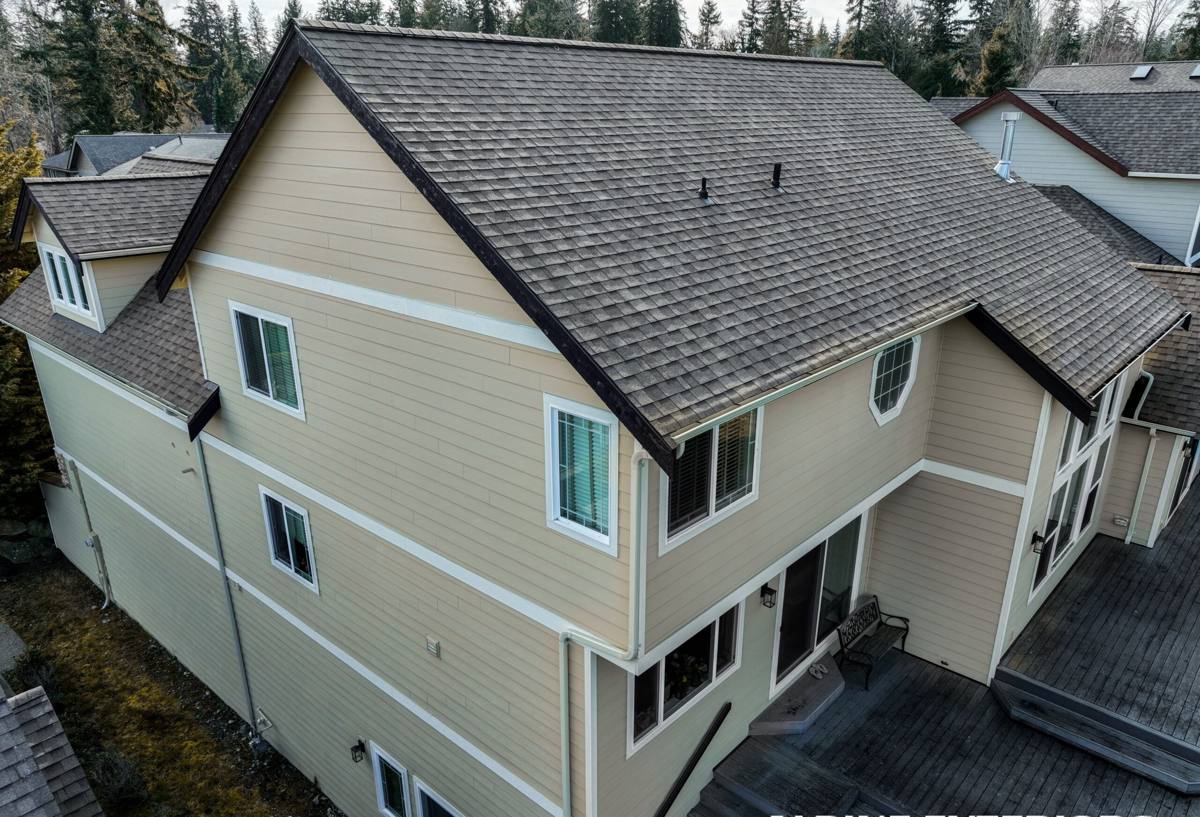
Lake-adjacent neighborhoods like Geneva get a specific kind of weather load. It's not just rain totals — it's how long the wood, fasteners, and framing stay wet after the rain stops. Tree canopy that blocks sun also blocks the drying wind that would otherwise dry a deck out between storms. That's the trade-off of a shaded lot.
- Salt-tinged marine air off the Puget Sound weather systems accelerates corrosion on nails, screws, joist hangers, and any exposed metal fasteners — even ones rated for exterior use.
- Driving rain during fall and winter storms gets pushed under railings, into ledger board connections, and behind fascia trim, which is where a lot of hidden rot actually starts.
- Extended moss season means algae and moss hold moisture against deck boards for months at a time, and that moisture doesn't just sit on the surface — it works into checks and cracks in the wood.
- Shade from surrounding trees slows evaporation, so a deck in Geneva can stay damp for days after a storm that would leave an open, sunny deck dry within hours.
None of this means a deck in Geneva is doomed — it means it needs to be built and maintained with that moisture load in mind, and repaired by someone who accounts for it rather than just patching what's visible.
What Actually Fails First
When we inspect a deck repair call in this area, we're checking specific spots first, because that's where problems actually start.
Ledger Board and House Connection
This is where the deck attaches to the house, and it's the single most important structural point on the whole deck. If flashing was installed poorly — or not at all — water tracks behind the ledger board and rots both the ledger and the rim joist behind it. This kind of damage is often invisible until you pull a board or push a screwdriver into the wood and it goes in soft.
Support Posts and Footings
Posts that sit in or near standing water, or that were never properly separated from ground contact, wick moisture upward. In shaded Geneva yards, the ground around footings often stays wet longer into the spring, which keeps the base of a post damp long after the rest of the deck has dried.
Fasteners and Hardware
Joist hangers, structural screws, and bolts are only as good as their coating. Once corrosion sets in, connections loosen, and a deck can develop a bounce or sway that homeowners often describe as "it just doesn't feel as solid as it used to." That's a hardware problem, not a wood problem, and it's a common and fixable one.
Deck Boards and Railings
The most visible wear — cupping, splintering, soft spots, and moss buildup on the walking surface — is usually the least serious structurally, but it's also the earliest warning sign. By the time boards show damage, moisture has often already reached the joists underneath.
Warning Signs Worth Calling About
Most deck problems don't show up as a dramatic failure — they show up as small changes that are easy to write off as normal aging. Worth a second look if you notice:
- Boards that feel spongy, springy, or soft underfoot, especially near the house or around posts
- Visible gaps or dark staining where the deck meets the siding
- Railings that wiggle or feel less rigid than they used to
- Moss or algae that keeps coming back within a few weeks of cleaning
- Rust streaks below fastener heads or joist hangers
- A noticeable slope or dip that wasn't there before
- Nails backing out or screw heads stripped/rusted flush
Catching any of these early is almost always cheaper than waiting, because deck repair costs scale with how far the moisture has already traveled — not just how bad the surface looks.
What a Correct Deck Repair Actually Involves
A repair that just replaces the boards you can see, without checking what's underneath, is a repair that gets redone in two or three years. Our process is built around finding the actual source of the damage first.
- Structural inspection — checking the ledger connection, posts, footings, and joists, not just the walking surface
- Moisture and rot mapping — probing suspect areas to determine how far damage has spread before deciding what needs to come out
- Flashing and drainage correction — fixing the water management at the ledger board and any other point where water is getting trapped, since this is the root cause in most Geneva repairs
- Hardware upgrade — replacing corroded fasteners and hangers with corrosion-resistant hardware suited to this climate, not a like-for-like swap of whatever failed
- Framing and board replacement — rebuilding only what's actually compromised, matched to the existing deck where possible
- Finish and protection — sealing or finishing repaired sections so they hold up under the same conditions that caused the original wear
Skipping steps 2 and 3 is the most common shortcut in deck repair, and it's also the reason so many "repaired" decks fail again in the same spot within a few seasons.
Repair vs. Full Rebuild: How We Decide
| Factor | Points Toward Repair | Points Toward Rebuild |
|---|---|---|
| Ledger board condition | Solid, dry, properly flashed | Soft, rotted, or improperly flashed |
| Posts and footings | Sound, no wood-to-ground contact | Rotted, undersized, or settling |
| Extent of damage | Isolated to a few boards or one section | Spread across most of the frame |
| Age of structure | Under 15-20 years, built to code | Older, outdated framing methods |
| Hardware condition | Localized corrosion | Widespread rust or failed connections |
Most Geneva decks we look at fall somewhere in the middle — sound framing with a few compromised zones — which is exactly the situation targeted repair is meant to solve.
Materials: What Holds Up Here, and What Doesn't
We get asked often whether composite decking solves the moisture problem outright. It helps with surface-level rot, but it doesn't change what's happening underneath. The framing, ledger connection, and hardware still need to be built and maintained for this climate regardless of what the walking surface is made of. Our standard on repair work is to match materials appropriately to the situation:
- Pressure-treated lumber for structural framing repairs, since it's rated for the moisture exposure this region delivers
- Stainless or hot-dip galvanized fasteners in place of standard coated screws, which corrode faster near the lake and in shaded, damp spots
- Proper flashing membrane at any ledger or wall connection, rather than caulk alone, which fails faster than it looks like it will
- Matched or compatible decking boards so repaired sections don't stand out or behave differently than the surrounding deck
We won't cut corners on fasteners or flashing to save a few dollars on a repair, because those are exactly the components that determine whether the fix lasts five years or fifteen.
Maintenance That Actually Extends the Life of a Repair
A good repair still needs upkeep in a climate like this. A few habits make a real difference for decks around Geneva and the rest of Sudden Valley:
- Clear moss and debris from boards and between gaps before the wet season sets in, not after
- Keep gutters and downspouts clear so runoff isn't draining directly onto or under the deck
- Check railings and stair connections for movement once a year
- Reseal or refinish exposed wood on the schedule the finish manufacturer recommends — shaded decks often need it more often than sunny ones, not less
- Trim back vegetation that's keeping the deck surface shaded and slow to dry
Why It Matters That We Already Work in Geneva
Deck repair advice that works for a dry, open lot on the other side of the state doesn't necessarily hold up in a shaded, lake-adjacent Whatcom County neighborhood. We've worked on enough decks in and around Sudden Valley to know which connections fail first in this specific microclimate, which fastener grades actually hold up to the marine air, and how long moss season really runs here versus what a general contractor from outside the area might assume. That local pattern recognition is what keeps a repair from being a guess.
It also means we're not learning the neighborhood on your project. We know what a Geneva deck is up against before we ever pull the first board.
Getting an Honest Read on Your Deck
If your deck has a few soft spots, a wobble in the railing, or moss that won't quit, it doesn't automatically mean a full rebuild. Most of what we see in Geneva is fixable with targeted, correctly sequenced repair work — as long as the moisture source gets addressed along with the visible damage. We're happy to come take a look, tell you honestly what we find, and lay out what repair versus replacement would actually involve for your specific deck. There's no pressure and no cost to get that estimate — just a straight answer so you can make a good decision either way.