 Sudden Valley
 Why Geneva Roofs Wear Out on Their Own Schedule
Geneva sits close enough to Lake Whatcom and the broader Whatcom County marine climate that roofs here take a different kind of beating than roofs twenty miles inland. Moisture-laden air moves through the tree canopy and settles on north-facing slopes and shaded valleys, driving rain comes in sideways off the water during fall and winter storms, and the growing season for moss stretches nearly year-round under the fir and cedar cover common in this part of the county. None of that is dramatic on its own, but stacked together over ten or fifteen years it shortens the life of a roof that would hold up fine in a drier, more open part of the state.
We're not describing a roof that's about to fail overnight. We're describing the slow accumulation of small problems — a shingle edge that lifts, a valley that holds water an extra hour after a storm, moss roots that work into granule loss — that eventually add up to a roof that's due. Knowing what to look for, and what a proper replacement actually involves in this environment, is the difference between a roof that lasts its full rated life and one that needs attention again in eight years.
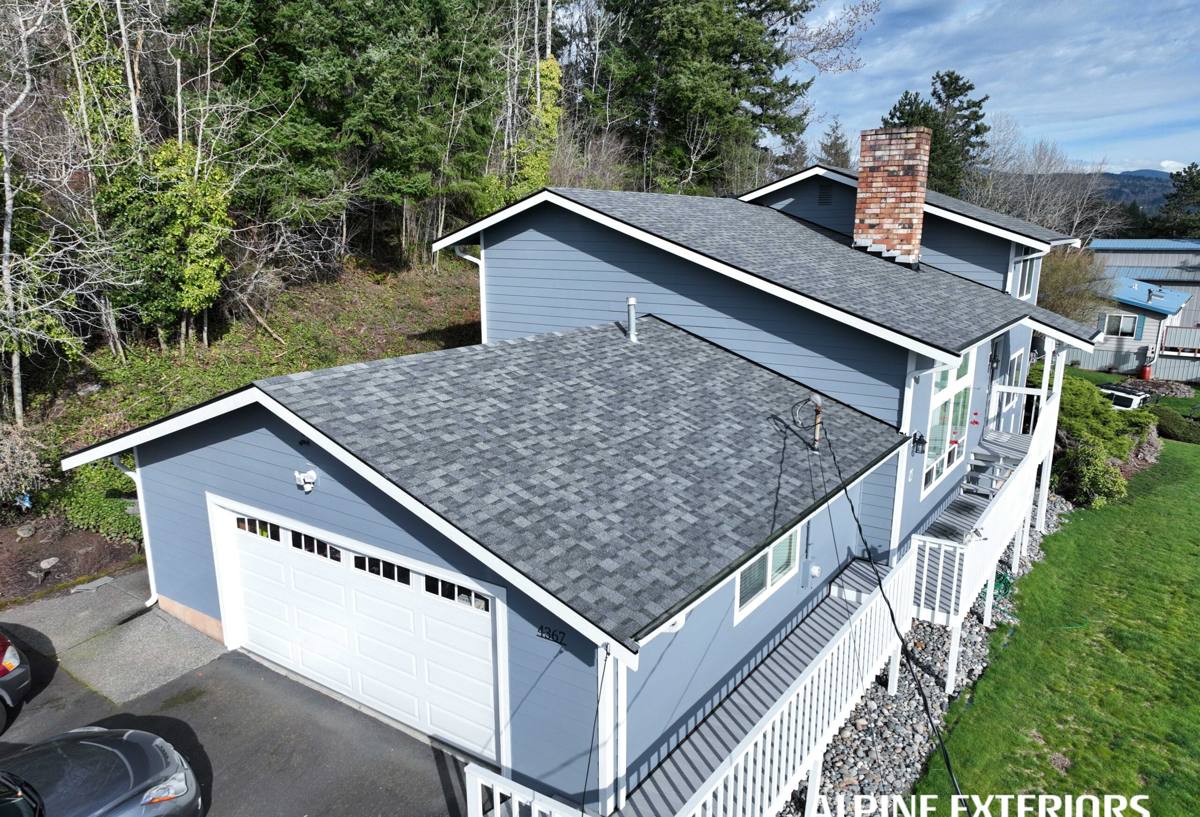
Signs a Geneva Home Is Due for a New Roof
Most homeowners don't climb their own roof, and they shouldn't. But there are ground-level and attic-level signs worth checking before winter each year.
- Granules collecting in gutters or at downspout outlets, especially after a heavy rain
- Shingles that look curled, cupped, or have visibly lost their flat profile
- Moss or dark algae streaking on north- or shade-facing slopes
- Daylight visible through the roof deck from inside the attic
- Soft or spongy spots when walking the roof (a sign for a professional to check, not a DIY test)
- Water stains on interior ceilings, especially near valleys, chimneys, or skylights
- A roof that's 20+ years old on standard asphalt composition shingle, or 15+ years with heavy moss history
Any one of these on its own might mean a repair. Two or three together, especially on an older roof, usually means it's time to talk about full replacement rather than patching the same spots again next year.
What a Correct Roof Replacement Actually Involves
Tear-off, Not Overlay
We remove the old roofing down to the deck rather than layering a new roof over the old one. Overlaying hides problems — soft decking, old flashing, trapped moisture — instead of fixing them, and it voids most manufacturer warranties outright. In an area with as much seasonal moisture as Whatcom County sees, hidden problems under a second layer of shingles are exactly what causes premature failure five or six years later.
Decking Inspection and Repair
Once the old material is off, we check the plywood or OSB decking underneath for soft spots, delamination, or rot — most commonly found near valleys, eaves, and anywhere moss or debris has held moisture against the roof for years. Any compromised decking gets replaced before anything new goes down. Skipping this step is the single most common shortcut in the roofing trade, and it's the one that causes the most expensive comebacks.
Underlayment and Ice/Water Protection
A synthetic underlayment goes down across the full roof, with self-adhering ice-and-water membrane at eaves, valleys, and any roof-to-wall transitions — the spots where wind-driven rain is most likely to find its way underneath the shingle field. This layer is cheap insurance compared to the cost of a leak that shows up two winters later.
Flashing
Flashing around chimneys, skylights, plumbing vents, and wall intersections is replaced, not reused. Old flashing that looks fine from the ground is often rusted, cracked, or improperly lapped underneath, and it's one of the most common leak points on older Whatcom County homes.
Ventilation
Proper intake and exhaust ventilation keeps the attic temperature and moisture level balanced, which matters more here than in drier climates. Poor ventilation traps humid air against the underside of the deck, which accelerates rot and gives moss and mold a head start from the inside out.
Material Options for Homes Near Sudden Valley and Geneva
Most homes in this area are well served by a quality architectural asphalt composition shingle, but it's worth understanding the trade-offs before deciding.
| Material | Typical Lifespan | Moss Resistance | Notes for This Climate |
|---|---|---|---|
| Architectural asphalt shingle | 25–30 years | Moderate (better with algae-resistant granules) | Best value for most Geneva-area homes; good performance with proper ventilation |
| Standard 3-tab shingle | 15–20 years | Lower | Lower upfront cost but shorter life under heavy moss exposure |
| Standing seam metal | 40–50+ years | High — sheds moss readily | Higher upfront cost; excellent for heavily shaded, moss-prone lots |
| Cedar shake | 20–30 years with upkeep | Low without regular treatment | Requires ongoing maintenance in this moisture level; we're upfront about that burden before recommending it |
We don't push one material on every roof. A shaded lot backed up against fir trees is a different conversation than an open, sun-exposed roofline, and we'll tell you honestly which option fits your specific site rather than defaulting to whatever's easiest to install.
Our Roof Replacement Process
- On-site inspection — we walk the roof and attic, not just the ground, before quoting anything
- Written estimate — material options, scope, and price laid out clearly, no vague allowances
- Scheduling around weather — we work around Whatcom County's rain patterns rather than rushing a tear-off into an open sky before a storm
- Tear-off and deck inspection — full removal, deck checked and repaired as needed
- Underlayment, flashing, and material installation — done to manufacturer spec, not shortcuts
- Cleanup and magnetic sweep — nails and debris cleared from the property, not left in the yard or driveway
- Final walkthrough — we go over the finished roof with you before calling the job done
Moss and Moisture: The Long-Term Maintenance Piece
A new roof in the Geneva area isn't "install and forget" the way it might be in a drier climate. Trees close to the roofline, north-facing shade, and a long wet season mean moss will eventually try to come back regardless of material. What changes with a properly installed roof is how well it resists that pressure and how easily it can be maintained:
- Zinc or copper strips near the ridge can reduce moss regrowth on shingle roofs over time
- Keeping overhanging branches trimmed back reduces shade and debris buildup
- Annual or biannual soft washing (not pressure washing, which damages granules) keeps moss from establishing
- Clean gutters prevent standing water from backing up under the shingle edge
We'll walk through this with every homeowner at the end of a job, because a roof replacement is a long-term investment and the first few years of upkeep have a real effect on how long it lasts.
What Affects the Cost of a Roof Replacement
| Factor | Why It Matters |
|---|---|
| Roof size and pitch | Steeper, larger roofs take more material, labor, and safety setup |
| Number of layers to remove | Tearing off two old layers costs more than one |
| Deck condition | Rotted or soft decking found underneath adds material and labor |
| Material choice | Asphalt, metal, and cedar carry different material and installation costs |
| Roof complexity | Valleys, dormers, skylights, and chimneys all add flashing work |
| Access | Steep driveways, tree cover, or tight lot access near the lake can affect staging and disposal |
We won't give a number over the phone that means anything — anyone who does hasn't seen your roof. A real estimate comes from walking it in person.
Why Local Experience in Geneva Actually Matters
A crew that's already worked roofs in and around Sudden Valley and Geneva knows which slopes hold moss the longest, which lots need extra attention to ventilation because of tree cover, and how the local storm pattern off the water tends to find weak flashing before it finds anything else. That's not something you can fully substitute with general roofing experience from a drier or more open part of the state. It shows up in small decisions — where to add extra ice-and-water membrane, which vents to prioritize, how to sequence a tear-off around a wet forecast — that add up to a roof that holds up rather than one that needs a callback.
If your roof is showing its age, or you just want an honest read on how much life is left in it, we're happy to take a look and walk you through what we find — no pressure, no obligation. Fill out the form below for a free estimate.