 Sudden Valley
 Building a Deck That Actually Holds Up in Happy Valley
A deck in Happy Valley doesn't fail the way a deck fails in a dry climate. It doesn't crack from sun exposure or dry out and pull away from the house. It fails from the bottom up and from the inside out — moisture working into end grain, hardware corroding where nobody can see it, and a green film building up on the walking surface until someone slips on it. If you're planning a new deck or replacing one that's past its prime, the design and material choices that make sense in most of the country aren't automatically the right call here in Whatcom County.
We build decks for homes throughout the Sudden Valley area, including Happy Valley, and the approach we use is shaped by what actually happens to lumber, fasteners, and finishes after a few Western Washington winters — not by what looks good in a catalog photo.
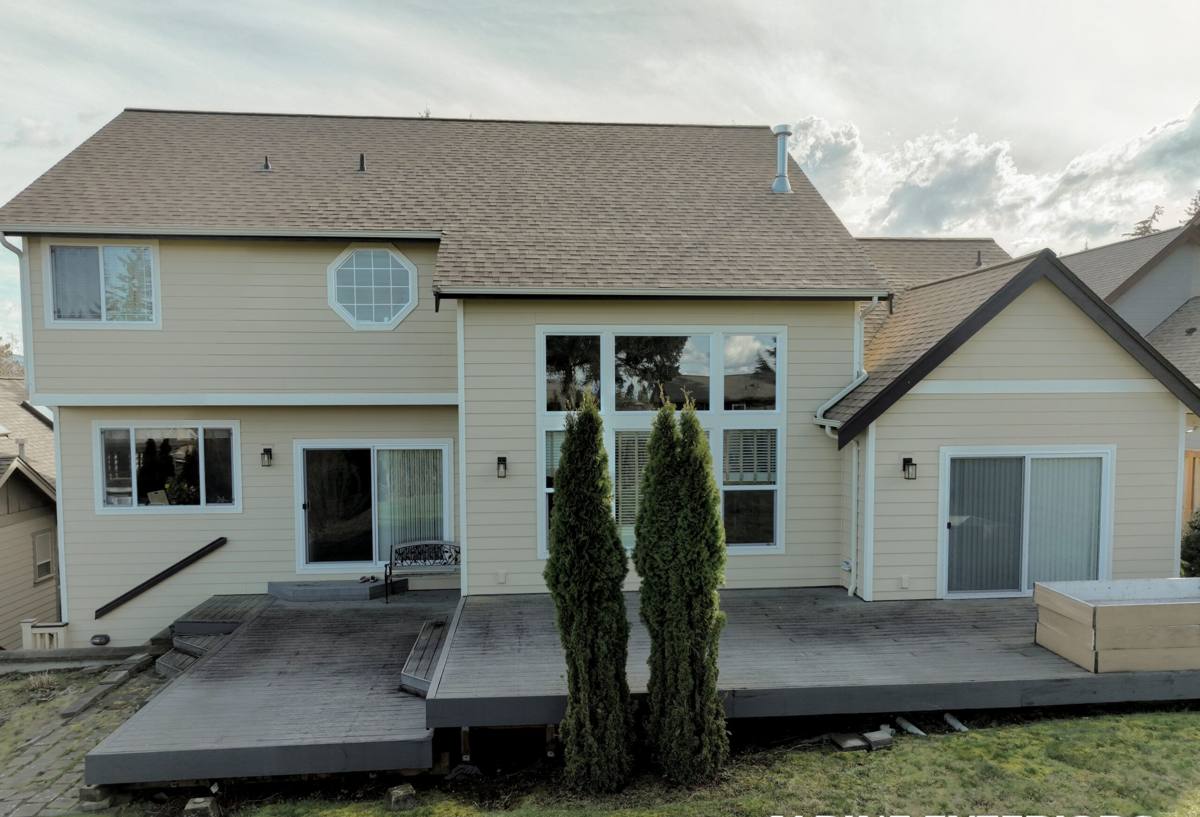
What This Climate Does to an Outdoor Deck
Moss and Surface Buildup
Long stretches of overcast, damp weather combined with tree cover give moss and algae exactly what they need. On a deck, that shows up first as a dull green haze in shaded corners and along the north side of the house, then spreads across the whole surface if it's not addressed. Beyond the appearance issue, a mossy deck board is a slick deck board — it's a real fall hazard on stairs and near door thresholds.
Corrosion at the Hardware
Salt-laden air moving through this part of Whatcom County doesn't just affect siding and gutters — it works on deck hardware too. Nails, screws, joist hangers, and post bases that aren't rated for exterior or coastal exposure will rust from the inside of the wood outward, long before the problem is visible from the top. By the time you see rust bleeding through around a screw head, the fastener has usually already lost a meaningful amount of holding strength.
Wood Movement, Splitting, and Rot
Driving rain saturates exposed wood surfaces repeatedly through fall, winter, and spring, and then the wood dries out between storms. That wet-dry cycle is what causes cupping, checking, and splitting in deck boards over time. It's also what rots out ledger boards, post bottoms, and stair stringers where water collects and doesn't get a chance to dry — usually the first structural failure point on an older deck.
Decking Material Options, Compared for This Area
There's no single "best" decking material — there's a best fit for your budget, your maintenance tolerance, and how much shade and moss exposure the deck will see. Here's how the common options actually perform in this climate, not just on paper.
| Material | Upfront Cost | Maintenance Here | Typical Lifespan |
|---|---|---|---|
| Pressure-treated lumber | Lowest | Needs cleaning and re-sealing every 1-2 years to resist moss and checking | 10-15 years with upkeep |
| Cedar | Moderate | Naturally moss- and rot-resistant, but still needs periodic cleaning and sealing to hold its color | 15-20 years with upkeep |
| Capped composite | Higher | Occasional washing; no staining or sealing; resists moss buildup much better than wood | 25-30 years |
| PVC/vinyl decking | Highest | Lowest upkeep of any option; doesn't absorb moisture at all | 30+ years |
For homes in the Sudden Valley area, we lean toward capped composite or cedar depending on the client's priorities. Pressure-treated lumber is a legitimate budget option, but it's also the one that punishes neglect the fastest in a climate this wet — skip a season of cleaning and sealing and you're playing catch-up. Whatever material you choose, the framing underneath it matters more than the decking on top, which is where a lot of deck problems actually start.
What a Correctly Built Deck Requires
Footings Set Below Frost Depth
Footings that are too shallow or poured on disturbed soil will shift over time, which shows up later as a deck that's suddenly out of level or a railing post that's gone loose. We size and set footings to the depth Whatcom County's building code requires for this area, not to whatever gets the job done fastest.
Ledger Board Flashing — Where Most Decks Actually Fail
The ledger board is the piece that attaches the deck to the house, and it's the single most common point of hidden rot on an existing deck. Water runs down the siding, hits the top of the ledger, and if there's no proper flashing directing it away from the house, it works its way behind the board and into the rim joist. A correctly flashed ledger — with flashing that laps over the siding correctly, not tucked in some improvised way — is not optional in this climate.
Joist Layout and Blocking
Joist spacing needs to match the decking material's span rating, and blocking needs to be placed to prevent the frame from racking under load. This is invisible once the decking goes down, which is exactly why it's worth getting right the first time rather than discovering a spongy spot years later.
Guardrails, Stairs, and Code Compliance
Any deck above a certain height needs a code-compliant guardrail with proper baluster spacing, and stairs need consistent rise and run with a graspable handrail. These aren't style preferences — they're inspection points, and getting them wrong means a failed inspection or, worse, a genuine safety issue on a wet, mossy step.
How We Approach a Happy Valley Deck Project
- Site visit and design. We look at the house, the slope of the lot, existing drainage, sun and shade exposure, and talk through material options and layout based on how you'll actually use the space.
- Permitting. New decks and most rebuilds require a permit through Whatcom County. We handle the drawings and the application so you're not the one chasing paperwork.
- Footings and framing. This is the phase that determines how the deck performs for the next 20-30 years, and it's where we spend the most care — correct footing depth, proper ledger flashing, and joist layout built to the decking manufacturer's spec.
- Decking, railings, and stairs. We install the walking surface, railing system, and stairs with corrosion-resistant, exterior-rated fasteners throughout — not just at the points that show.
- Final walkthrough. We go over the finished deck with you, including what maintenance it will and won't need going forward.
Keeping a Deck Sound Year After Year
Whatever material you choose, a little seasonal attention goes a long way in a climate that stays damp for months at a time:
- Sweep leaves and debris off the deck surface regularly in fall — trapped organic material is what feeds moss growth
- Clean the surface at least once a year with a deck-safe cleaner to knock back algae and moss before it takes hold
- Check the ledger board area and any spot where the deck meets the house for staining, soft wood, or peeling caulk
- Keep gutters and downspouts clear so roof runoff isn't dumping extra water directly onto or under the deck
- Inspect railing posts and stair stringers for movement or soft spots each spring
- Re-seal wood decking on the schedule the product actually needs in this climate, not the label's best-case estimate
- Trim back overhanging branches to cut down on shade, debris, and moss-friendly moisture on the deck surface
Why a Crew That Already Works This Neighborhood Makes a Difference
A lot of what determines whether a deck holds up here isn't exotic — it's knowing to flash the ledger properly, spec fasteners rated for salt air and constant moisture, and set footings to the right depth for this soil and climate. A contractor who mostly builds in drier parts of the state may not default to any of that unless you ask. We already do, because we see what happens to decks around Sudden Valley that were built without it.
There's also a practical side to hiring local: we're familiar with how permitting works in Whatcom County, we're not driving in from out of the area for a warranty callback, and if something needs a look five years down the road, we're still around to take that call.
Repair, Rebuild, or Replace?
Not every tired-looking deck needs to be torn out. If the framing is sound and the problems are cosmetic — surface graying, moss, a few split boards — a cleaning, repair, and re-decking can extend the life of the structure for a fraction of full replacement cost. But if the ledger board is soft, footings have shifted, or the framing shows rot at multiple points, patching the surface just hides a structural problem instead of solving it. We'll tell you honestly which situation you're in before recommending either option.
If you're planning a new custom deck for a Happy Valley property or trying to figure out whether an existing one is worth saving, we're happy to take a look and walk you through what we're seeing. Reach out for a free, no-pressure estimate — use the form below to get started.