 Sudden Valley
 What Cordata's Climate Actually Does to Siding
Cordata sits close enough to the water and the lowland fog belt that homes here take on a specific mix of punishment: salt-tinged air drifting in off Bellingham Bay and the Sound, driving rain that comes in sideways during winter fronts, and long stretches of gray, damp weather that never quite dry the siding out between storms. Add in the shade from mature Douglas fir and cedar that's common on Whatcom County lots, and you get months at a time where north- and west-facing walls simply stay wet. That combination is exactly what breaks down cheaper siding products years before they should fail.
Salt air corrodes fasteners and trim hardware faster than inland exposure. Driving rain finds every gap in flashing and caulking that a fair-weather install would never expose. And the long moss season — often six or seven months of the year in this part of Whatcom County — turns any siding with a rough, absorbent, or shaded surface into a growth medium. None of this is unique to Cordata, but it's concentrated here in a way that separates a siding job that lasts twenty-plus years from one that needs repainting or patching after five.
Why We Only Install James Hardie on Jobs Like This
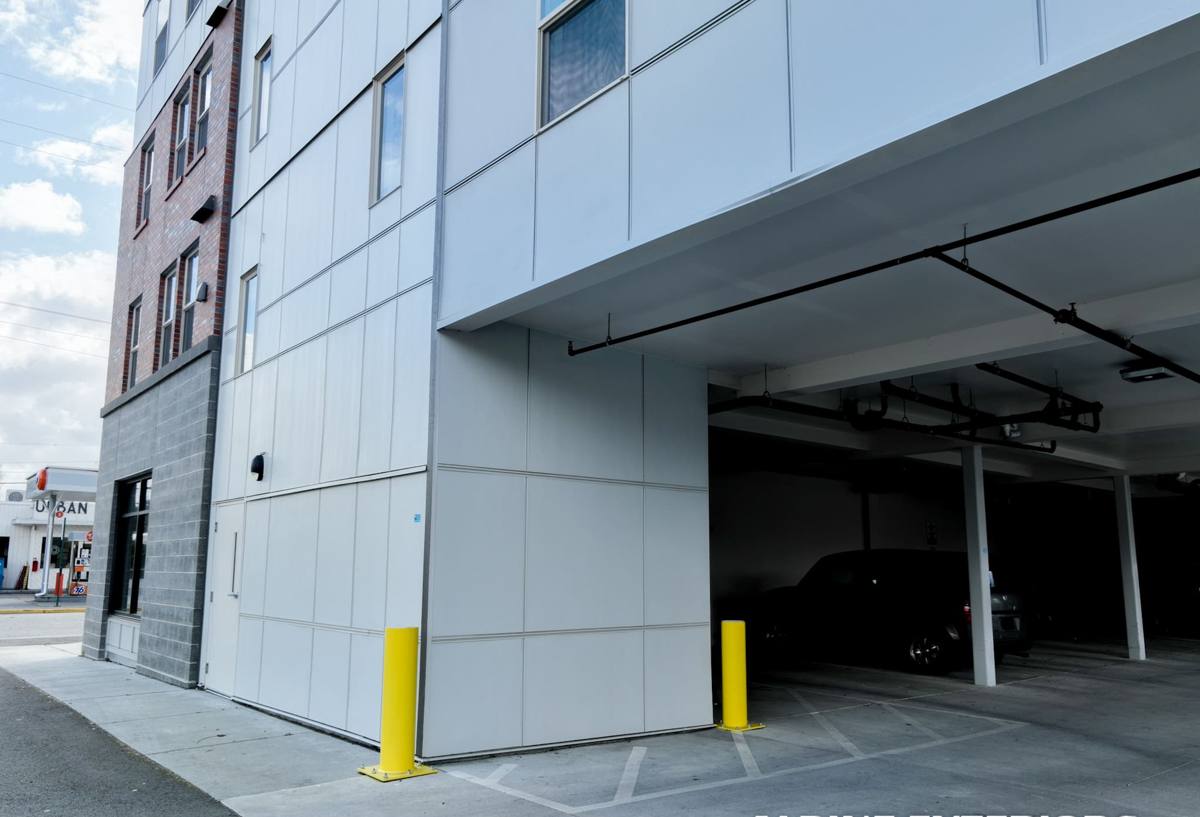
We standardized on James Hardie fiber cement for every home we side, and a property like this is a good example of why. Hardie board is non-combustible and dimensionally stable — it doesn't swell, cup, or rot the way wood-based products can when they stay damp for weeks at a stretch. The factory-applied ColorPlus finish is baked on under controlled conditions, which means the color layer resists the fading and peeling that field-applied paint struggles with under constant UV and moisture cycling.
Hardie also makes a specific product line, HZ5, engineered for climates that see freeze-thaw cycling and sustained moisture — which describes most of western Washington. That's the line we spec for Whatcom County installs by default, not because it's the upsell option, but because it's the version of the product actually built for this weather. We don't install LP SmartSide, vinyl, Cemplank, Allura, or primed wood siding, and on a job with this much sustained dampness and salt exposure, the reasons are practical, not just a brand preference: moisture-sensitive substrates and field-finished products carry more long-term risk in exactly the conditions Cordata sees most of the year.
What HZ5 Actually Changes
The HZ5 formulation adjusts the cement mix and moisture-management engineering for wetter, cooler regions compared to Hardie's HZ10 line built for hot, dry climates. For a homeowner, the practical difference shows up over time as better resistance to moisture-related cracking and a longer service life before repainting is needed — assuming the installation itself is done correctly, which matters just as much as the product choice.
What a Correct Installation Involves Here
Fiber cement siding is only as good as the water management system behind it. A rushed or generic install can put the right product on a wall and still fail within a few years if the details underneath are wrong. On a Cordata home, we pay particular attention to a few things that matter more here than in drier parts of the state.
Rain Screen and Weather-Resistive Barrier
Every wall gets a weather-resistive barrier installed correctly under the siding, with all seams and penetrations taped and lapped so water sheds down and out rather than working its way behind the board. Given how much of the year this area sees sustained rain, we install furring strips to create a drainage gap (a rain screen) behind the siding wherever the wall assembly allows it. That gap lets bulk water and incidental moisture drain and the wall breathe, instead of trapping water against the back of the siding — which is one of the most common causes of premature failure on homes near the water.
Flashing, Gaps, and Fastening
Windows, doors, and any wall penetration get proper flashing integrated with the barrier, not just caulked over. Hardie's own installation instructions call for minimum clearances at the ground, roofline, and deck ledgers, and specific gaps at butt joints and trim to allow for expansion — corners cut on any of these details are invisible on installation day and show up as staining, warping trim, or rot two or three winters later. We fasten with corrosion-resistant fasteners appropriate for coastal-influenced air, set to the depth Hardie specifies, and we don't caulk-and-cover mistakes instead of fixing them.
Our Process for a Cordata Job
The steps don't change much house to house, but the sequencing and extra care around moisture management do, given the local conditions.
| Stage | What Happens | Why It Matters Here |
|---|---|---|
| Assessment | Walk the property, check existing siding, trim, and sheathing for hidden moisture damage | Long wet seasons often hide rot behind old siding until it's opened up |
| Tear-off | Remove old siding and trim down to sheathing | Lets us catch and repair any water damage before it's covered again |
| Sheathing repair | Replace or repair any compromised sheathing or framing | Covering damaged sheathing guarantees a future failure |
| Weather barrier install | Install and tape the weather-resistive barrier, flash all openings | This layer does most of the real work keeping water out long-term |
| Rain screen / furring | Add drainage gap where the wall assembly allows | Lets moisture drain instead of sitting against the siding back |
| Hardie install | Install HZ5 boards, panels, or trim per manufacturer spec | Correct fastening and clearances are what the warranty depends on |
| Caulk and detail | Seal joints per Hardie spec, install trim and accessories | Over-caulking or under-caulking both cause problems in this climate |
| Final walkthrough | Inspect the full job with the homeowner | Catch anything before it becomes a warranty claim later |
Cost Factors on a Job Like This
Every home is different, and we won't quote a number without seeing the property, but the line items that move the price on a Cordata siding job tend to be the same handful of factors.
| Factor | Why It Affects Cost |
|---|---|
| Sheathing condition | Hidden rot or moisture damage found during tear-off adds repair scope |
| Wall complexity | Dormers, bump-outs, and multiple roof lines add flashing and cutting time |
| Siding profile | Lap, panel, and shingle-style Hardie products differ in material and labor cost |
| Trim scope | Full trim replacement versus reusing sound existing trim |
| Access | Tree cover, slopes, and tight lot lines common in this area affect staging and labor time |
| Color and finish | Standard ColorPlus colors versus custom-matched or premium finishes |
Moss, Algae, and Long-Term Maintenance
Because so much of the year here is spent damp and shaded, moss and algae growth on siding is less a possibility and more an expectation if the wrong material or installation is used. Rough-surfaced or absorbent siding products give moss spores something to grab onto and stay wet against. James Hardie's smoother factory finish and non-porous cement composition give algae and moss far less to hold onto, and the ColorPlus finish means an occasional gentle wash keeps the color looking right without needing to repaint every few years the way field-painted siding often does in this climate.
That said, no siding is maintenance-free in a climate like this. A short annual routine keeps a Hardie installation performing the way it's designed to:
- Rinse siding gently once or twice a year to clear pollen, moss spores, and grime buildup, especially on shaded or north-facing walls
- Keep gutters clear so overflow doesn't run down the siding face during heavy rain events
- Trim back tree limbs and shrubs that keep a wall section shaded and damp longer than the rest of the house
- Check caulking at trim and window edges every couple of years and re-seal any joints that have opened up
- Watch for any staining or soft spots at the bottom courses, which usually signal a drainage or clearance issue worth addressing early
Why a Crew That Already Works This Area Matters
Whatcom County's mix of coastal moisture, tree cover, and older housing stock means the details that cause callbacks aren't the same ones you'd worry about in a drier inland climate. A crew that installs Hardie siding regularly in this specific area already knows to plan for the rain screen detail, already carries the right fasteners for salt-influenced air, and already recognizes what hidden sheathing rot looks like before it turns into a change order surprise mid-project. That familiarity shows up in fewer surprises, tighter scheduling around the weather, and a finished job that's built for the conditions it actually has to survive rather than a generic install pulled from a manual written for a different climate.
It also matters for warranty support. James Hardie's product warranty and any installation warranty we back it with both depend on the work being done to spec — a crew unfamiliar with local moisture conditions is more likely to miss a detail that only becomes a problem two or three winters down the road, well after the job's been paid for and forgotten.
Mistakes We Catch on Re-Sides in This Area
A fair share of the work we do in Whatcom County is replacing siding that failed early — sometimes Hardie installed incorrectly by another crew, more often a different product entirely. The recurring issues worth knowing about before you hire anyone for a project like this:
- Siding installed tight to the ground, deck, or roofline with no clearance gap, wicking moisture straight into the board
- Weather barrier seams left untaped or lapped the wrong direction, letting water track behind the siding
- No rain screen or drainage gap on a wall that gets sustained damp shade for most of the year
- Caulk used to seal butt joints that Hardie's own instructions say should be left with a gap and flashed instead
- Standard fasteners used in a salt-air-influenced location instead of corrosion-resistant ones
None of these are visible from the curb on installation day. They're the difference between a siding job that's still tight and clean in fifteen years and one that needs trim repairs and repainting in five.
Ready to Talk About Your Cordata Home
If you're weighing options for a Cordata property, we're happy to walk the house, look at what's driving the current siding's condition, and give you a straight answer on what James Hardie siding done correctly would involve and cost for your specific home. There's no pressure and no obligation — just a local crew that already knows this climate giving you a clear picture before you decide anything. Use the form below to request a free estimate.