 Sudden Valley
 Why Lake Whatcom Homes Need a Different Approach to Metal Roofing
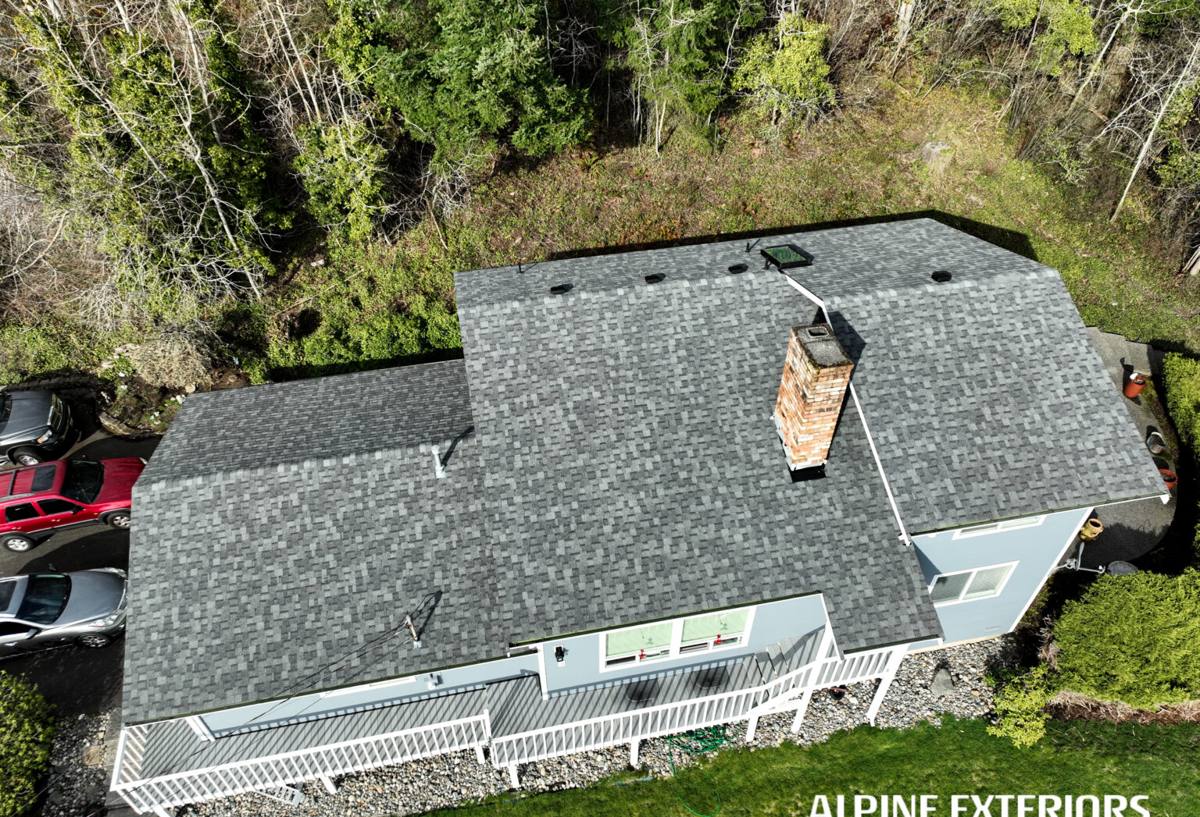
Lake Whatcom sits in a pocket of Whatcom County that gets hit from more than one direction. You've got the marine air pushing in off the Puget Sound corridor, the lake itself keeping humidity high right at the shoreline, heavy driving rain that comes in sideways during winter storms, and tree cover dense enough that moss and organic debris are a year-round fact of life, not a seasonal nuisance. A roof that would be fine in a drier inland town can struggle here within a decade. Metal roofing, installed correctly for this specific environment, tends to outperform other options precisely because it doesn't give moss and moisture the same foothold that shingles do — but "installed correctly for this environment" is doing a lot of work in that sentence, and it's the part that gets skipped by crews who don't normally work this area.
We've worked on homes around Sudden Valley and the greater Lake Whatcom area long enough to know which details matter here and which ones are just manufacturer boilerplate that doesn't account for local conditions.
What the Lake Whatcom Climate Actually Does to a Roof
Moisture that doesn't fully dry out
Homes near the lake shoreline sit in a microclimate that stays damper longer than properties even a mile or two away. Morning fog off the water, shade from mature trees, and the general humidity of a lakeside lot mean roof surfaces can stay wet well into the afternoon on days when a drier lot down the road has already dried off. That extended wet time is exactly what moss, lichen, and algae need to get established.
Moss isn't cosmetic — it's mechanical damage
On shingle or wood roofs, moss roots work into the material and lift edges, which is how leaks start. Metal doesn't give moss the same organic surface to grab onto, but moss and debris buildup in valleys, around penetrations, and at the eaves can still trap moisture against fasteners and trim if the roof wasn' t designed and installed with adequate slope, clearance, and detailing to shed it.
Wind-driven rain finds the weak points
Storms coming across the lake don't just fall straight down — the wind pushes rain up under laps, around flashing, and into any seam that wasn't sealed or lapped correctly. On a lake-adjacent property this is more pronounced than on a sheltered inland lot. Every seam, fastener, and flashing detail on a metal roof here has to be treated as a place water will actively try to get in, not just a place it might eventually reach.
Salt-influenced air accelerates corrosion
Whatcom County isn't a true coastal environment, but Lake Whatcom and the broader Puget Sound air movement carry enough salt and moisture content that untreated or mismatched metal components corrode faster than they would inland. The wrong fastener alloy, an uncoated cut edge, or dissimilar metals in contact with each other will show rust streaking and pitting years before they should.
What a Correct Metal Roof Installation Looks Like Here
A metal roof is only as good as the details underneath and around it. For Lake Whatcom conditions, we pay particular attention to:
- Underlayment selection: a high-temp synthetic or self-adhered ice-and-water membrane at eaves, valleys, and penetrations — not just builder's felt — to give a second line of defense against wind-driven rain
- Fastener and flashing metal compatibility: matching fastener coatings and flashing metals to the panel material so you don't get galvanic corrosion where two metals touch
- Panel seam type and spacing: standing seam or mechanically-locked panels with seams run correctly with the water flow, sized and spaced per manufacturer spec for our snow and wind load
- Valley and eave detailing: wider, properly lapped valley metal and correctly sized drip edge so moss and needle debris don't dam water at the low points
- Ventilation: intake and exhaust ventilation sized to keep the underside of the roof deck dry, which matters more under tree cover where ambient humidity is already elevated
- Ice and snow retention where needed: snow guards or retention systems on sections over walkways or driveways, since metal sheds snow in slabs rather than letting it melt off gradually
Skip any one of these and the roof might look fine going up — the failures show up two, five, or ten years later, usually right where a corner was cut.
Comparing Metal Roofing Options for a Lake Whatcom Property
| Option | Moss/Moisture Resistance | Typical Lifespan Here | Best Fit For |
|---|---|---|---|
| Standing seam steel | Excellent — smooth surface, no exposed fasteners for moss to anchor around | 40-60+ years with correct install | Full roof replacements, homes wanting the cleanest long-term performance |
| Exposed-fastener metal panels | Good, but fasteners need periodic checking/re-sealing | 25-40 years | Shops, outbuildings, budget-conscious full replacements |
| Stone-coated steel | Good — textured surface sheds water well but can hold more debris in valleys | 30-50 years | Homeowners wanting a shake or tile look with metal durability |
| Aluminum panels | Excellent — naturally corrosion-resistant, good choice this close to the lake | 40-60 years | Properties right at the shoreline with higher moisture/salt exposure |
For most Lake Whatcom homes we lean toward standing seam steel or aluminum specifically because the smooth, continuous panel surface gives moss and algae the least amount of texture to grab onto — and because both hold up well against the wind-driven rain this area gets in the winter months.
Our Process for Lake Whatcom Metal Roofing Projects
1. On-site assessment
We look at your existing roof structure, deck condition, ventilation, tree cover, and how water currently moves across the roof and off the property. On lake-adjacent lots we pay close attention to shading patterns and drainage toward the lake side of the house.
2. Material and system recommendation
Based on that assessment, we recommend a panel type, gauge, and finish that matches your budget and how exposed your specific lot is to moisture and wind. We'll explain the trade-offs honestly rather than defaulting to whatever's easiest to install.
3. Tear-off and deck inspection
Once the old roofing is off, we inspect the deck for rot or soft spots — common where moss has been trapping moisture against the roof for years — and address any repairs before a single new panel goes down.
4. Underlayment and flashing detail work
This is where most of the long-term performance is decided. We install underlayment and flashing to the standard described above, not the minimum a manufacturer warranty requires.
5. Panel installation
Panels go down with correct fastener spacing, seam engagement, and attention to thermal expansion — metal roofs move with temperature swings, and panels that are fastened too rigidly will eventually oil-can or work fasteners loose.
6. Final walk-through
We walk the roof and the property with you, cover basic maintenance expectations, and make sure you know what normal wear looks like versus something that needs a call back to us.
Maintenance Realities for a Lake Whatcom Metal Roof
Metal roofing is lower-maintenance than shingles, not maintenance-free. In this climate, a short annual checklist goes a long way:
- Clear needles, leaves, and moss buildup out of valleys and off of any low-slope sections at least once a year, more often under heavy tree cover
- Check that gutters and downspouts are flowing freely — a clogged gutter backs water up under the drip edge
- Look for any rust streaking at fasteners or cut edges, which usually means a coating has been compromised somewhere
- Trim back overhanging branches that keep sections of the roof shaded and slow to dry
- After major windstorms, a quick visual check for lifted flashing or displaced panels is worth the five minutes
Why Local Installation Experience Matters Here
A metal roofing crew that mostly works drier, more sheltered parts of the county can still do competent work — but competent isn't the same as calibrated for this specific microclimate. Underlayment choices, fastener specs, and ventilation sizing that are "good enough" in a drier neighborhood can leave a Lake Whatcom roof underperforming against moss and wind-driven rain within a few years. We've built our detailing standards around what actually happens to roofs on this lake, not around a generic spec sheet, and that shows up in how the roof performs ten and twenty years out, not just on installation day.
Get an Honest Look at Your Roof
If you're weighing metal roofing for a home in Sudden Valley or elsewhere around Lake Whatcom, we're glad to come take a look, walk you through what your specific roof and tree cover situation calls for, and give you a straight answer on materials and cost. Reach out for a free, no-pressure estimate using the form below.