 Sudden Valley
 New-Construction Windows for Yew Street Homes
When a new home is going up in the Yew Street area of Sudden Valley, the window package is one of the few parts of the build that has to be right the first time. Once siding, trim, and interior finish work close in around a window opening, fixing a bad flashing detail means tearing back out work that's already been paid for. We install new-construction windows as part of the building envelope, not as a stand-alone product drop-in, and we coordinate with the framing and siding sequence so the opening is sealed correctly before the next trade ever touches it.
"New-construction" windows are different from replacement windows in a way that matters here. They come with a nailing fin that attaches directly to the sheathing, which gives us full access to the rough opening, the weather-resistive barrier (WRB), and the flashing layers before any exterior finish goes on. Done correctly, that's the strongest, most weathertight way to install a window. Done carelessly, it's also the fastest way to build a leak path straight into the wall cavity — which is exactly what you don't want in this part of Whatcom County.
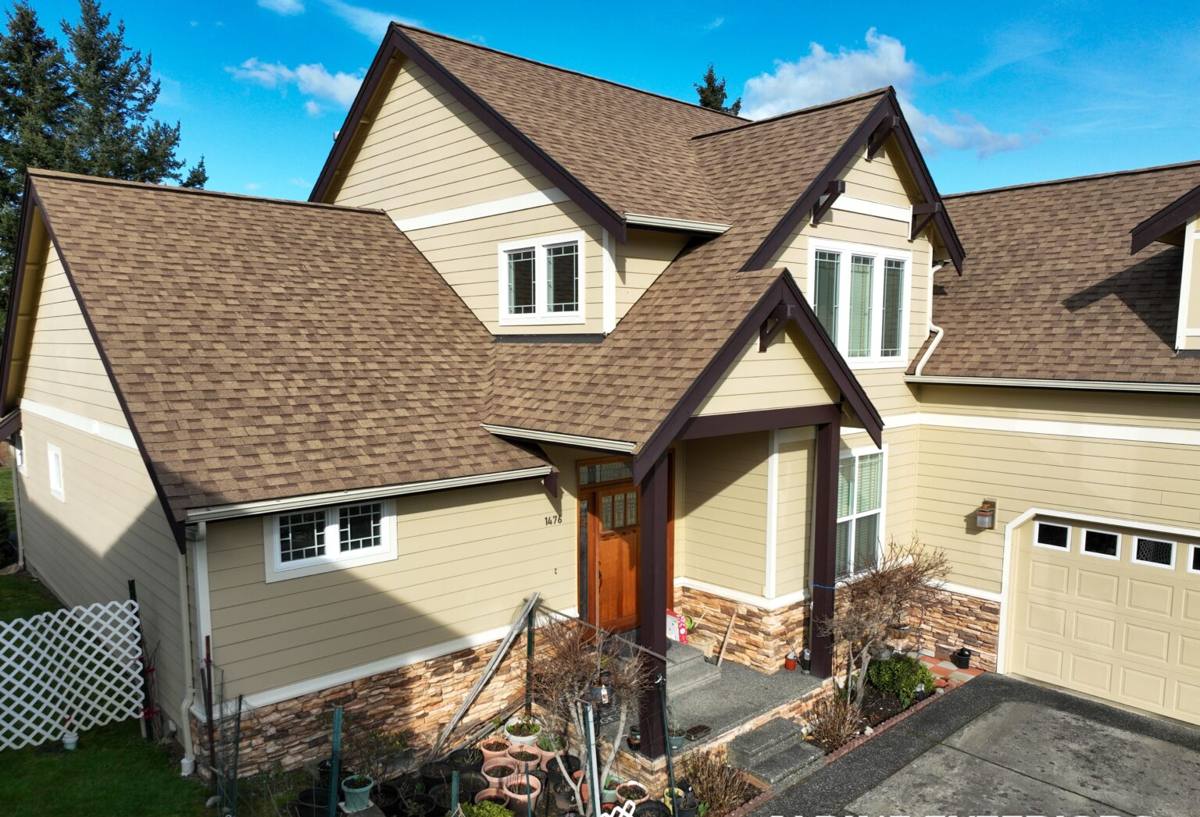
Why Whatcom County's Climate Changes How This Job Is Done
Homes around Sudden Valley and the surrounding Whatcom County lake and valley terrain deal with a specific combination of conditions: long stretches of driving, wind-pushed rain, a marine-influenced air that carries salt and moisture even away from the immediate coastline, and a moss season that runs a good chunk of the year on anything shaded or north-facing. None of that is exotic weather, but it's persistent, and persistent moisture is what finds every shortcut in a window install.
For new construction specifically, this shows up in a few practical ways:
- Wind-driven rain pushes water sideways and upward under sills and around trim, so flashing has to be lapped correctly (always shedding water downward and outward) rather than just caulked and hoped for.
- Sustained dampness means any organic material — untreated wood shims, cardboard packaging left in a rough opening, unsealed OSB edges — becomes a mold and rot risk if it's ever exposed to trapped moisture behind the cladding.
- Moss and algae growth on north- and west-facing walls holds moisture against the wall assembly longer than direct sun-exposed sides, which is worth factoring into sill pan and drainage plane details on those elevations.
- Salt-tinged marine air accelerates corrosion on cheap fasteners and unprotected metal flashing, which is why we specify corrosion-resistant flashing and fastener hardware rather than whatever came in the window's basic accessory kit.
None of this means new construction here needs anything unusual — it means the ordinary steps (WRB integration, sill pan flashing, proper lapping order, sealed nailing fins) can't be skipped or rushed, because this climate will find the gap eventually.
Getting the Install Right the First Time
The sequence that actually keeps water out
A correct new-construction window install follows a specific order. Skipping a step or doing them out of sequence is the single biggest cause of window-related water intrusion in new builds, and it's invisible from the outside until there's a stain on a wall years later.
- Rough opening framed square, level, and to the manufacturer's specified dimensions — undersized or racked openings force shims and gaps that compromise the seal.
- Sill pan flashing installed first, sloped slightly to the exterior, so any water that gets past the window has somewhere to go besides the framing.
- Weather-resistive barrier cut and integrated around the opening before the window goes in, not patched around it afterward.
- Window set, leveled, and fastened through the nailing fin per the manufacturer's schedule — not just at the corners.
- Side and head flashing lapped over the WRB in the correct shingle-style order (sides over sill pan, head flashing over the sides, house wrap over the head flashing).
- Interior and exterior sealant applied at the specified points only — over-sealing every gap can trap moisture instead of letting it drain.
- Backer rod and low-expansion foam (not standard high-expansion foam) used around the frame to avoid bowing the window jambs.
Quick checklist for homeowners watching the process
- Can you see a sill pan under each window before it's set? (Ask — it should be visible during rough-in.)
- Is the WRB lapped over the top flashing, not tucked under it?
- Are fasteners going through the fin into solid framing, not just sheathing?
- Is there a visible weep path at the sill for any water that gets behind the cladding?
- Does the crew document window installation with photos before siding closes it in?
Choosing Window Products for a New Build
For new construction we work with vinyl, fiberglass, and wood-clad windows, and the right call usually comes down to budget, the home's design intent, and how much long-term maintenance the owner wants to take on. We won't push a product line just because it has a wider margin — we'll tell you honestly where each option is strong and where it isn't.
| Frame Material | Upfront Cost | Maintenance | Best Fit |
|---|---|---|---|
| Vinyl | Lowest | Very low — no painting, won't rot | Budget-conscious builds, rental or spec homes |
| Fiberglass | Mid-to-high | Low — stable in temperature swings, holds paint well | Homes wanting durability without wood upkeep |
| Wood-clad | Highest | Moderate — exterior clad protects wood, but seals and joints need periodic inspection | Design-driven builds prioritizing interior wood look |
In a climate that stays damp for long stretches, we're careful about any product where the manufacturer's warranty depends heavily on perfect field installation and annual maintenance — that's a real trade-off worth knowing before you buy, not a knock on any specific brand. We'll walk you through warranty terms in plain language before you sign off on a product.
Energy Performance for New Construction
Washington's energy code sets minimum performance requirements for new-construction windows, and those numbers matter more here than in a milder climate because heating season runs long. Two ratings to know:
- U-factor — measures heat loss through the window. Lower is better for our winters.
- SHGC (Solar Heat Gain Coefficient) — measures how much solar heat passes through. Matters more on south- and west-facing glass.
We spec glass packages to meet or beat current code minimums as a baseline, then adjust by orientation — a north-facing wall in a shaded lot has different needs than a sun-exposed south wall on the same house.
Working Around Design Review in Sudden Valley
Many homes in and around Sudden Valley sit inside an association with architectural or design review requirements, and new construction typically has to go through that process before or during the build. We've worked enough projects in this community to know how to package window specs — sizes, grid patterns, exterior color, trim profile — in the format design review committees expect, so it doesn't turn into a back-and-forth that stalls your framing schedule. If your project already has an approved plan set, we install to that spec; if window selections are still open, we can help put together options that are likely to clear review the first time.
Our Process, Start to Finish
- Plan review — we look at your architectural drawings and window schedule before framing is complete, so orders go in with enough lead time.
- Rough opening verification — we check every opening against manufacturer specs before windows arrive on site, catching framing errors while they're still cheap to fix.
- Flashing and sill pan install — done to the sequence above, on every opening, not just the ones that are easy to reach.
- Window set and fasten — leveled, shimmed, and fastened per manufacturer instructions.
- Final flashing and WRB integration — completed and photographed before siding crews close the wall.
- Walkthrough — we go over operation, hardware, and any manufacturer warranty registration steps with you or your builder before the project wraps.
What Affects Cost on a New-Construction Window Package
| Factor | Why It Moves the Price |
|---|---|
| Number and size of openings | More glass and larger units mean more material and labor per opening |
| Frame material chosen | Vinyl, fiberglass, and wood-clad carry different unit costs |
| Glass package | Upgraded low-E coatings or triple-pane glass add cost but improve comfort and energy performance |
| Site access and timing | Coordinating install tightly with the framing schedule keeps labor efficient; delays or rework add cost |
| HOA-driven specs | Specific grid patterns, colors, or trim profiles required by design review can affect product selection |
We don't quote a job without seeing the plans and the actual openings — anything else is a guess, and we'd rather give you a number we can stand behind.
Why It Matters to Hire a Crew That Already Works This Area
A window installer who's worked new construction in Sudden Valley and the broader Whatcom County area has already seen how this specific climate treats a wall assembly over time — which elevations take the worst wind-driven rain, where moss builds up fastest, and what kind of flashing details actually hold up through a wet winter rather than just passing a dry-day inspection. We also know the local design review expectations, which saves time on a new build instead of adding a redo to your schedule. That local track record is worth more than a lower bid from a crew that's installing new-construction windows in this climate for the first time.
If you're planning a new build in the Yew Street area and want window installation done right from the framing stage forward, we'd be glad to take a look at your plans and give you a straightforward, no-pressure estimate — just fill out the form below.