 Sudden Valley
 Roof Repair Built for Geneva's Climate, Not a Generic Checklist
Geneva sits close enough to Lake Whatcom and the Whatcom County weather pattern that its roofs take on a specific combination of stress: damp air that carries a faint salt component off the Sound, driving rain that comes in sideways during fall and winter storms, and a moss season that can run eight months or longer in shaded, north-facing sections of a roof. None of those things alone will destroy a roof quickly. Together, over years, they find every weak seam, every under-nailed shingle tab, and every spot where flashing was cut a little short.
A roof repair that ignores this pattern tends to fail again within a season or two. A repair that accounts for it — matching materials, sealing methods, and moss treatment to what Geneva roofs actually face — holds up. That distinction is the whole point of this page.
What Geneva Homes Need From a Roof Repair
Most of the repair calls we get in this part of Whatcom County fall into a few categories, and each one has a slightly different root cause tied to the local climate:
- Wind-lifted or cracked shingle tabs from driving rain and gusts off the lake basin, which loosens sealant strips over time.
- Moss intrusion at butt joints and valleys, where moss holds moisture against the roof deck long after the rest of the roof has dried.
- Flashing failures around chimneys, skylights, and roof-to-wall transitions, usually where sealant has dried out or metal has been nailed instead of properly lapped.
- Soft or spongy decking discovered only once a leak has been chased back to its source, often further from the visible stain than homeowners expect.
- Granule loss and surface wear on older asphalt roofs, accelerated by the combination of moisture retention and UV exposure between storms.
A repair that only patches the visible symptom — say, caulking over a cracked shingle without checking the flashing above it — is a short-term fix. We look at each repair as a small investigation first: what let water in, and what will let it happen again if we don't address it.
Signs It's Time to Call for a Repair
- Water staining on a ceiling or attic sheathing, especially after a heavy rain event
- Visible moss growth thicker than a quarter-inch on north- or shade-facing slopes
- Shingles that look cupped, curled, or are missing granules in patches
- Daylight visible through the attic at roof valleys or penetrations
- Gutters filling with granules or moss debris after every storm
- Soft spots when walking the roof deck (we check this — homeowners shouldn't)
- Rusted or lifted flashing around chimneys, vents, or skylights
What a Correct Roof Repair Actually Involves
A proper repair is not just replacing what's broken — it's making sure the fix integrates with the roof system around it so water still sheds correctly. On most Geneva homes that means:
- Locating the true source of the leak or damage, which is often uphill from where the interior stain shows up.
- Removing damaged material fully — shingles, underlayment, or decking — rather than layering a patch over compromised material.
- Checking the decking underneath for soft spots or rot before anything new goes back on.
- Re-establishing proper flashing laps at any wall, chimney, or valley transition involved in the repair.
- Matching materials as closely as possible to the existing roof so the repair doesn't stand out or create a mismatched wear pattern.
- Treating any moss or algae in the repair area so it doesn't immediately re-establish itself under the new material.
Skipping any one of these steps is how a "repaired" roof leaks again in the same spot a year later.
Moss, Algae, and Whatcom County's Long Wet Season
This region's moss season is long enough that it's really more of a baseline condition than a seasonal event. Shaded roof sections, especially those under overhanging trees common around Lake Whatcom properties, stay damp for extended stretches, and moss doesn't need much more than that to take hold. Left alone, moss lifts shingle edges as it grows, which is exactly the mechanism that lets wind-driven rain get underneath the shingle mat instead of running off it.
Any repair we do in a moss-prone area includes physically removing moss and buildup (never pressure-washing shingles, which strips granules and shortens their life), treating the area to slow regrowth, and checking whether zinc or copper control strips make sense for that particular roof going forward. We treat moss control as part of the repair, not an upsell — a repair that leaves moss in place next to it is only a partial fix.
Common Roofing Materials on Geneva Homes: Repair Considerations
Different roofing materials fail differently, and the right repair approach changes with the material. Here's how the most common types we see in this area typically hold up and what repair usually involves:
| Material | How It Typically Fails Here | Repair Approach |
|---|---|---|
| Asphalt composition shingle | Granule loss, curling, wind-lifted tabs, moss at valleys | Section replacement with matched shingle, resealing tabs, valley cleaning |
| Wood shake/shingle | Moss and moisture retention, splitting, rot at the deck | Individual shake replacement, deck inspection, moss treatment |
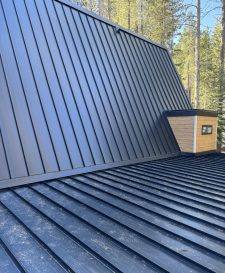
| Metal panel | Fastener backout, seam and flashing leaks, minor denting | Fastener replacement, seam resealing, flashing correction |
| Flat/low-slope membrane | Ponding water, seam separation, flashing pull-away | Seam repair or patch, drainage correction, flashing re-lap |
If your roof is a material not listed here, the same principle applies: the repair method has to match how that specific material actually fails, not a one-size-fits-all patch.
Repair vs. Replacement: How We Actually Decide
Not every damaged roof needs full replacement, and not every leak can be permanently solved with a patch. We look at a few honest factors before recommending either direction:
| Factor | Favors Repair | Favors Replacement |
|---|---|---|
| Extent of damage | Localized to one section or penetration | Spread across multiple slopes or widespread granule loss |
| Roof age | Well within expected service life | At or past the material's typical lifespan |
| Decking condition | Solid, no rot found during inspection | Soft or rotted decking in multiple areas |
| Underlying cause | Isolated, correctable issue (one flashing, one section) | Systemic issue, like failed underlayment throughout |
| Cost over time | Repair cost is a small fraction of replacement cost | Repeated repairs are approaching replacement cost |
As a broad range, simple flashing or section repairs on most homes run in the low hundreds of dollars; larger repairs involving decking replacement or multiple sections can run well into the thousands. We'll always give you the honest comparison against a full replacement estimate before you commit either way — it's your call, and we'd rather you make it with real numbers.
Our Roof Repair Process for Geneva Homeowners
- Inspection and diagnosis. We walk the roof (weather permitting) and check the attic from the inside, tracing the actual water path rather than just the visible symptom.
- Written estimate. You get a clear scope of work and a price range before anything is scheduled — no surprise add-ons once we're on the roof.
- Repair work. Damaged material is removed, decking is checked, flashing is corrected, and new material is installed to match the existing roof.
- Moss and debris cleanup. Any moss or algae in the work area is treated as part of the job, not billed separately as an afterthought.
- Final check. We confirm the repair sheds water correctly and walk you through what we found and fixed.
Why a Crew That Already Works Geneva Matters
A roofer who works this part of Whatcom County regularly already knows what a Geneva-area roof is up against before they climb the ladder — the moss patterns on shaded, tree-covered lots, the way driving rain off the lake basin tests flashing at wall transitions, and the salt-tinged air that slowly works on exposed fasteners and metal. That familiarity changes what gets checked during an inspection and what gets prioritized during a repair.
It also means a faster, more accurate estimate. We're not guessing at how local weather affects a given material or design — we've already repaired plenty of roofs facing the same conditions in the surrounding area, and we bring that experience to every job here.
After the Repair: Keeping It From Happening Again
- Have gutters cleaned at least twice a year — clogged gutters back water up under shingle edges
- Trim back overhanging branches to cut down on shade and debris that feed moss growth
- Schedule a roof check after any major windstorm, even if nothing looks obviously wrong from the ground
- Address small issues (a lifted shingle, a small stain) right away rather than waiting for a bigger leak
- Ask about moss control treatment as part of routine maintenance, not just as a repair-time fix
A repair done right, paired with a little routine upkeep, should hold up through several more Whatcom County wet seasons without needing a repeat visit for the same problem.
If you're seeing signs of roof trouble on a Geneva-area home, we're happy to take a look and give you a straightforward, no-pressure estimate — just fill out the form below to get started.