 Sudden Valley
 Roofing in a Wet, Shaded, Lake-Whatcom Microclimate
Silver Beach sits in one of the wetter, shadier corners of Whatcom County. Between the tree canopy around Lake Whatcom, the marine-influenced air moving in off the Sound, and a rainy season that stretches from fall well into spring, roofs here don't age the way they do in drier parts of the state. Moisture sits longer on north-facing slopes and shaded valleys, wind-driven rain finds its way under loose or aging flashing, and moss gets a long runway to establish itself before summer ever dries things out. A roof replacement in this neighborhood has to be planned around those realities, not just installed to a generic spec sheet.
That doesn't mean Silver Beach roofs fail faster than anywhere else — a correctly installed, well-ventilated roof holds up fine here. It means the details that get skipped on a rushed job (proper underlayment coverage, flashing at every transition, real attic ventilation) matter more in this climate than they would somewhere drier, because there's less margin for error when a roof spends months of the year damp.
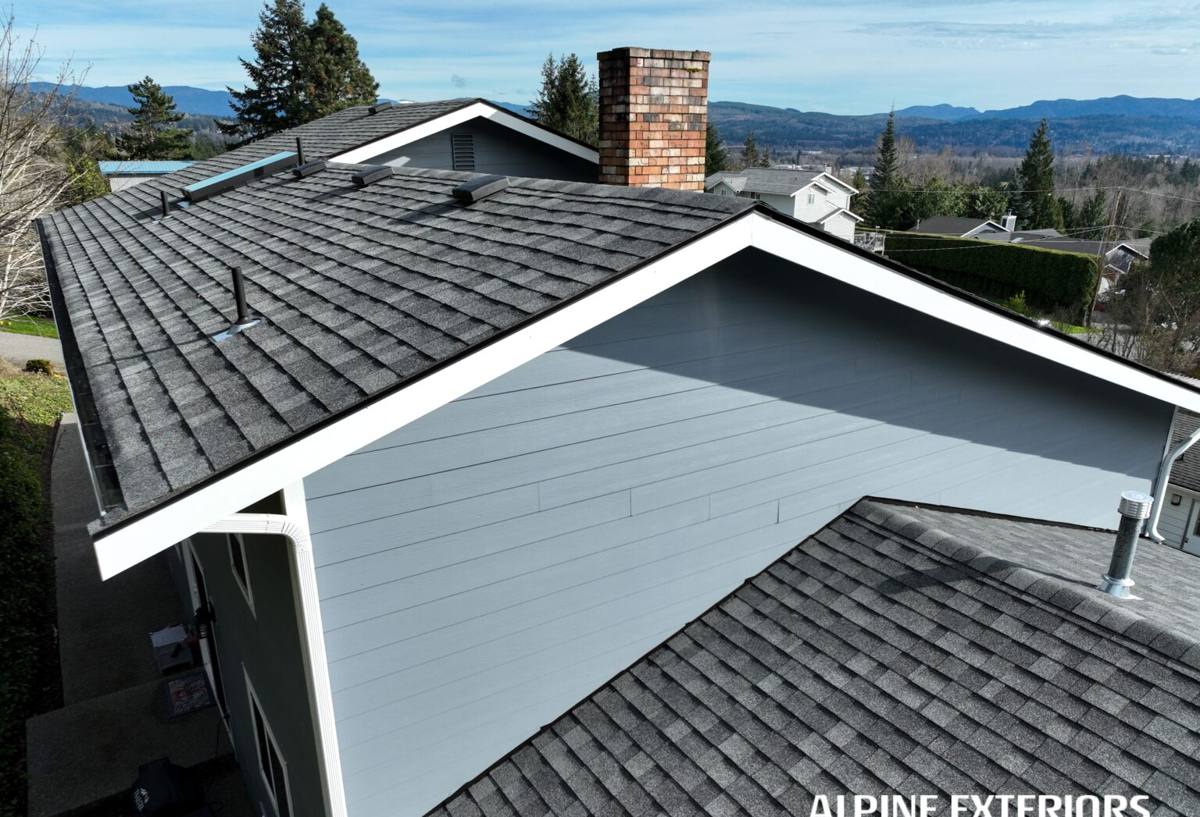
What Actually Wears Out a Roof Here
Moss and Algae
Shaded roof sections — especially those under fir or cedar cover — stay damp longer after every rain. Moss doesn't just look bad; it lifts shingle edges as it grows, holding moisture against the roofing material and accelerating granule loss. Left unaddressed for a few seasons, a mossy roof can shed years off its expected life.
Driving Rain and Wind
Storms off the water tend to push rain sideways, not just straight down. That means flashing around chimneys, skylights, dormers, and roof-to-wall transitions takes more punishment than it would in a calmer climate — and it's usually where a marginal roof starts leaking first, long before the field of the roof itself fails.
Salt-Tinged Marine Air
Homes closer to open water deal with a faint but constant presence of salt in the air, which can accelerate corrosion on exposed metal — nails, flashing, vents, gutter hardware. It's a slow effect, but over the life of a roof it adds up, which is part of why fastener and flashing material choice matters more here than it would inland.
What a Correct Roof Replacement Involves
A roof replacement isn't just stripping off old shingles and nailing down new ones. Done right, it's a sequence where each layer protects the next:
Tear-Off and Deck Inspection
We remove the old roofing down to the deck rather than layering over it. That's the only way to actually see the plywood or plank sheathing underneath — soft spots, delamination, or rot from old leaks won't show up until the old material is off. Any damaged decking gets replaced before anything new goes down; skipping this step is one of the most common shortcuts that leads to problems five or ten years later.
Underlayment and Water Protection
In a climate that stays wet for months at a stretch, the underlayment is doing more work than people realize. We use synthetic underlayment across the field for tear strength and consistent water resistance, with self-adhering ice-and-water membrane at eaves, valleys, and other vulnerable spots where wind-driven rain is most likely to find a way in.
Flashing at Every Transition
Chimneys, skylights, sidewalls, valleys, and roof penetrations all get new flashing — not reused, patched, or caulked-over old metal. Flashing is where the majority of real-world leaks originate, and it's also the easiest place for a lower-cost job to cut corners because it's slower, more detail-oriented work than laying shingles in the open field.
Ventilation
A roof deck that can't breathe traps moisture from the inside, which shortens shingle life and can lead to rot regardless of how good the roofing material is. We check intake (soffit) and exhaust (ridge or roof vents) balance as part of every replacement, not as an afterthought.
Choosing a Roofing Material for a Lake Whatcom Home
Most Silver Beach homes end up on architectural asphalt shingles or metal roofing, with a smaller number of cedar or synthetic-shake roofs. Each has real trade-offs in this specific climate:
| Material | Moss/moisture behavior | Typical lifespan | Relative cost |
|---|---|---|---|
| Architectural asphalt shingle | Good with proper ventilation; algae-resistant granule options help on shaded slopes | 25–30 years | Lowest to mid |
| Standing seam metal | Sheds moss and moisture very well; smooth surface resists buildup | 40–50+ years | Highest |
| Cedar shake | Attractive but needs regular maintenance to resist moss and rot in a wet climate | 20–30 years with upkeep | High |
| Synthetic shake/slate | Won't rot or feed moss the way wood can; consistent performance in shade | 40–50 years | High |
We don't push cedar shake as a default choice on shaded, moisture-heavy lots — not because it's a bad product, but because it demands a maintenance routine (cleaning, treating, occasional board replacement) that a lot of homeowners underestimate until they're several years in. If you want the look, we'll talk through what upkeep actually looks like so you're deciding with real information, not a sales pitch.
Moss and Algae: The Long-Term Maintenance Factor
Even a well-installed roof in this neighborhood will see some moss activity over the years, especially under tree cover. What matters is starting from a roof that's set up to resist it: algae-resistant shingle granules, zinc or copper strips near the ridge on shaded sections, and keeping gutters clear so water isn't backing up under the shingle edge. None of that eliminates maintenance entirely, but it buys years between cleanings and reduces the chance that moss growth turns into a moisture problem underneath the shingles.
Signs a Silver Beach Roof Needs Replacing, Not Just Repair
Not every roof problem here calls for a full replacement — plenty of issues are legitimate repairs. But a few signs usually mean the roof is past the point where patching makes sense:
- Granules collecting heavily in gutters and downspouts, especially on an older roof
- Shingles that are curling, cupping, or cracking across large sections rather than one isolated spot
- Daylight visible through the roof deck from inside the attic
- Soft or spongy decking felt underfoot during an inspection
- Repeated leaks in different locations after previous patch repairs
- Heavy, established moss growth across most of the roof rather than a shaded corner
- Flashing that's rusted, separated, or was sealed with caulk instead of properly formed metal
If you're only seeing one or two of these, and only in one area, a targeted repair may genuinely be the more sensible move — we'll tell you that if it's true.
Our Process From Estimate to Cleanup
- On-site inspection. We walk the roof (not just look from the ground) and check the attic for ventilation and moisture signs.
- Written estimate. Material options, scope, and timeline laid out clearly, with no pressure to decide on the spot.
- Scheduling around weather. Given how much rain this area gets, we plan tear-off windows carefully and keep the deck protected if conditions shift mid-job.
- Tear-off, deck repair, and installation. Old roofing removed, deck inspected and repaired as needed, then underlayment, flashing, and roofing installed in that order.
- Cleanup and magnetic nail sweep. Job site cleared of debris and swept for stray fasteners before we call it done.
- Final walkthrough. We go over the finished roof and ventilation with you before wrapping up.
Why a Crew That Already Works This Neighborhood Matters
Roofing crews that don't regularly work around Lake Whatcom sometimes underestimate how much shade, moisture, and slope combine on properties here. A crew that already works Silver Beach and the surrounding Sudden Valley area knows to check for it — steeper driveway access, tree cover that affects staging and cleanup, and the kind of shaded roof sections that need extra attention to ventilation and moss resistance. If your property is part of a homeowners' association with guidelines on roofing materials or colors, we've been through that approval process before and can help you navigate it rather than guess at what's expected.
Local familiarity also means fewer surprises mid-project — knowing what a typical Whatcom County jurisdiction expects for permitting and inspection, and having a realistic sense of how weather windows around here actually behave during a tear-off.
Getting an Estimate
If your roof is showing its age, dealing with persistent moss, or you're just not sure whether repair or replacement is the right call, we're happy to take a look and give you an honest answer either way. The form below gets you a free, no-pressure estimate — no obligation, and no upsell if a repair is genuinely the better move for your situation.