 Sudden Valley
 Why Sehome Roofs Wear Differently Than You'd Expect
A roof in Sehome isn't fighting the same conditions as a roof three states inland. Whatcom County sits close enough to the Salish Sea that salt-laden air moves through on a regular basis, and that air is hard on anything metal — fasteners, flashing, gutter hangers, vent caps. Add in driving, wind-pushed rain off the water and a shaded, tree-heavy tree canopy that keeps roof surfaces damp for days after a storm, and you get a roof that ages differently than the same materials would in a drier climate.
None of this means Sehome roofs fail faster across the board. It means the failure points are different, and a repair that doesn't account for them tends to come back within a season or two.
Salt Air and Metal Fatigue
Galvanized fasteners, exposed flashing edges, and gutter hardware corrode faster near the coast than they do further inland. A repair that reuses corroded fasteners or leaves old flashing in place because "it's not leaking yet" is often just delaying the next call.
Driving Rain and Wind-Driven Leaks
Most leaks we find aren't in the open field of the roof — they're at transitions: valleys, chimney flashing, skylight curbs, vent boots. Wind-driven rain finds the smallest gap at these joints and pushes water uphill under shingles, which is why a leak inside the house often shows up several feet from where the actual failure is on the roof.
Moss Season
Shaded, moisture-retaining lots are common through this part of Whatcom County, and moss thrives in exactly those conditions. Moss doesn't just look bad — it holds water against the shingle surface, lifts shingle edges as it grows, and accelerates granule loss. A roof that's been carrying a moss mat for a couple of seasons usually has more going on underneath than what's visible from the ground.
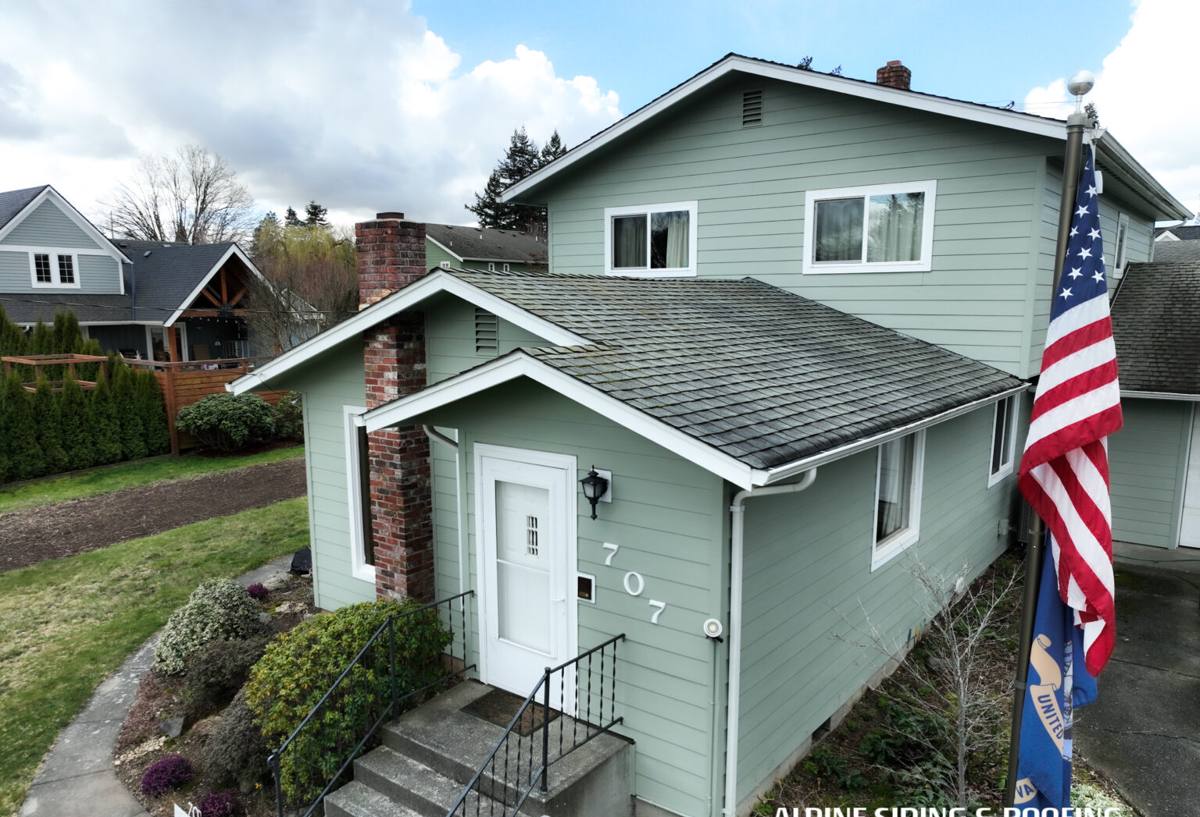
What Counts as a Roof Repair (and What Doesn't)
Repair means fixing a specific, localized problem — a failed flashing detail, a section of wind-damaged shingles, a cracked vent boot — without redoing the whole roof. It's the right call when the roof's overall structure, decking, and remaining shingle life are sound and the problem is isolated. It's the wrong call when the roof has multiple unrelated failure points, when the shingles are past their service life and simply brittle everywhere, or when repeated patch jobs haven't held.
Signs You Likely Need a Repair, Not a Replacement
- The leak or damage is limited to one area — one valley, one flashing point, one storm-damaged section
- The rest of the roof still has good shingle flexibility and intact granule coverage
- This is the first or second repair call for this roof, not the fifth
- The decking underneath the damaged area is dry and solid, not soft or delaminated
- The roof is under roughly two-thirds of its expected service life
Common Roof Repair Calls We See Around Sehome
The specifics vary by house age and roof design, but a handful of problems show up repeatedly on the calls we run in this area:
- Moss-damaged shingles along shaded north- and east-facing slopes
- Flashing failures at chimneys, skylights, and roof-to-wall transitions
- Clogged or undersized gutters backing water up under the first course of shingles
- Fascia and soffit rot where trapped moisture has had time to work
- Wind-lifted shingles and popped nails on exposed hips and ridges
- Cracked or dried-out pipe boots letting water track down into the attic
What a Correct Repair Involves
Matching Materials, Not Just Patching
A durable repair uses shingles and flashing that match the existing roof's profile and weather-exposure rating, tied in correctly with the surrounding courses — not a mismatched patch caulked over the top. Caulk and roofing cement have a place, but they're a short-term fix, not a repair method on their own.
Flashing Details Matter More Than the Field
Since most leaks originate at transitions, a correct repair rebuilds the flashing detail itself — proper step flashing, counter-flashing, and underlayment integration — rather than sealing over a flashing that's already failed. Sealing a bad flashing joint buys a few months at best in a climate with this much wind-driven rain.
Ventilation and Moisture Balance
We check attic ventilation as part of most repair calls, because trapped moisture from poor airflow shows up on the roof deck long before it shows up as a visible leak. A repair that ignores a ventilation problem is fixing the symptom, not the cause.
Our Repair Process
- Inspection. We get on the roof (weather permitting) and check the whole surface, not just the spot you called about — a single leak often has a related issue nearby.
- Diagnosis. We trace the leak to its actual source, which is frequently not directly above the interior stain or drip point.
- Written scope and estimate. You get a clear description of what's being repaired, the materials used, and the cost before any work starts.
- Repair. We do the work, including any flashing or decking replacement the diagnosis calls for — not just a surface patch.
- Cleanup and check. Job site cleared of old materials and debris, gutters checked for anything that fell during the repair.
- Follow-up. We stand behind the work and are reachable if anything comes up after the next round of weather.
Repair or Replace? How We Help You Decide
| Factor | Leans Toward Repair | Leans Toward Replacement |
|---|---|---|
| Roof age | Under ~15-18 years for asphalt | Near or past manufacturer service life |
| Number of past repairs | First or second call | Third or more, same roof |
| Extent of damage | One isolated area | Multiple unrelated problem areas |
| Decking condition | Solid, dry underneath damage | Soft, delaminated, or previously repaired decking |
| Shingle condition elsewhere | Still flexible, granules intact | Brittle, curling, heavy granule loss across the roof |
We'll tell you honestly which side of this table your roof falls on. There's no benefit to us in talking a homeowner into a full replacement when a repair will genuinely hold, and there's no benefit in patching a roof that's going to keep generating service calls.
What Roof Repairs Typically Cost
Every repair is priced after we've actually seen the roof, but here's the general range of what different types of repair calls tend to run, so you have a sense of scale before we quote you:
| Repair Type | Typical Scope | Rough Cost Range |
|---|---|---|
| Minor flashing or vent boot fix | Single point repair, one visit | Low hundreds |
| Moss treatment and localized shingle replacement | Moss removal plus one damaged section re-shingled | Mid hundreds to around $1,000 |
| Valley or chimney flashing rebuild | Removal of old flashing, new underlayment and flashing installed | Roughly $1,000-$2,500 |
| Larger multi-area repair | Several problem areas addressed in one visit | $2,500 and up, depending on scope |
These ranges are meant as a planning reference, not a quote. Roof pitch, access, and how much of the surrounding roof needs to come up to do the repair correctly all move the number.
Homeowner Maintenance Checklist Between Repairs
A repair holds a lot longer when the roof isn't fighting the same conditions that caused the problem in the first place. A few habits go a long way in this climate:
- Clear gutters and downspouts at least twice a year, more often under heavy tree cover
- Trim back branches that overhang the roofline to cut down on shade, debris, and moss growth
- Schedule moss treatment before it builds into a thick mat, not after
- Check gutters occasionally for accumulated granules — a sign of accelerating shingle wear
- Look in the attic after a hard rain for daylight, damp insulation, or musty smell
- Never pressure-wash a roof — it strips granules and drives water under shingles
Why Hiring a Crew That Already Works Sehome Matters
Roof repair isn't a one-size-fits-all trade. A crew that works this part of Whatcom County regularly already knows how moss cycles run through the wet months here, which flashing details tend to fail first on the roof styles common to the area's housing stock, and how much wind-driven rain a given roof orientation actually takes in a typical winter. That's the kind of judgment that only comes from doing the work locally, season after season — not from a general reference chart.
It also matters for follow-up. If something comes up a few months after a repair, you want a crew you can reach that's still working in the area, not a traveling outfit that's moved three counties over. As a local exteriors crew based in Sudden Valley, we run repair calls throughout Whatcom County, including Sehome, and we're around for the whole life of the repair, not just the day we're on your roof.
If you've got a leak, a moss problem, or a roof that's had one too many patch jobs, we're happy to take a look and give you a straight answer about what it actually needs. Reach out for a free, no-pressure estimate using the form below.