 Sudden Valley
 Why Silver Beach Puts Siding to the Test
Silver Beach sits low against the water, and that location shapes everything about how siding ages here. Homes get a steady dose of moisture off the lake, wind-driven rain that doesn't just fall straight down but gets pushed sideways into walls, and long stretches of shaded, damp weather that keep exterior surfaces from drying out fully between storms. Add Whatcom County's mild, wet winters and you have a climate that rewards siding systems built for water management and punishes anything that isn't.
Moss is the visible symptom most homeowners notice first — green streaking on north-facing walls, dark staining under eaves, a fuzzy texture creeping up from the ground line. But moss is a symptom, not the real problem. Wherever moss can hold on, moisture is sitting against the wall longer than it should, and that's the condition that actually degrades siding, trim, and the sheathing behind it over time.
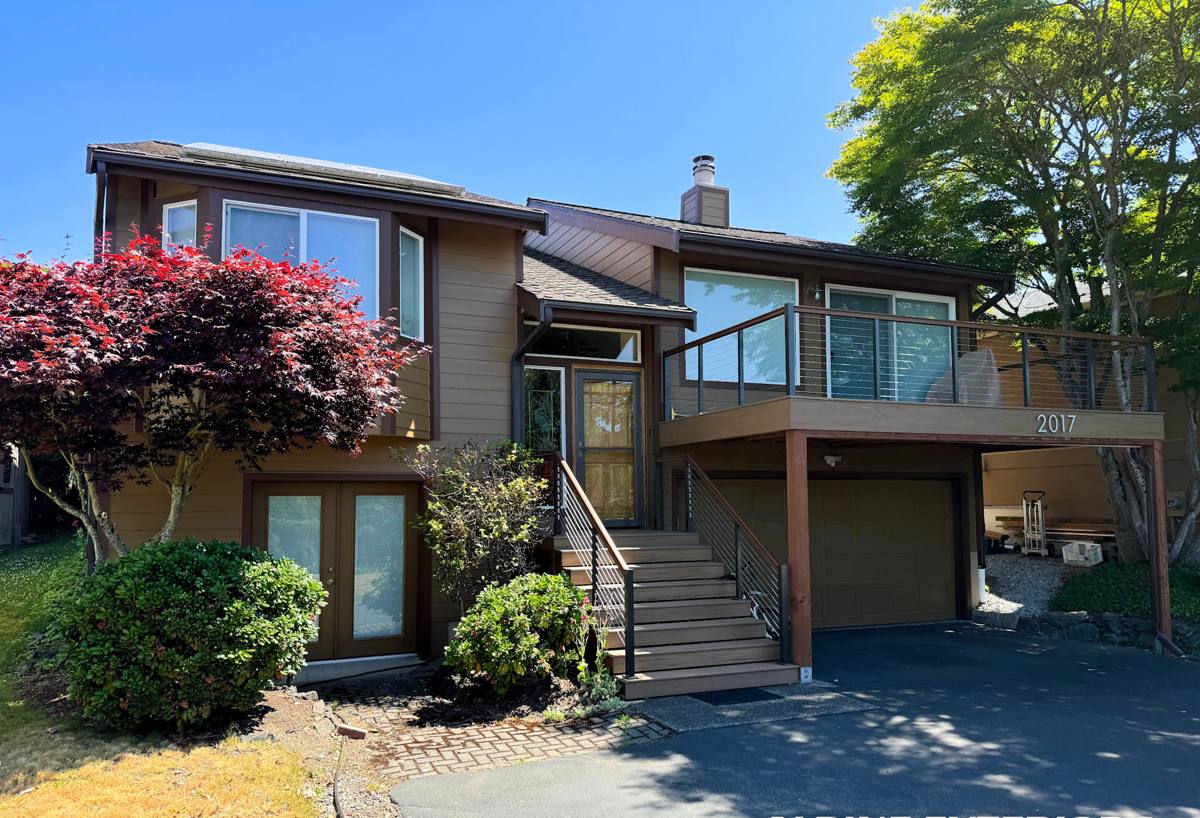
What Silver Beach Homes Actually Need From Their Siding
A siding installation in this neighborhood has to do more than look good on day one. It needs to:
- Shed driving rain without letting water track behind the panels at laps, corners, and penetrations
- Resist swelling, softening, or rot from prolonged dampness — not just occasional wetting
- Hold a factory finish that doesn't need repainting every few years in a climate that's hard on exposed coatings
- Discourage moss and algae growth rather than giving it a porous surface to colonize
- Stay dimensionally stable through repeated wet-dry, warm-cool cycling without cracking or cupping
That list rules out a lot of products before you even get to appearance or price. It's also exactly why this company installs one siding system on homes in this area: James Hardie fiber cement.
Why We Standardized on James Hardie for This Climate
We don't install LP SmartSide, vinyl, Cemplank, Allura, primed spruce, or cedar — not because those products have no place anywhere, but because after years of working exteriors in exactly this kind of damp, moss-prone, water-adjacent climate, fiber cement from James Hardie is what consistently holds up without turning into a maintenance project. It's non-combustible, it doesn't feed on moisture the way wood-based or wood-fiber products can, and Hardie's ColorPlus factory finish is engineered to resist fading and hold up to the kind of prolonged damp exposure that strips ordinary paint jobs faster than homeowners expect. Hardie also builds specific product lines engineered for different climate zones — the HZ5 line used in this region is formulated for wetter, harsher weather rather than a one-size-fits-all board.
None of that means Hardie is maintenance-free or magic. It still has to be installed correctly — with the right clearances, flashing, and fastening — to deliver on what the product is capable of. That's the part that actually determines how a siding job performs here.
How Hardie Compares in a Damp, Moss-Prone Climate
| Factor | James Hardie Fiber Cement | Vinyl | Wood / Primed Spruce / Cedar |
|---|---|---|---|
| Moisture resistance | Engineered non-combustible cement composite; doesn't absorb and swell | Water-resistant itself, but seams and gaps let moisture behind panels | Absorbs moisture; prone to rot and swelling in prolonged damp conditions |
| Moss/algae resistance | Dense, factory-finished surface is less hospitable to growth | Resistant to rot, but grime and algae still cling to the surface | Porous surface holds moisture and organic growth readily |
| Finish longevity | ColorPlus factory finish holds color for years without repainting | Color is baked into the material but can fade or chalk over time | Requires repainting/re-staining on a recurring cycle to stay protected |
| Fire resistance | Non-combustible | Can melt or deform under heat | Combustible |
| Typical warranty | Long-term, transferable manufacturer warranty on the product | Varies widely by manufacturer and product grade | Typically no manufacturer warranty against rot/moisture |
What a Correct Installation Involves
The single biggest factor in how long siding lasts in Silver Beach isn't the brand on the box — it's whether the crew installing it manages water correctly. A Hardie board installed with sloppy flashing or the wrong clearances can still develop moisture problems behind the wall, even though the board itself resists water. Here's what we actually do on a proper installation:
Before the First Board Goes Up
- Remove old siding down to the sheathing and inspect for hidden rot, especially around windows, corners, and the bottom few feet of wall where splash-back and ground moisture do the most damage
- Repair or replace any compromised sheathing and framing before covering it back up
- Install a weather-resistive barrier (house wrap) that's lapped and taped correctly so water drains down and out, not into the wall cavity
- Flash every window, door, and penetration so water is directed out and away from the sheathing, not trapped behind trim
During Installation
- Maintain correct clearances from grade, decks, roof lines, and other horizontal surfaces so siding isn't sitting in standing water or constant splash
- Follow James Hardie's fastening and lap requirements exactly — under- or over-driven fasteners and incorrect nailing patterns are a common cause of early failures
- Caulk and seal joints, corners, and penetrations with products rated for Hardie, not generic sealants that fail under repeated wet-dry cycling
- Keep butt joints and corners tight and properly backed so water can't wick in at the seams
Every one of those steps matters more in a climate like this than it would somewhere dry. Skip one, and moisture finds it — usually behind the wall, where you can't see it until the damage is already done.
Our Process for Silver Beach Homes
- Walk-through and assessment — we look at your current siding, note problem areas (moss lines, soft spots, failed caulk, water staining), and check clearances and drainage around the home
- Written estimate — a clear scope of what's being replaced, what Hardie product and profile fits the home, and what the job includes
- Tear-off and sheathing inspection — we don't cover up problems; anything soft or rotted gets addressed before new siding goes on
- Weather barrier and flashing — the water management layer goes in correctly, since this is what actually protects the wall long-term
- Hardie installation — installed to manufacturer spec for fastening, clearances, and joint treatment
- Final walk-through — we go over the finished job with you before calling it done
Signs Your Current Siding Is Losing the Fight
Homeowners in this area often live with early warning signs longer than they should, because from a distance the siding still looks fine. Up close, the signs are usually there:
| What You See | What It Usually Means |
|---|---|
| Persistent moss or dark streaking, especially on shaded or north walls | Moisture is sitting against the surface longer than it should be drying out |
| Soft or spongy spots when pressed | Water has gotten behind the siding and is affecting the sheathing underneath |
| Peeling, bubbling, or chalky paint | The finish has failed and is no longer shedding water effectively |
| Gaps opening at seams, corners, or trim | Caulk has failed or the material has moved, creating a path for water intrusion |
| Visible warping, cupping, or swelling of boards | The siding material itself has absorbed moisture and is breaking down |
Why It Matters That We Already Work in This Neighborhood
Siding installation isn't identical from one part of Whatcom County to another. A crew that mostly works drier, more sheltered lots can underestimate what a lake-adjacent, moisture-heavy site like Silver Beach demands — tighter flashing details, more attention to grade clearances, and no shortcuts on the weather barrier. Working this area repeatedly means we're not guessing at how the local climate behaves; we've seen where water problems tend to start on homes like this one, and we build the installation to close those gaps before they open.
It also means fewer surprises during the estimate. We know the kind of moss and moisture patterns to expect on a Silver Beach home, so the assessment tends to be more accurate and the scope of work is less likely to change once tear-off starts.
What to Expect After Installation
Correctly installed Hardie siding is genuinely low-maintenance, not zero-maintenance. In a climate like this, a homeowner should still:
- Rinse siding periodically to keep organic buildup from accumulating, especially on shaded sides of the home
- Keep gutters clear so overflow isn't running down the wall face
- Trim back vegetation and tree cover that keeps a wall surface shaded and damp
- Have caulking and trim checked periodically, since sealant is the first thing to age even when the siding itself is holding up fine
That's a modest routine compared to what wood or lower-grade siding demands in this environment, and it's part of why the long-term cost of ownership tends to favor a correctly installed Hardie system even when the upfront number is higher than vinyl.
Get a Straightforward Estimate
If your Silver Beach home is showing moss buildup, soft spots, failing paint, or you're just planning ahead for a siding replacement, we're happy to take a look and give you an honest read on what's going on and what it would take to fix it right. The estimate is free, there's no pressure to commit, and you'll get a clear explanation of what we'd recommend and why — use the form below to get started.