 Sudden Valley
 Why Decks in Silver Beach Wear Out Faster Than You'd Expect
If you've owned your home in Silver Beach for more than a few years, you've probably already noticed it: the deck ages faster here than it would somewhere drier and calmer. Between the salt-laden air drifting in off the water, the steady driving rain that defines a Whatcom County winter, and a moss season that seems to start earlier every year, an outdoor deck takes a beating that most manufacturers' warranty language simply doesn't account for.
Salt air accelerates corrosion in fasteners, hardware, and any exposed metal connectors. Driving rain doesn't just fall straight down — wind-driven moisture gets pushed sideways into joints, under railings, and into end-grain cuts that were never properly sealed. And moss doesn't just look bad; it holds moisture against the decking surface for months at a time, which is exactly the condition that causes rot, delamination, and slick, unsafe footing.
None of this means a deck in Silver Beach is doomed. It means the build has to account for the environment from the start — not as an afterthought, but in the framing, the fasteners, the flashing, and the material choice.
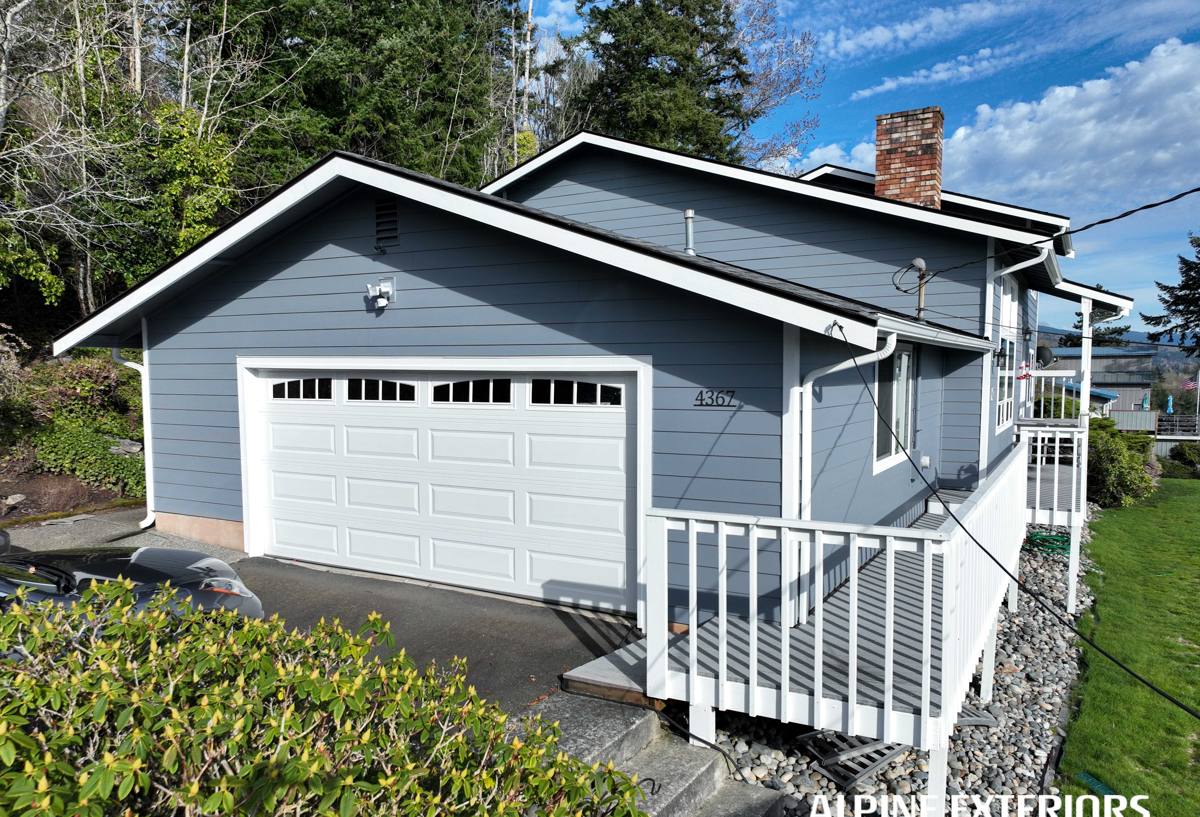
Signs Your Deck Needs Replacement, Not Just Repair
Not every tired-looking deck needs to be torn out. But there's a point where patching boards or re-staining is just delaying an expense — and in some cases, delaying a safety problem. Here's how we tell the difference on a typical visit.
Repair usually makes sense when:
- A handful of boards are cupping, splintering, or graying, but the framing underneath is solid
- Railings are loose but the posts themselves aren't rotted at the base
- Surface moss and mildew are the main complaint, with no soft spots underfoot
Replacement is the honest answer when:
- You can push a screwdriver into the ledger board, joists, or posts and it sinks in easily — that's rot, not just weathering
- The deck feels bouncy or springy in the middle, which usually points to undersized or failing joists
- Multiple structural members show water staining, fungal growth, or soft, spongy wood
- The ledger board attachment to the house looks improperly flashed — a common issue on older decks and a real water-intrusion risk to the house itself
- Fasteners and hardware are heavily corroded, which is common on older decks in this air
An honest contractor will tell you when repair is enough. We'd rather sell you a smaller repair now than a full replacement you didn't need — but when the structure itself is compromised, patching over it just hides the problem until it's more expensive to fix.
What a Correct Deck Replacement Actually Involves
A deck replacement is more than pulling up old boards and screwing down new ones. Done right, it addresses everything underneath the surface that you can't see once it's finished.
Structure first
This means inspecting and, where needed, replacing the ledger board, joists, beams, and posts. Ledger board attachment and flashing deserve special attention here — this is the single most common point of hidden water damage on a house-attached deck, and it's also the hardest to inspect once the new decking is down. We flash it correctly the first time because redoing it later means tearing the deck apart again.
Footings
Footings need to be sized and set to local frost and soil conditions, not guessed at. A deck that shifts or settles unevenly over a few winters is almost always a footing problem, not a decking problem.
Fasteners and hardware
Given the salt air in this area, we use corrosion-resistant, code-rated hardware and fasteners throughout — joist hangers, structural screws, post bases. This is not a place to save money, since hardware failure is a structural and safety issue, not a cosmetic one.
Decking surface
Whatever material you choose, correct installation includes proper spacing for drainage and expansion, hidden or properly countersunk fastening, and attention to end-grain sealing on cut boards.
Railings and stairs
Railings need to meet code height and baluster spacing requirements, and stair stringers need to be sized for the actual rise and run of your site — not a generic template.
Choosing a Decking Material for This Climate
There's no single "right" material for every home, but in a climate with this much rain, salt air, and moss pressure, some options hold up noticeably better than others with less ongoing work from you.
| Material | How It Handles Our Climate | Maintenance |
|---|---|---|
| Pressure-treated wood | Affordable, but end grain and fastener holes are entry points for moisture; needs consistent sealing to resist rot and moss staining | Annual cleaning and re-sealing recommended |
| Cedar | Naturally moisture- and insect-resistant, ages to a gray patina if left unfinished, but still needs cleaning to keep moss from taking hold | Periodic cleaning; sealing if you want to keep the original color |
| Standard composite | Resists rot, but uncapped or older-generation composite can absorb moisture at the surface and grow moss or mildew if not cleaned | Occasional washing; no sealing or staining |
| Capped composite / PVC | A fully protective outer shell resists moisture absorption and staining best of any option here, at a higher upfront cost | Low — occasional rinsing |
We don't push one material on every homeowner. We'll walk you through what each option actually costs to own over time in this specific environment, not just what it costs to install.
How Our Process Works
- On-site assessment — we look at the existing structure, note any hidden rot or flashing issues, and talk through what you actually want the deck to do (entertaining space, hot tub support, simple access, etc.)
- Honest scope and estimate — you get a clear breakdown of what's being replaced and why, not a vague lump sum
- Demo and disposal — old decking, framing, and hardware removed and hauled off
- Structural rebuild — ledger, framing, footings, and flashing addressed first, inspected before anything gets covered up
- Decking, railing, and stairs installed — to your chosen material and layout
- Final walkthrough — we go over the finished deck with you, including what maintenance it will actually need
Permits and Code Considerations
Most deck replacement projects in Whatcom County require a permit, particularly when structural framing, footings, or railings are being replaced — not just cosmetic decking swaps. Requirements can vary depending on deck height, size, and attachment to the house, so we handle the permit process as part of the job rather than leaving you to sort it out. Guardrail height, baluster spacing, and stair requirements are all governed by code, and we build to those standards regardless of what was there before — an older deck that predates current code doesn't get grandfathered in once you're doing a full replacement.
What Affects the Cost of a Deck Replacement
Every deck is different, so we won't quote a number without seeing the site — but these are the factors that actually move the price up or down.
| Factor | Why It Matters |
|---|---|
| Deck size and shape | More square footage and complex angles mean more material and labor |
| Decking material | Pressure-treated, cedar, standard composite, and capped composite all sit at different price points |
| Structural condition | Hidden rot in ledger boards, joists, or posts adds repair scope once we open things up |
| Footings | Whether existing footings can be reused or need to be re-poured to current standards |
| Railings and stairs | Style, material, and code-required features (like cable rail or glass panels) add cost over basic wood balusters |
| Height off the ground | Taller decks need more substantial framing and can involve more complex stair builds |
| Demo and disposal | Larger or multi-layer old decks take more time and cost more to haul away |
Broadly speaking, a straightforward pressure-treated replacement will run less than a similarly sized capped-composite deck with upgraded railings — but the gap narrows once you factor in how much less maintenance the composite option needs over the years. We'll lay out the real trade-offs for your specific deck rather than just quoting a number.
Keeping Your New Deck Ahead of the Climate
A correctly built deck still needs some basic upkeep in this environment. A little consistency goes a long way toward avoiding an early repeat of the problems that likely brought you to this page in the first place.
- Sweep debris and standing leaves off the surface regularly, especially in fall
- Rinse or lightly scrub moss and algae buildup before it gets a foothold, particularly on shaded sections
- Check that gaps between boards stay clear so water can drain rather than pool
- Inspect railings and stair connections once a year for looseness or corrosion
- Re-seal wood decking on the manufacturer's recommended schedule — don't wait until it's visibly gray and dry
- Keep an eye on the area where the deck meets the house; that's where hidden water problems start
Why Hiring a Crew That Already Works in Silver Beach Matters
A deck replacement is a structural project happening right where your home meets the outdoors — the ledger connection, the flashing, the footings all directly affect the house itself, not just the deck. A crew that regularly works in Silver Beach and the broader Sudden Valley area already understands how the local rain patterns, salt air exposure, and moss cycle affect material choices and detailing, instead of treating this as a generic outdoor carpentry job. That local familiarity shows up in the small decisions — how flashing gets lapped, which fasteners get specified, how much drainage gap gets left between boards — the details that determine whether a deck is still solid in ten years or starting to fail in three.
If your deck is showing its age, or you're just not sure whether it needs a repair or a full replacement, we're happy to take a look and give you a straight answer. Reach out for a free, no-pressure estimate using the form below.