 Sudden Valley
 Roof Repair Built for Silver Beach's Climate
Silver Beach sits in one of the wetter, greener corners of Whatcom County, ringed by mature trees and close enough to Bellingham Bay that the same marine air moving through the rest of the county settles here too. That combination — heavy tree canopy, long stretches of overcast and rain, and salt-tinged marine air working its way inland — is hard on roofs in ways that don't show up overnight. It shows up as moss creeping up from the eaves, granules washing into gutters, and small leaks that started at a nail head or a flashing seam months before anyone noticed a stain on the ceiling.
A roof repair done right in this neighborhood isn't just patching the spot that's leaking. It's understanding why that spot failed in the first place, given what the climate here does to a roof year-round, and fixing the underlying cause so the same repair doesn't have to happen again in eighteen months.
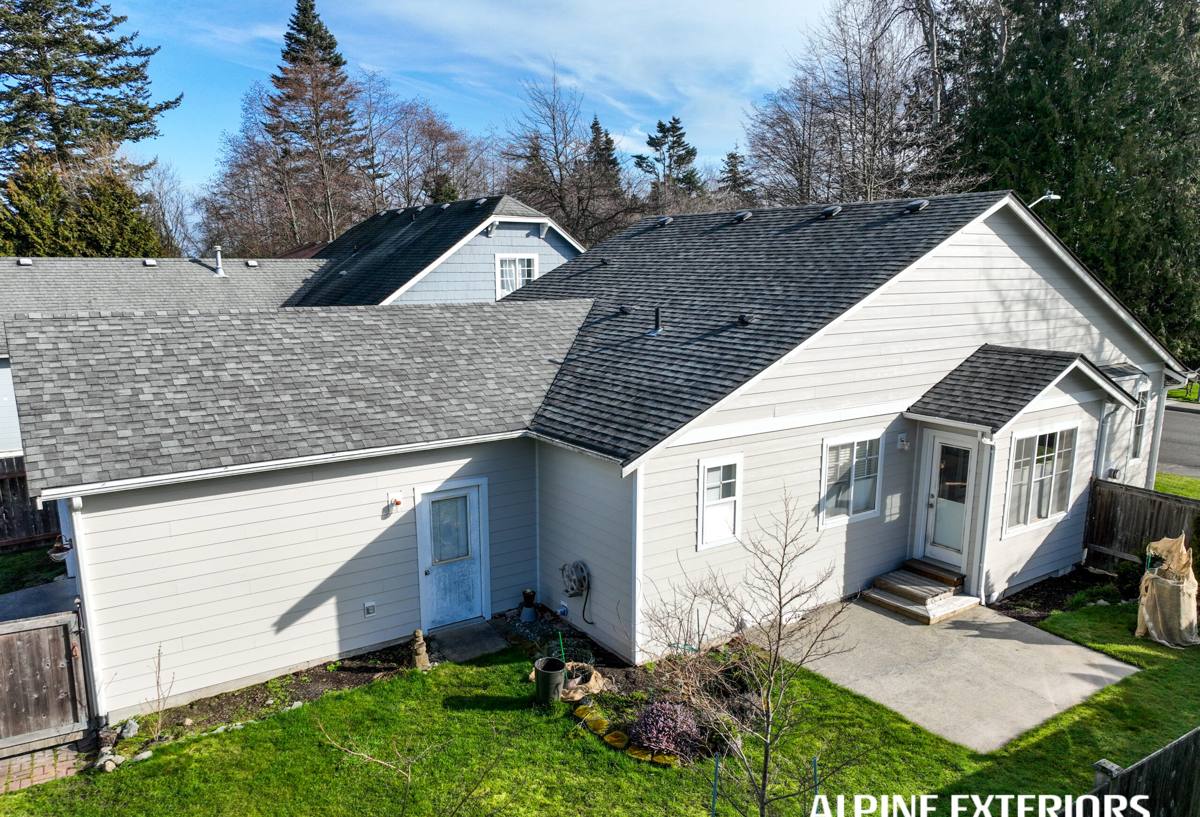
What Whatcom County's Weather Does to a Silver Beach Roof
Moss and Organic Growth
Between the tree cover around Lake Whatcom and the long stretch of wet months from fall through spring, moss and moss-adjacent growth (lichen, algae streaking) are the single most common reason we get called out to this area. Moss doesn't just look bad — it lifts shingle edges, holds moisture against the roof deck, and works its way under flashing and into fastener holes. Left alone through a couple of wet seasons, a moss problem turns into a rot problem underneath.
Driving Rain and Wind-Driven Water
Rain that comes in at an angle, pushed by wind off the water, doesn't behave like straight-down rain. It finds its way under shingle tabs, around chimney flashing, and into any gap that a calmer climate would never expose. Roofs here need repair details — flashing laps, underlayment overlaps, sealant placement — that assume the water is coming from the side, not just from above.
Marine Air and Metal Fatigue
Salt-tinged marine air accelerates corrosion on exposed metal — flashing, fasteners, gutter hardware, and any older galvanized components. A fastener or flashing piece that would last decades inland can start rusting and losing its seal years sooner out here. Repairs that reuse old fasteners or bare metal flashing without accounting for this are repairs that fail early.
Signs a Silver Beach Roof Needs Repair, Not Just a Look
- Moss or dark green/black streaking concentrated on the north-facing or shaded slopes
- Granules collecting in gutters or at downspout outlets after rain
- Shingle edges that curl, lift, or look "fuzzy" where moss has taken hold
- Rusted or discolored streaking below metal flashing, vents, or chimney caps
- Soft or spongy spots underfoot near valleys, penetrations, or the eaves
- Daylight visible through the roof deck from inside an attic or crawlspace
- Water stains on interior ceilings that appear or worsen after wind-driven rain
- Sagging or uneven rooflines near valleys or where two roof planes meet
Any one of these on its own might be minor. Two or three together, especially combined with the roof's age, usually means it's time for an inspection before the next wet season does more damage underneath the surface.
What a Correct Roof Repair Actually Involves
Diagnosis Before Anything Gets Touched
The most common mistake in roof repair isn't bad workmanship — it's fixing the visible symptom instead of the source. A stain on a bedroom ceiling might trace back to a flashing failure ten feet away, following the roof deck downhill before it ever shows up indoors. A proper repair starts with tracing the water path, not just patching where it appeared inside the house.
Moss and Debris Removal Done the Right Way
Moss has to come off without damaging the shingle surface underneath — aggressive pressure washing strips granules and shortens the roof's remaining life just as fast as the moss itself does. We remove growth by hand or with low-pressure methods appropriate to the material, clear the debris that's trapping moisture, and address the conditions (shade, debris buildup, poor airflow) that let the moss establish in the first place.
Flashing, Underlayment, and Fastener Work
Most real leaks trace back to flashing — around chimneys, skylights, vent pipes, and valleys — or to underlayment that's failed at a seam. A correct repair replaces the compromised flashing or underlayment section entirely rather than just running a bead of sealant over the gap. Sealant is a short-term patch, not a repair, and it's usually the first thing that fails again in the next storm.
Material-Matched Shingle or Panel Replacement
Replacement shingles or panels need to match the existing roof closely enough in profile and material that the repair doesn't become a visible patch or a new water entry point at the seam between old and new. On older roofs where the original material is discontinued or badly weathered, we'll tell you honestly when a patch is a temporary fix versus when it's time to talk about a larger section replacement.
Roofing Materials Common in This Area and Their Repair Considerations
| Material | Common Failure Points Here | Repair Notes |
|---|---|---|
| Asphalt composition shingle | Granule loss, moss lifting tabs, nail pops | Most repairable material; matching older shingle color/profile can be limited by weathering |
| Cedar shake/shingle | Moss, splitting, moisture retention | Requires careful moss management; individual shake replacement is common and effective if caught early |
| Metal roofing/panels | Fastener backing out, sealant failure at laps, corrosion at cut edges | Repairs focus on fastener replacement and lap resealing; marine air makes fastener quality matter more |
| Low-slope/flat sections (additions, porches) | Membrane seam failure, ponding water | Needs membrane-specific repair, not shingle-style patching; ponding issues often need a slope correction, not just a patch |
Repair vs. Replacement: What Actually Drives the Decision
Homeowners often ask us to just decide for them, but the honest answer depends on a few concrete factors. This isn't about upselling a replacement — plenty of roofs we look at only need targeted repair, and we'll say so.
| Factor | Leans Toward Repair | Leans Toward Replacement |
|---|---|---|
| Roof age relative to material lifespan | Under roughly 60-70% of expected life | Near or past expected material lifespan |
| Extent of moss/moisture damage | Isolated to one or two areas | Widespread across multiple slopes |
| Deck condition underneath | Solid, dry decking | Soft, rotted, or delaminating decking |
| Number of prior repairs in same area | First repair in that spot | Repeated repairs to the same area |
| Overall cost of repair vs. replacement | Repair is a small fraction of replacement cost | Repair cost approaches a meaningful share of full replacement |
As a general range, straightforward localized repairs — flashing sections, moss remediation, a section of shingles — often fall in the low hundreds to a couple thousand dollars depending on scope and access. Anything beyond that, especially where deck rot is involved, is worth a real inspection before committing, since the true cost depends entirely on what's found once we're up there.
Our Roof Repair Process in Silver Beach
- Inspection: We walk the roof and check the attic or crawlspace from underneath, tracing any interior water stains back to their actual source rather than guessing from the ground.
- Written scope and honest estimate: You get a clear explanation of what's failing, why, and what it will take to fix it correctly — including if the honest answer is "this is a small fix" rather than something bigger.
- Moss and debris clearing: Any growth or accumulated debris is removed before repair work begins, since you can't properly assess or seal a roof surface that's still covered in moss.
- Repair execution: Flashing, underlayment, decking, or shingle/panel sections are repaired or replaced using materials matched to the existing roof wherever possible.
- Final check and cleanup: We confirm the repair holds under close inspection, clear debris and old materials from the site, and walk you through what was done.
Why It Matters to Hire a Crew That Already Works This Area
Roof repair isn't uniform across climates, and it isn't even uniform across Whatcom County. A crew that mostly works drier inland areas will diagnose and repair a Silver Beach roof differently than one that's used to the moss cycles, wind-driven rain, and marine air conditions specific to homes near the water and the lake. Knowing which failure patterns show up first here — moss on shaded slopes, flashing corrosion, wind-driven leaks at valleys — means less time spent diagnosing and more time spent fixing the actual problem.
There's also a practical side: a local crew can respond faster when a leak shows up during a storm, and has a track record in the neighborhood that's easy to check rather than take on faith.
Questions Worth Asking Before You Hire Anyone for Roof Repair
- Will they inspect from both the roof surface and the attic/interior, or just the surface?
- Do they explain the cause of the leak, not just where they're patching it?
- Are they licensed and insured for roofing work in Washington State?
- Do they give a written scope before starting, not just a verbal price?
- Can they speak specifically to moss management and marine-climate flashing practices, not just generic shingle repair?
Keeping a Repaired Roof in Good Shape Between Visits
Once a repair is done, a few habits stretch the time before the next one is needed. Keep gutters clear so water isn't backing up under the roof edge. Trim back tree limbs that overhang the roof, since overhanging branches are one of the biggest contributors to moss and debris buildup in this area. Have the roof looked at after any major windstorm, since wind-driven rain can find a new weak point even on a roof that was recently repaired. And don't wait for an interior stain to schedule an inspection — by the time water shows up inside, it's usually been finding its way in for a while.
If you're dealing with a leak, visible moss, or just want an honest read on where your roof stands, we're happy to take a look. Fill out the form below for a free, no-pressure estimate — we'll tell you plainly what we find and what it actually needs, whether that's a small repair or something more.