 Sudden Valley
 Composite Decking Built for South Hill's Conditions
South Hill homes deal with a specific mix of exposure: salt air moving in off the water, driving rain that doesn't let up for days at a time, and a moss season that stretches through most of the wet months. That combination is hard on any exterior surface, but it's especially hard on a deck, which sits flat, collects standing water and debris, and takes the weather from above and the ground moisture from below at the same time. We install composite decking throughout the South Hill area with that specific exposure in mind, and the difference between a deck that holds up here and one that doesn't usually comes down to details most homeowners never get shown before the work starts.
This page is about composite decking specifically — what this climate does to a deck surface, what a correct composite install actually involves, and how we approach the work on South Hill properties. If you're deciding between materials or trying to understand why a quote from one contractor looks different from another, this is the detail that explains it.
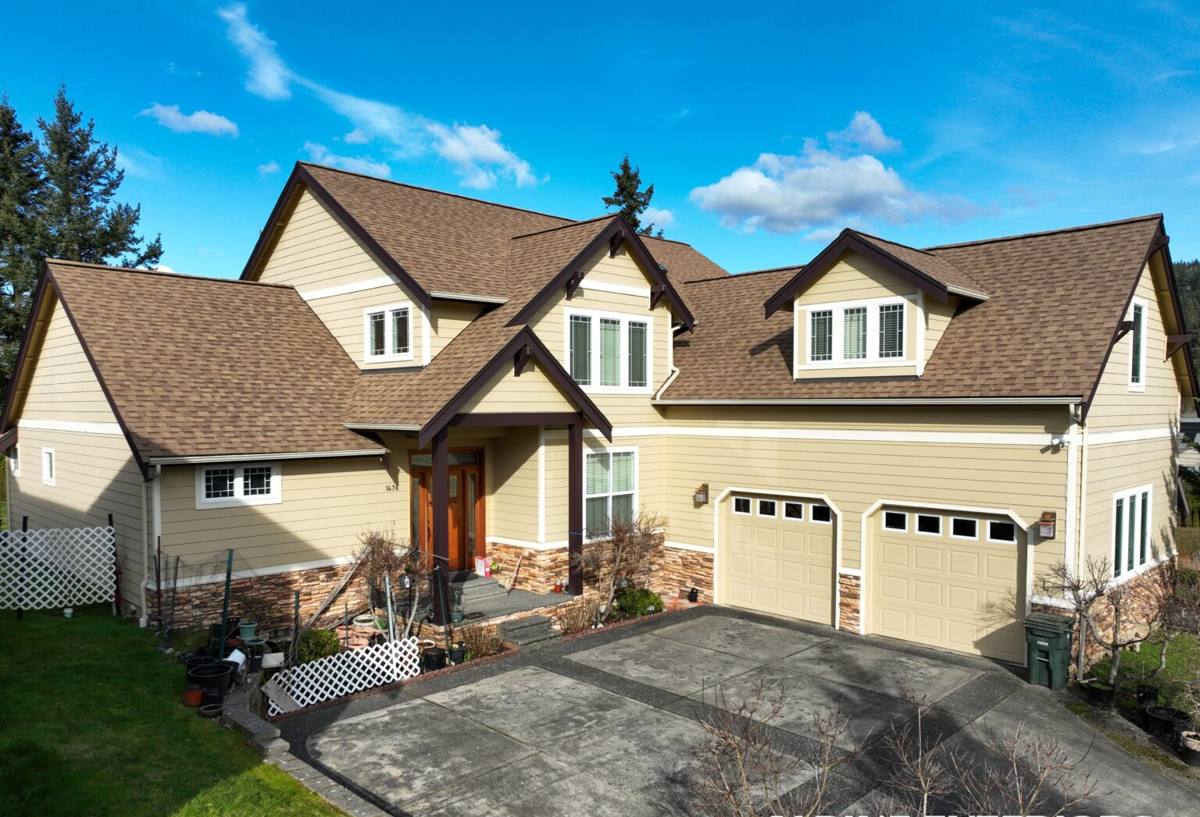
What Salt Air, Rain, and Moss Do to a Deck Here
Salt Air and Metal Fatigue
Salt-laden air accelerates corrosion on anything metal — fasteners, joist hangers, structural screws, railing brackets. On a lot of decks, the framing underneath fails years before the surface boards show real wear, and salt exposure is a big reason why. Standard zinc-coated hardware isn't built for that environment long-term; it needs to be rated for coastal or high-corrosion exposure, or it becomes the weak point in an otherwise sound deck.
Driving Rain and Standing Water
A deck is horizontal, which means it doesn't shed water the way a wall does — it has to drain it. Driving rain in this area doesn't just wet the surface, it drives water into every gap, seam, and fastener hole, and if the substructure underneath isn't sloped and vented to let that water get out, it sits there. That trapped moisture is what causes rot in a wood-framed deck and corrosion in the connectors holding it together, even when the visible decking on top looks fine.
A Long Moss Season
Moss needs shade, moisture, and time, and South Hill's wet season gives it plenty of all three. On a deck, moss and algae growth shows up first in low spots, board seams, and anywhere debris collects and stays damp. Beyond looking bad, a mossy deck surface gets slick and can hold moisture against the board longer than it should, which matters more with some decking materials than others.
Why Composite Holds Up Better Than Wood in This Climate
Wood decking is not a bad product on its own, and plenty of homeowners like the look and cost of it. But wood is a moisture-absorbing material, and in a climate with driving rain and a long wet season, that's a real maintenance commitment — annual sealing or staining, watching for splitting and cupping, and replacing boards that rot faster than expected because they never fully dried out between storms. Composite decking, particularly capped composite, doesn't absorb water into the board the way wood does, which removes a big part of that maintenance cycle.
That doesn't mean composite is maintenance-free — it isn't. Composite boards still need to be kept clear of standing debris, cleaned periodically to keep moss and algae from taking hold on the surface, and the substructure underneath still has to be built to drain and dry properly regardless of what decking material sits on top. What changes with composite is where the maintenance burden sits: less refinishing and structural repair on the boards themselves, more routine cleaning to keep the surface from becoming a moss trap.
What We Won't Do
We don't install uncapped or lower-tier composite products in this climate as a standard practice. Fully capped composite boards — with a polymer shell wrapping the board on all sides — resist moisture intrusion and staining far better than boards with exposed composite cores, which can still absorb water at cut ends and develop mold or swelling over time in a climate this wet. That's a professional standard we hold to, not a knock on every composite product on the market; it's simply what we've found actually performs on a South Hill deck through repeated wet seasons.
What a Correct Composite Deck Installation Involves
The decking boards get most of the attention, but the work that actually determines how long a deck lasts happens underneath and around them. On every composite deck we build in this area, that includes:
- Joist tape or flashing over the framing: Composite boards are attached to wood or engineered joists, and that framing still needs protection from moisture. Joist tape keeps water from soaking into the top of the joist through fastener penetrations.
- Corrosion-resistant fasteners and hardware: Given the salt exposure here, we use structural screws, hangers, and hidden fastener systems rated for coastal or high-moisture environments, not standard-grade hardware.
- Proper slope and drainage: The deck surface and substructure need a slight pitch away from the house so water actually moves off the deck instead of pooling against the ledger board or in low spots.
- Ledger board flashing: Where the deck attaches to the house, the ledger connection is one of the most common places water intrusion starts. Correct flashing there protects both the deck framing and the wall behind it.
- Board spacing for expansion: Composite boards expand and contract with temperature and moisture changes. Gaps that are too tight lead to buckling; gaps that are too wide look sloppy and collect debris. Manufacturer-specified spacing matters.
- Hidden fastener systems where appropriate: Clip-based or hidden fastening reduces the number of surface penetrations in the board, which reduces the number of points where water can work its way in over time.
Skip any one of these and the boards on top can still look good for a season or two while the structure underneath quietly deteriorates — which is exactly the kind of problem that's expensive to fix later and nearly invisible during a walk-through.
Comparing Decking Options for a South Hill Property
| Material | Moisture Behavior | Maintenance | Typical Lifespan Here |
|---|---|---|---|
| Capped composite | Resists water absorption; core is sealed on all sides | Low; periodic cleaning to prevent moss and algae buildup | 25–30+ years with correct substructure |
| Uncapped composite | Exposed core can absorb moisture at cut edges and fastener holes | Moderate; more prone to staining and swelling over time | Shorter and less predictable in this climate |
| Pressure-treated wood | Absorbs and releases moisture readily; treatment slows but doesn't stop rot | High; annual sealing or staining recommended | 10–15 years before major board replacement is typical |
| Cedar | Naturally moisture-resistant but still absorbs water over time | High; refinishing needed to maintain appearance and protection | Shorter without consistent upkeep in a wet climate |
Our Process for a South Hill Composite Deck
Site Assessment and Structural Check
We start by looking at what's actually there — existing framing condition, ledger attachment, drainage path, and how much sun and shade the deck footprint gets, since that affects how fast moss and algae will establish on the finished surface. If we're building over or replacing an older deck, we check the substructure before assuming it's reusable; framing that's been sitting in this climate for years often has hidden moisture damage even when the surface boards look presentable.
Framing and Waterproofing
This is where the durability of the deck actually gets decided. Joist protection, correct fastener grade, proper ledger flashing, and slope for drainage all get built in before a single composite board goes down.
Composite Installation
Boards go down with manufacturer-specified spacing and fastening, with attention to consistent gapping, straight board runs, and clean transitions at stairs, railings, and the house. Cut ends get properly capped or sealed per the manufacturer's requirements so the exposed edge doesn't become the one point on the deck that absorbs water.
Final Walkthrough
We walk the finished deck with the homeowner, cover what routine maintenance actually looks like for the specific product installed, and point out anything worth watching — a shaded corner that may need more frequent cleaning, for example, given how quickly moss can take hold on a shaded South Hill lot.
Signs an Existing Deck Needs Attention
- Boards that feel spongy, springy, or noticeably different underfoot in one area versus another
- Visible gaps opening up between boards, or boards that have started to cup or bow
- Rust staining bleeding through around fastener heads or hardware
- Persistent moss or algae in the same spots no matter how often it's cleaned
- Water pooling on the surface after rain instead of draining off within a reasonable time
- Any looseness or movement at the ledger board where the deck meets the house
Any one of these is worth a look before it turns into a structural repair rather than a surface one.
Why Hiring a Crew That Already Works South Hill Matters
Decking work that's built for a drier inland climate doesn't automatically hold up here. A crew that regularly works South Hill and the surrounding Sudden Valley area already knows which hardware grade actually stands up to the salt exposure in this area, how much slope a deck needs to drain properly given the rainfall this region sees, and how fast moss establishes on a shaded lot versus an open one. That local pattern recognition is what shows up in the details — the flashing choice at the ledger, the fastener spec, the drainage path — long before it shows up as a problem you can see.
A Few Questions Worth Asking Before You Hire
- What decking product tier do they install by default, and why — capped or uncapped composite?
- What fastener and hardware grade do they use, and is it rated for this area's exposure?
- Do they inspect and, if needed, replace the substructure rather than building over questionable framing?
- How do they detail the ledger board connection and drainage slope?
- What does the manufacturer's warranty actually cover, and does their installation meet the requirements to keep it valid?
If you're weighing options for a new deck or wondering whether an existing one on your South Hill property needs more than a surface cleaning, we're glad to take a look and give you a straight answer. Reach out for a free, no-pressure estimate using the form below.