 Sudden Valley
 Why South Hill Homes Take a Different Kind of Weather Beating
South Hill sits inside one of the wetter, greener pockets of Whatcom County, and that setting cuts both ways. The tree cover that makes Sudden Valley a nice place to live also keeps north- and west-facing walls shaded and damp long after a storm has passed. Add in salt-laden air that drifts inland off the Puget Sound corridor, driving rain that comes in sideways during fall and winter systems, and a moss season that can stretch from October into May, and you have an exterior that's under near-constant low-grade moisture stress for most of the year.
None of that means siding here has to fail early. It means the assembly behind the siding — the weather barrier, the flashing, the drainage gaps, the fastening — has to be done correctly, every time, with no shortcuts. A siding job that would hold up fine in a dry inland climate can fail within a few years in a setting like this if it's installed to a lower standard.
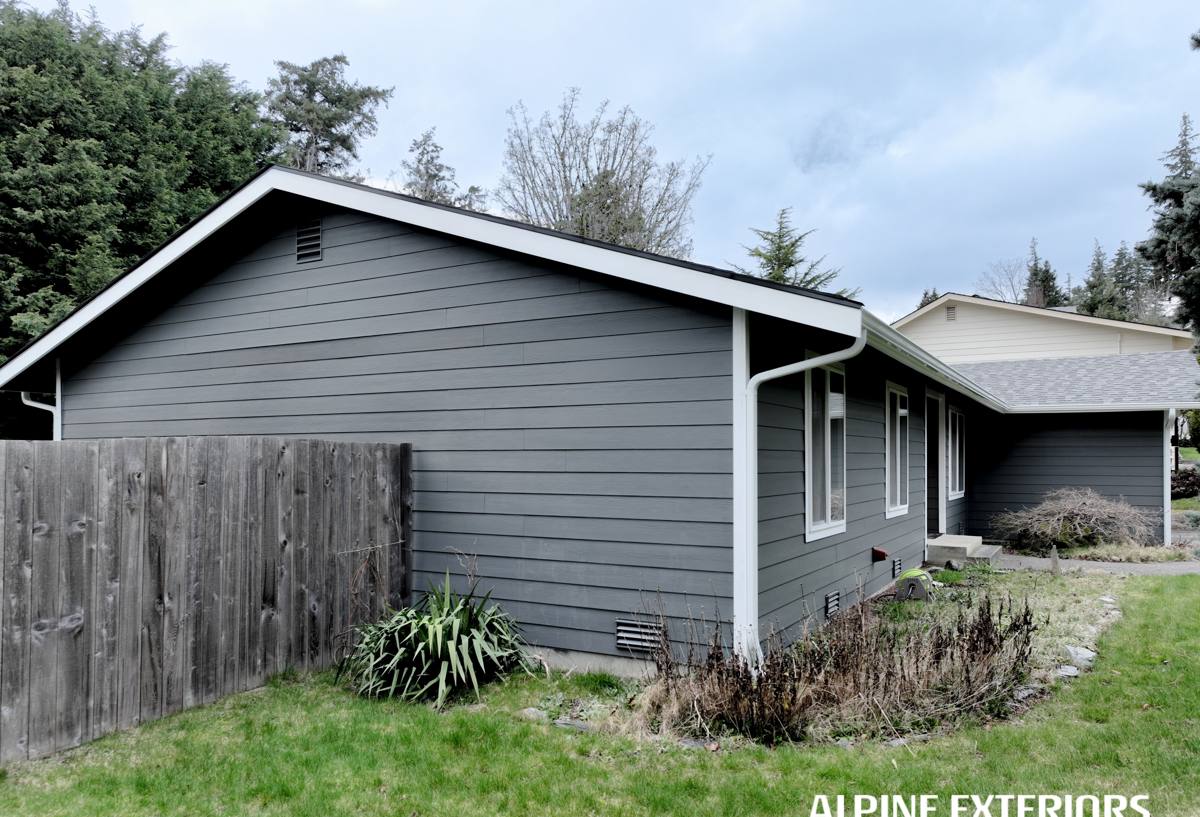
What a Correctly Installed Siding Job Actually Involves
Most premature siding problems we see aren't caused by a bad product. They're caused by installation shortcuts that don't show up until moisture finds the gap. A correct install includes:
- A continuous, properly lapped weather-resistive barrier behind the siding, with no gaps or reverse laps that let water track backward
- Flashing at every window, door, and penetration — not caulk used as a substitute for flashing
- Kick-out flashing wherever a roofline meets a sidewall, so runoff is directed into the gutter instead of behind the siding
- Proper ground clearance so the bottom edge of the siding isn't sitting in splash-back or snow contact
- Correct fastener type, spacing, and depth for the specific product being installed
- Butt joints and trim treated per manufacturer spec, not just caulked over and painted
Every one of these steps takes longer than the shortcut version. None of them are visible once the job is finished and painted. That's exactly why they matter — a poor install and a correct install can look identical on the day the crew leaves, and only one of them holds up through a Whatcom County winter.
Why This Crew Installs Only James Hardie Fiber Cement
We made a decision to install one product system — James Hardie fiber cement — and we stand behind that decision on every job, including South Hill. Fiber cement doesn't absorb and swell the way wood-based products can, it's non-combustible, and Hardie's engineered HZ product lines are built specifically around regional moisture and temperature exposure rather than a one-size-fits-all spec. The ColorPlus factory finish is baked on under controlled conditions, which holds color and resists moisture intrusion at the surface far better than a field-applied coat, and it comes with a real transferable warranty. In a climate that gives siding very little downtime between wet spells, we don't think it makes sense to install a product that asks for more maintenance or carries more moisture risk than it needs to.
Our Installation Process for South Hill Properties
Assessment and Tear-Off
We start by pulling the existing siding back far enough to actually see the sheathing and framing underneath, not just the first few feet. This is where hidden rot, old flashing failures, and trapped moisture usually show up — and it's information you need before pricing or scheduling the rest of the job.
Sheathing and Weather Barrier Repair
Any soft or water-damaged sheathing gets replaced before anything else happens. A new weather-resistive barrier goes on with correct overlaps, sealed seams, and attention to every corner and penetration.
Flashing and Trim
Window and door flashing, kick-out flashing at roof-to-wall intersections, and trim details get installed to manufacturer spec. This is the step that determines whether water sheds away from the wall or finds its way behind it.
Hardie Panel or Lap Installation
Siding goes on with the fastener pattern, spacing, and clearances specified for the product and exposure. Butt joints are treated correctly rather than just caulked and painted over.
Caulking, Touch-Up, and Final Walkthrough
Caulk is used where the manufacturer specifies it — as a seal, not as a substitute for flashing — and any factory-finish touch-up is done with matched product. We walk the finished job with the homeowner before calling it done.
Common Problems We Find Removing Old Siding in This Area
When we tear off older siding on homes in this part of Whatcom County, a handful of issues show up again and again:
- Moss and algae staining on north- and shade-facing walls, which usually points to siding that's held moisture against its surface for extended periods
- Failed or missing kick-out flashing at roofline intersections, letting years of roof runoff soak directly into the wall assembly
- Caulk joints that were used as the primary water seal instead of proper flashing, and have since cracked or pulled away
- Rusted or improperly seated fasteners bleeding rust streaks through the paint film
- Soft or delaminated trim and sheathing at the base of walls, near grade, where splash-back and poor clearance did slow damage over years
These aren't unusual findings for this climate — they're the predictable result of an install that skipped a step decades ago. Catching them at tear-off, rather than after new siding is already up, is the whole reason a thorough assessment matters.
Choosing the Right Hardie Product Line for This Climate
James Hardie builds its HZ (HardieZone) products around regional exposure, and for a wet, moss-prone area like South Hill, matching the right line to the right wall makes a real difference over the life of the siding.
| Product Line | Best Suited For | Why It Matters Here |
|---|---|---|
| HardiePlank Lap Siding (HZ5/HZ10) | Most wall areas, standard elevations | Engineered moisture and freeze-cycle resistance for Pacific Northwest exposure |
| HardiePanel Vertical Siding | Accent walls, gables, modern facades | Fewer horizontal joints where water can pool or track |
| HardieTrim Boards | Corners, window and door casing, fascia | Matches the fiber cement's stability so trim and field siding weather together |
| ColorPlus Factory Finish | All exposed surfaces | Factory-cured finish resists the fading and moisture uptake a field coat can't match in a shaded, damp setting |
We'll walk through which line makes sense for each elevation of the house during the estimate — a heavily shaded north wall and a sun-exposed south wall don't always need the same spec.
What Drives the Cost of a Siding Installation in South Hill
| Cost Factor | Why It Affects the Price |
|---|---|
| Condition of existing sheathing | Rot or water damage found at tear-off has to be repaired before new siding goes on |
| Wall complexity | Multiple gables, dormers, and cut-ins mean more flashing detail and trim work |
| Access and site layout | Slopes, tree cover, and tight setbacks affect scaffolding and material staging |
| Product selection | Lap vs. panel siding, trim profile, and ColorPlus color all shift material cost |
| Scope of tear-off | Full removal to sheathing costs more up front than a straightforward re-side, but it's the only way to actually see what's underneath |
We give a firm, written number after we've actually looked at the house — not a phone estimate — because the condition behind the existing siding is usually the biggest variable.
Caring for Hardie Siding After Installation
Fiber cement asks for less than most alternatives, but "less" isn't "none," especially in a climate with a long wet season:
- Rinse siding annually to keep moss spores and organic buildup from taking hold, especially on shaded elevations
- Keep gutters clear so overflow doesn't run down the wall face instead of into the downspout
- Trim back vegetation that holds moisture or shade directly against the siding
- Check caulked joints at windows, doors, and trim every year or two and have any cracked sealant replaced promptly
- Watch for any staining or discoloration at roof-to-wall intersections — it's often the first sign of a flashing issue, not a siding issue
Why Hiring a Crew That Already Works in Sudden Valley Matters
A crew that regularly works South Hill and the rest of Sudden Valley has already seen how this specific combination of tree cover, moisture, and coastal-influenced air behaves against a wall over time — not in theory, but from tear-offs done on homes with the same exposure. Many properties in this community also fall under community association guidelines for exterior colors and materials, so it helps to work with a contractor who's used to checking that box as part of the process rather than treating it as an afterthought. Local experience also means fewer surprises on scheduling around this area's wetter months, and a better read on which elevations of a given house need extra attention before the first board goes up.
If you're weighing a siding replacement or new installation on a South Hill property, we're happy to walk the house with you, point out what we find, and give you a straight, no-pressure estimate — free, with no obligation to move forward.