 Sudden Valley
 Yew Street's Climate Is Harder on Windows Than It Looks
Homes along Yew Street in Sudden Valley take a steady beating from weather that most homeowners underestimate until they're dealing with a failed window. Whatcom County's marine climate means moisture is almost always in the air, driving rain comes in sideways during fall and winter storms, and shaded, tree-lined lots hold onto that dampness far longer than open ground does. Add in the salt-tinged coastal air that moves through this part of Washington and you get a slow, steady attack on window frames, seals, and finishes that never really stops.
None of this means windows here fail faster because the product is bad. It means the installation has to account for conditions a window in a drier climate would never see. A window that's a good fit for eastern Washington or the Midwest can still underperform on Yew Street if it isn't flashed, sealed, and fitted with this specific climate in mind.
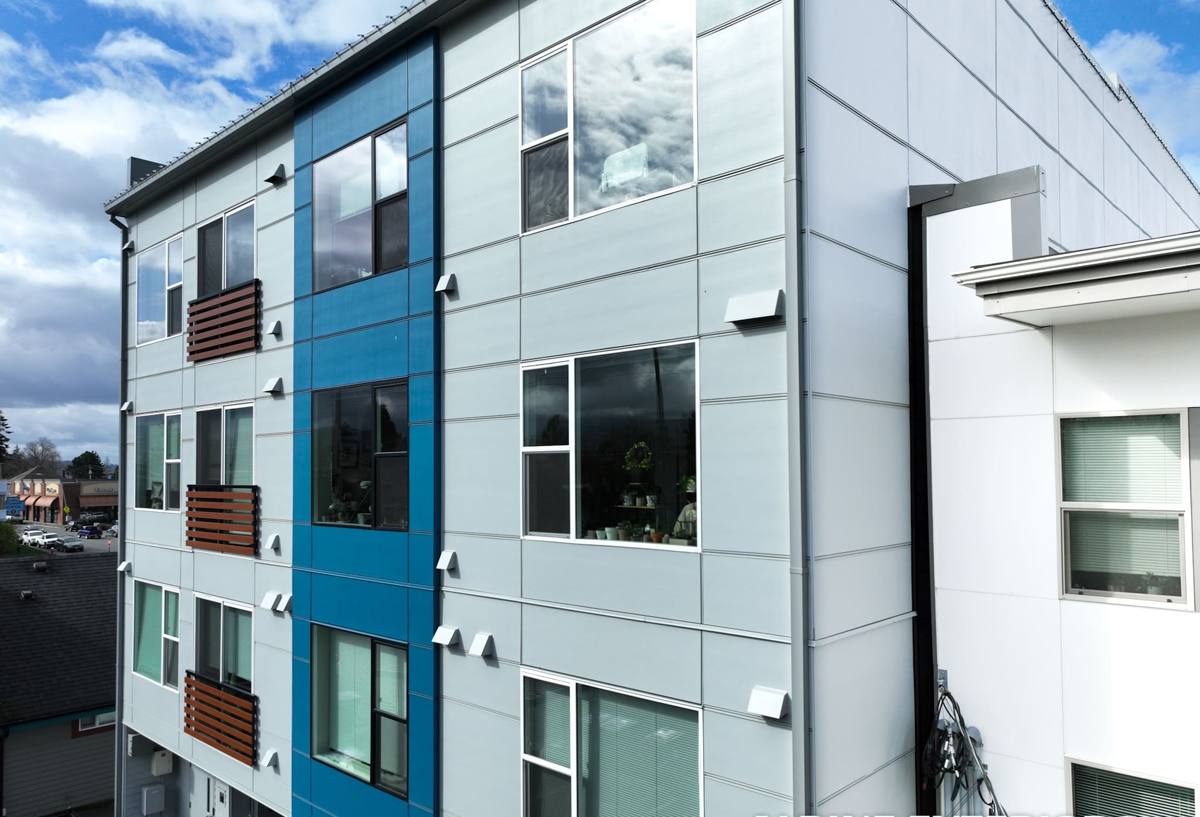
What "Custom" Actually Means for These Homes
"Custom windows" doesn't have to mean unusual shapes or high-end architectural glass, though we do that too. For most Yew Street homes, it simply means the window is built or fitted to match openings that stock sizes don't cover — which is common in this neighborhood for a few practical reasons:
- Older framing with rough openings that were never standardized to today's manufacturer sizing charts
- Settling or minor structural shift over the years, which changes an opening's square and level
- Additions or remodels where a window needs to match sightlines or trim from an original build
- Sloped or wooded lots where sun exposure and moisture load vary window to window on the same house
Custom sizing and custom fitting are two different things, and a good installer treats them differently. A custom-sized unit is manufactured to the exact opening. A custom fit means an installer adapts a near-standard unit — with proper shimming, flashing, and trim work — to a slightly irregular opening. Both are legitimate approaches; the wrong one is forcing a stock window into an opening it doesn't actually fit and covering the gaps with extra caulk.
Where Window Installations Usually Go Wrong Around Here
Flashing and Water Management
In a dry climate, a sloppy flashing job might go unnoticed for years. In Sudden Valley's wet season, it shows up fast — as staining below the sill, soft trim, or moisture inside the wall cavity. Correct flashing means water that gets behind the siding or trim has a clear path back out, never a path inward toward the framing.
Moss and Organic Growth
Moss doesn't just grow on roofs here. On shaded window sills, in horizontal trim joints, and along north-facing exposures, it takes hold anywhere moisture sits still. Once moss establishes on a window sill or sash track, it holds water against the wood or vinyl continuously, which accelerates rot in wood components and can stain or degrade sealants faster than normal weathering would.
Sealant Failure at Salt-Influenced Exposure
Coastal-influenced air breaks down lower-grade sealants faster than inland conditions do. A window can have perfect glass and a solid frame and still leak or fog prematurely if the perimeter sealant was the wrong product, or was applied over a dirty or damp surface during installation.
Signs a Yew Street Home's Windows Need Attention
Most window problems here develop slowly, so homeowners often live with early warning signs for a year or more before calling anyone. Worth checking for:
- Fogging or a milky look between panes — the seal on the insulated glass unit has failed
- Soft or discolored wood trim around the frame, especially at the bottom corners
- Visible moss or persistent green film on the sill or lower sash
- Drafts you can feel with a hand near the frame on a windy day
- Difficulty opening, closing, or locking — often a sign the frame has shifted slightly
- Rising energy bills without any change in usage habits
- Condensation forming on the inside of the glass regularly, not just on the coldest mornings
Any one of these on its own isn't an emergency. Several together, especially on the same window, usually mean it's past the point where caulk and weatherstripping will solve the problem.
Frame Material Options for This Climate
There's no single "best" window material — the right choice depends on the home's age, style, budget, and how much upkeep the owner wants to take on. Here's how the common options actually perform in Whatcom County's damp, moss-prone conditions:
| Material | Moisture Behavior | Maintenance | Typical Fit For Yew Street |
|---|---|---|---|
| Vinyl | Won't rot; seams and corners are the main weak point if welding quality is poor | Low — occasional cleaning | Good all-around choice for most homes, especially budget-conscious replacements |
| Fiberglass | Very stable in wet/dry cycling, resists warping | Low | Strong option for exposed, high-moisture elevations |
| Wood | Handsome, but vulnerable to moss and rot if finish isn't maintained | High — needs regular finish upkeep | Best for owners committed to upkeep or matching historic trim |
| Wood-Clad (wood interior, metal or vinyl exterior) | Exterior cladding protects the wood from direct weather | Moderate | Good compromise for homeowners who want a wood interior look with less exterior maintenance |
We don't push one material on every home. We do steer people away from unclad exterior wood on heavily shaded, north- or west-facing walls in this neighborhood, simply because that's where moss and standing moisture do the most damage over time — it's a maintenance-burden conversation, not a knock on wood windows generally.
Glass Package Matters As Much As Frame Material
For this climate, look at the glass spec, not just the frame. Double-pane, low-E glass is the baseline for most replacements. Triple-pane adds cost and weight but can be worth it on exposed walls that catch wind and rain directly, mainly for comfort and condensation resistance rather than dramatic energy savings on a per-window basis.
What a Correct Installation Involves
The window unit itself is usually not where a job fails. The installation details are. A correct job on a Yew Street home generally includes:
- Removing the old unit and inspecting the rough opening and sill for hidden rot or moisture damage before anything new goes in
- Repairing or rebuilding any compromised framing — never installing a new window over a soft or wet sill
- Setting the new window level, plumb, and square, with proper shimming at load-bearing points
- Installing flashing and a sloped sill pan so any water that reaches the opening drains outward, not inward
- Sealing with a weather-rated sealant appropriate for coastal-influenced exposure, applied to clean, dry surfaces
- Integrating the new window with the existing siding and trim so there's no gap or reverse-lap that catches wind-driven rain
- Testing operation and checking for square, level, and even reveal before calling the job finished
Skipping the sill pan or flashing step is the single most common shortcut we see on past installations we're called in to fix. It's invisible once the trim goes back on, and it's exactly where driving rain finds its way into the wall.
Cost Factors for Custom Window Projects
Every home is different, so we won't quote a number without seeing the openings, but these are the variables that actually move the price on a Yew Street project:
| Factor | Why It Affects Cost |
|---|---|
| Standard vs. true custom sizing | Non-standard dimensions require made-to-order units, which cost more than off-the-shelf sizes |
| Frame material | Vinyl is generally the most economical; fiberglass and wood-clad run higher |
| Glass package | Triple-pane and specialty coatings add cost over standard double-pane low-E |
| Condition of the existing opening | Rot or framing repair discovered during tear-out adds labor and material |
| Number and grouping of windows | Grouped or same-visit installs typically cost less per window than one-off replacements |
| Trim and siding integration | Matching existing trim profiles or siding can add finish work beyond the window itself |
As a broad range, straightforward vinyl replacement windows on an already-sound opening run toward the lower end of typical regional pricing, while larger custom units, premium materials, or openings needing structural repair push toward the higher end. We'll always break down what's driving the number on your specific home rather than giving a flat per-window rate that doesn't reflect your actual situation.
Why a Crew That Already Works Yew Street Matters
A window installer who mostly works drier inland areas isn't wrong about windows — they're just used to solving different problems. On Yew Street, we already know which elevations tend to hold moss, which lots stay shaded and damp longest into the afternoon, and which older homes in this part of Sudden Valley tend to have non-standard rough openings from past remodels. That means fewer surprises during tear-out and a sealing and flashing approach that's built for what this specific area actually throws at a house, not a generic checklist.
It also means we're not guessing about permitting. Whatcom County has its own permit requirements for window replacement depending on scope, and many Sudden Valley properties also fall under the local community association's architectural guidelines. We handle that groundwork so you're not the one tracking down which rules apply.
Getting an Estimate
If your windows on Yew Street are fogging, drafty, showing moss, or just original to a home that's due for an upgrade, we're happy to take a look. We'll walk the exterior, check the rough openings, and give you a straightforward assessment of what's actually needed — no pressure, no inflated scope. Reach out for a free estimate using the form below.