 Sudden Valley
 Building a Deck That Can Actually Handle Yew Street's Weather
A deck in Yew Street lives outside year-round, which means it takes the full brunt of what Whatcom County weather delivers: long stretches of driving rain, salt-laden marine air moving in off the Sound, and a moss season that can run half the year in the shaded, tree-covered lots common around Sudden Valley. Siding sheds most of that water vertically and dries out between storms. A deck sits horizontally, catches standing water on every surface, and holds moisture against wood and fasteners far longer. That difference is why a deck built the same way you'd build one in a dry inland climate tends to show problems — soft boards, rusted hardware, slick moss growth — years before it should.
Building it right for this area isn't about a different set of tools. It's about choosing materials and details that assume the deck will be wet more often than it's dry, and building in the drainage, ventilation, and corrosion resistance to handle that from day one.
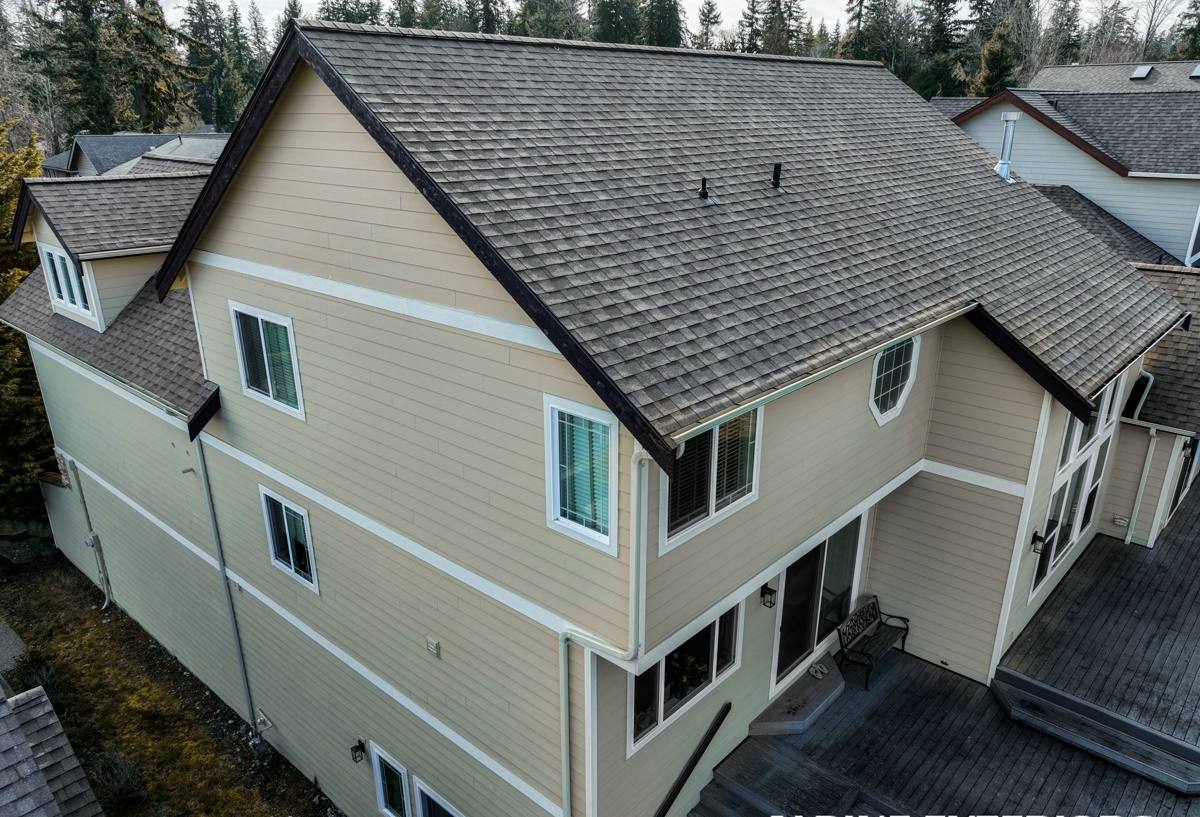
What This Climate Does to an Ordinary Deck
Most deck problems we get called out to fix aren't dramatic — they're slow. Water finds a way in, doesn't dry out fast enough, and by the time it's visible the damage has been building for a season or two. In this part of Whatcom County, the usual failure points are:
- Ledger boards (where the deck attaches to the house) that were never properly flashed, letting water track behind the siding and into the rim joist
- Standard steel fasteners and joist hangers that corrode from constant moisture and marine air, weakening connections long before the wood itself fails
- Decking laid with tight gaps that trap leaves, needles, and moisture, giving moss and algae a place to establish
- Footings poured too shallow, which can shift with frost and ground saturation over time
- Underside framing with no airflow, which stays damp for days after every rain
None of these are exotic problems. They're the predictable result of building a deck like it's going somewhere dry, when it isn't.
The Ledger Board: Where Most Deck Failures Start
If a deck is attached to the house, the ledger board — the piece bolted to the rim joist that the rest of the deck hangs from — is the single most important detail on the job. It's also the one most often installed poorly, because from the outside it looks fine even when water is getting behind it.
A correct ledger installation includes proper flashing that directs water out and away from the house framing, a gap or flashing detail behind the decking to keep water from wicking back toward the wall, and lag bolts or through-bolts sized and spaced for the actual load, not just whatever was on the truck. Skipping or shortcutting this step is invisible on installation day and expensive five years later, when the rim joist behind the siding has been quietly rotting the whole time.
Framing and Fasteners That Won't Quietly Fail
Framing lumber, joist hangers, and fasteners take a beating from Whatcom County's combination of rain and marine air, which accelerates corrosion on anything less than properly rated hardware. We build with hot-dip galvanized or stainless connectors and fasteners rated for ground contact and coastal exposure — not because code sometimes allows cheaper options, but because we don't want to be the crew that built a deck with hardware that rusts out from underneath while the boards on top still look fine.
Joist hangers matter as much as the joists themselves. A deck can have solid lumber throughout and still fail structurally if the hangers holding it together are corroding and losing their grip on the fasteners.
Choosing Decking Material for This Climate
There's no single right answer here — it depends on budget, how much upkeep you want to do, and how much shade and moss exposure the site gets. Here's how the common options actually perform in this climate:
| Material | Moisture & Moss Behavior | Maintenance | Typical Lifespan |
|---|---|---|---|
| Cedar | Naturally rot- and insect-resistant, but still absorbs moisture and grows moss without regular cleaning and sealing | Needs periodic cleaning and re-sealing to hold its color and resist moss | 15–25 years with upkeep |
| Pressure-Treated Fir/Pine | Chemically treated against rot, but end cuts and fastener holes need field treatment or they become weak points | Lowest upfront cost, but needs regular sealing and moss cleaning | 15–20 years with upkeep |
| Composite / PVC Decking | Doesn't absorb water or rot; some textured composites resist moss better than smooth wood but can still grow surface moss if never cleaned | No sealing or staining; occasional washing | 25–30+ years, manufacturer-warrantied |
We'll walk through the honest trade-offs for your specific lot — sun exposure, tree cover, and how much yearly maintenance you actually want to commit to — rather than pushing one product across every job.
Footings, Permits, and Whatcom County Code
A deck's strength starts below ground. Footings need to be sized for the actual load and set below the local frost depth so they don't shift with seasonal ground movement — a detail that's easy to shortcut and impossible to fix later without tearing the deck apart. Guardrails, stair rise and run, and attachment details all fall under building code requirements that Whatcom County enforces through permitting, and most deck projects above a certain height or size need a permit before work starts.
If your property in the Sudden Valley area falls under a homeowners' association, it's also worth checking whether deck plans need design review before you apply for a permit — some associations have their own rules on size, materials, or appearance separate from the building code itself. We handle the permit process as part of the job, but it's worth knowing upfront so there are no surprises on the timeline.
Basic Deck Code Checklist
- Footings set below frost depth and sized for the load they're carrying
- Ledger properly flashed and bolted to the house structure, not just nailed
- Guardrails required above a certain deck height, built to code-minimum rail height and baluster spacing
- Stairs meeting consistent rise and run requirements, with graspable handrails where required
- Permit and inspection completed before the deck is considered finished, not an afterthought
Moss, Drainage, and Keeping a Deck Safe Underfoot
A long moss season is one of the more overlooked deck problems in this area, and it's as much a safety issue as a cosmetic one — moss and algae on decking get genuinely slick when wet. The fix starts at construction: proper board spacing so water and debris don't sit trapped between boards, joist tape or flashing on top of the framing so the wood underneath the decking isn't sitting in standing water, and enough clearance and airflow underneath the deck so the whole structure has a chance to dry out between storms.
After that, it comes down to seasonal upkeep. A deck built correctly still needs some attention from the homeowner to stay in good shape through the wet months.
Seasonal Deck Maintenance Checklist
- Sweep leaves and debris off the deck surface regularly through fall, especially between boards
- Clean moss and algae off the surface before it builds up and gets slick — a stiff brush and a mild cleaner is usually enough
- Check that gaps between boards are clear and not packed with organic debris that holds moisture
- Inspect the ledger flashing and any visible fasteners once a year for rust or gaps
- Reseal wood decking on the manufacturer's recommended schedule, not just when it looks faded
How We Build a Deck in Yew Street
Our process is the same one we'd want if it were our own house:
- Site visit to look at drainage, sun exposure, tree cover, and how the deck will tie into the existing structure
- Design and material discussion, including honest trade-offs between wood and composite for your specific site
- Permit application and, if applicable, coordination with association design review
- Demolition of the old deck if one is being replaced, checking the rim joist and house framing behind it for hidden rot before anything new goes up
- Footings poured to code depth, framing built with corrosion-rated hardware throughout
- Ledger flashing, decking, and railing installed with the drainage and airflow details built in from the start
- Final inspection and a walk-through so you know how to maintain it going forward
Why Hiring a Crew That Already Works Yew Street Matters
A deck built for a dry inland climate and a deck built for Whatcom County's rain, marine air, and moss season aren't the same project, even if they look identical from the driveway. A crew that already works in and around Sudden Valley knows which details actually matter here — how much shade a given lot gets, how long moss takes to establish on a north-facing deck under tree cover, which fasteners hold up and which don't. That's the difference between a deck that needs real attention in five years and one that's still solid in twenty.
If you're planning a new deck or replacing one that's showing its age, we're happy to come take a look and give you a straightforward, no-pressure estimate — just fill out the form below.