 Sudden Valley
 Why Yew Street Roofs Wear Differently Than Roofs Inland
Homes along Yew Street sit close enough to Lake Whatcom and the surrounding tree cover that the roof above them is doing more work than a roof on a dry, open lot across town. Moist air off the lake, shade from mature conifers, and Whatcom County's long wet season combine to create conditions that are hard on roofing materials — especially anything with seams, fasteners, or organic material that can hold water. Add in the periodic wind-driven rain that comes through this part of Sudden Valley, and you have a roof that needs to shed water fast, resist moss colonization, and hold up to decades of damp cycling without trapping moisture underneath.
Asphalt shingles in this environment tend to show moss and algae staining within a few years, and the granule loss that follows shortens their service life. Metal roofing handles this particular combination of stressors better than most alternatives, which is why we install more of it on Yew Street and the surrounding Sudden Valley streets every year.
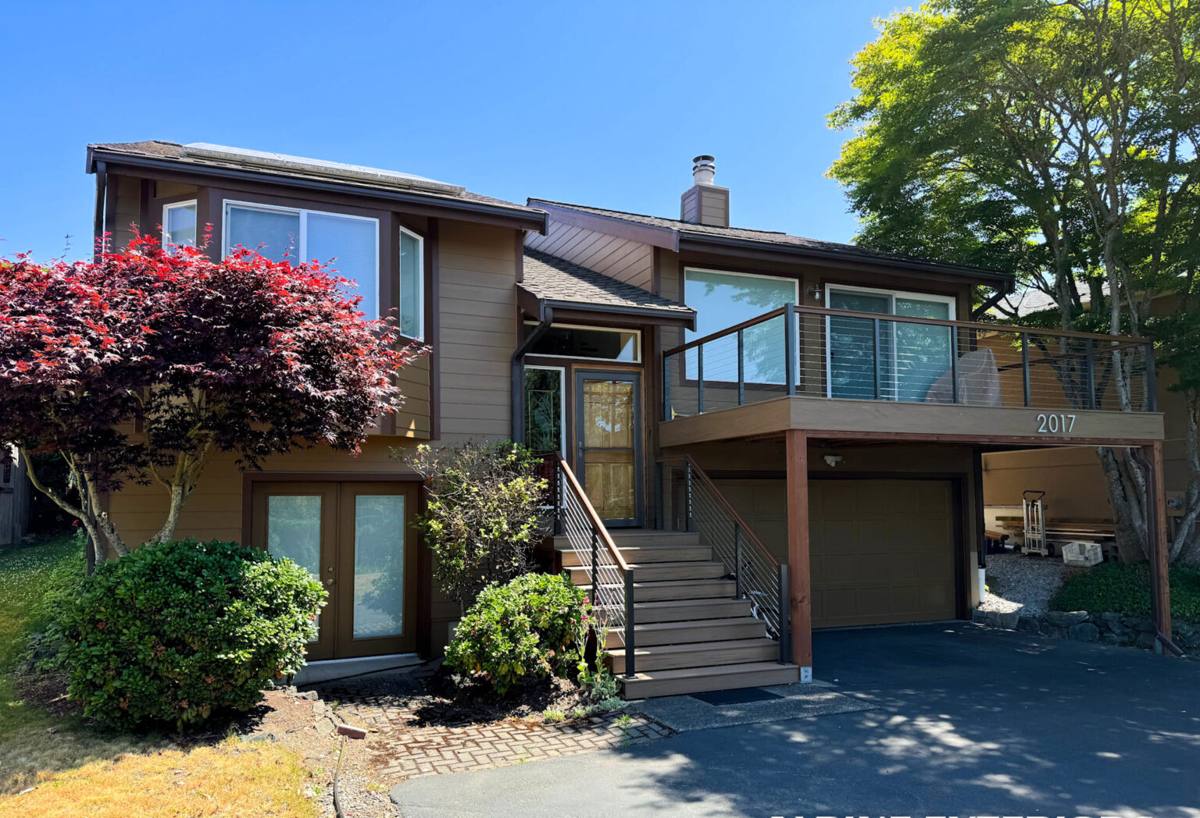
What a Roof on Yew Street Actually Needs to Do
Before talking about panels and finishes, it helps to be specific about the job the roof has to perform here:
- Shed steady rain quickly, including wind-driven rain that hits the roof at an angle rather than straight down
- Resist moss and moisture-loving growth on shaded, north-facing, or tree-covered slopes
- Handle the humidity swings that come from being near the lake without trapping condensation in the attic
- Stand up to occasional salt-tinged air moving in from Bellingham Bay without premature fastener or coating failure
- Survive freeze-thaw cycling at the edges and valleys without ice-related lifting or fastener backout
Metal roofing checks these boxes when it's specified and installed correctly. It does not check them automatically just because it's metal — the details of the installation matter as much as the material itself.
Panel Types and Finishes: What We Recommend and Why
Standing Seam vs. Exposed Fastener
The two main categories of metal roofing are standing seam (concealed fastener) panels and exposed fastener (screw-down) panels. Both are legitimate products, but they behave differently over time in a wet, moss-prone climate like this one.
| Factor | Standing Seam | Exposed Fastener |
|---|---|---|
| Fastener exposure | Hidden clips, no exposed screws in the field | Screws penetrate the panel face directly |
| Long-term water resistance | Very high — no repeated penetration points | Good, but gaskets age and need eventual re-torquing or replacement |
| Upfront cost | Higher | Lower |
| Best fit | Main roof planes, long-term ownership | Outbuildings, shops, budget-driven projects |
| Maintenance | Minimal | Periodic fastener inspection recommended |
For primary residences we typically steer homeowners toward standing seam because the exposed screws on a fastener panel are the first thing to fail in a damp climate — the rubber washers under those screws harden and shrink over years of UV and moisture exposure, and once a washer fails, water finds its way into the panel penetration. That's not a defect in the product; it's a maintenance item that concealed-fastener systems simply avoid.
Finish and Gauge
Steel panels come in different steel gauges and paint finish systems. Heavier gauge steel resists denting from ladders, branches, and hail better than thinner economy panels. Paint finish quality matters even more here than panel thickness — a coastal-grade Kynar or comparable PVDF finish holds color and resists chalking far longer than a basic polyester finish when it's exposed to salt-tinged, moisture-heavy air for years at a stretch.
What a Correct Installation Actually Involves
A metal roof is only as good as what's underneath it. This is where a lot of the long-term performance is decided, and it's largely invisible once the job is done:
Underlayment
We install a high-temperature synthetic or self-adhered underlayment rated for the panel type and climate, with extra ice-and-water membrane at eaves, valleys, and around every penetration. In a climate with this much sustained moisture, underlayment isn't a formality — it's the roof's actual water barrier if wind ever drives rain past the panel seams.
Ventilation
Metal roofs perform better with proper intake and exhaust ventilation than without it. Trapped attic moisture condenses on the underside of cold metal panels, and over time that can cause rot in the decking even if the roof surface itself is doing its job. We check existing ventilation on every Yew Street project and correct it when it's inadequate, rather than just roofing over the problem.
Flashing and Penetrations
Chimneys, plumbing vents, and skylights are where roofs actually fail, far more often than the open field of the roof. Flashing details have to be formed to fit the specific panel profile, not just caulked and hoped for. We fabricate flashing to match the panel system rather than relying on universal boots and heavy sealant, because sealant is a maintenance item and formed metal is not.
Fastening and Panel Layout
Panel runs, seam spacing, and expansion allowance all need to account for how much a full-length steel panel moves with temperature swings. Panels fastened too rigidly can oil-can or eventually work fasteners loose; panels installed with proper clip spacing and expansion room stay tight for decades.
What Drives the Cost
Every roof is different, but these are the main factors that move the price up or down on a Yew Street project:
| Factor | Effect on Cost |
|---|---|
| Roof pitch and access | Steep or hard-to-access roofs take longer and require more safety setup |
| Tear-off vs. layover | Removing old roofing adds labor and disposal cost but is usually the right call for long-term performance |
| Panel type | Standing seam costs more upfront than exposed fastener panels |
| Roof complexity | Valleys, dormers, and multiple penetrations increase flashing labor |
| Decking condition | Rotted or undersized decking found during tear-off needs replacement before installation |
| Ventilation corrections | Adding or fixing intake/exhaust vents is a small add if caught during the same job |
We give straight, itemized numbers after we've actually looked at the roof — not a phone estimate based on square footage alone. Roofs on the same street can price differently depending on pitch, decking condition, and how many penetrations they have.
How We Approach a Yew Street Project
- Site visit and roof assessment — we walk the roof, check the decking and ventilation from the attic side where possible, and note every penetration and flashing detail before quoting anything.
- Written estimate — panel type, underlayment spec, flashing plan, and a clear price, explained in plain terms.
- Tear-off and decking repair — old roofing comes off, decking is inspected, and any soft or damaged sections are replaced before anything new goes down.
- Underlayment and flashing — ice-and-water membrane at vulnerable areas, formed flashing at every penetration, ventilation corrections if needed.
- Panel installation — panels run and fastened to spec, with attention to expansion and seam alignment.
- Final walkthrough — we go over the finished roof with the homeowner before we consider the job done.
Nothing about this process changes because a house is on Yew Street specifically — but knowing the street, the tree cover, and the typical roof pitches in this part of Sudden Valley means fewer surprises once we're up there.
Maintenance in a Moss-Prone, Wet Climate
Metal roofing needs far less maintenance than shingles, but "far less" isn't "none." A few habits keep a metal roof performing for its full service life around here:
- Keep overhanging branches trimmed back so shaded areas of the roof get some sun and airflow, which discourages moss
- Clear gutters and valleys of needles and debris each fall, before the heavy rain season sets in
- Rinse visible moss or algae growth gently rather than pressure-washing, which can damage panel finishes and seams
- Have flashing and penetrations checked periodically, since these are the most likely spots for any future issue
- Watch for any panel scratches or dents that expose bare steel, and touch them up before rust can start
Why Local Experience on This Street Matters
Sudden Valley isn't a uniform subdivision — pitch, tree cover, sun exposure, and exposure to wind off the lake vary block to block, and Yew Street has its own particular mix of these factors. A crew that has already worked roofs in this specific pocket of Whatcom County knows what to check for before they're up on the ladder: which slopes tend to hold moisture longest, how much ventilation correction a typical attic here needs, and what flashing details tend to get overlooked on older roofs in this area. That familiarity doesn't replace a proper site assessment, but it does mean fewer surprises and a more accurate estimate from the start.
It also means we're not learning the region on your roof. We know what Whatcom County winters do to a poorly flashed valley, and we build accordingly.
If you're weighing metal roofing for a home on Yew Street, we're glad to come take a look and give you a straight, no-pressure estimate — no obligation, just an honest read on what your roof needs. The form below is the fastest way to get that scheduled.