 Sudden Valley
 New Roof Installation Built for Acme's Climate
A roof in the Acme area of Whatcom County works harder than one on a dry, sheltered lot. Salt air moving in off the water corrodes metal faster than it does further inland, driving rain finds every weak flashing detail sooner or later, and a long moss season keeps roof surfaces damp for months at a stretch. We install new roofs for homes in and around Sudden Valley and Acme with that exact combination in mind, and the choices we make on material, underlayment, and flashing are built around what actually survives here, not what looks good in a showroom.
This page is specifically about full new roof installation for Acme homes — not a repair patch, not a general roofing overview. If you're weighing a full replacement, here's what the local climate demands, what a correct installation actually involves, and how our process works from first visit to final walkthrough.
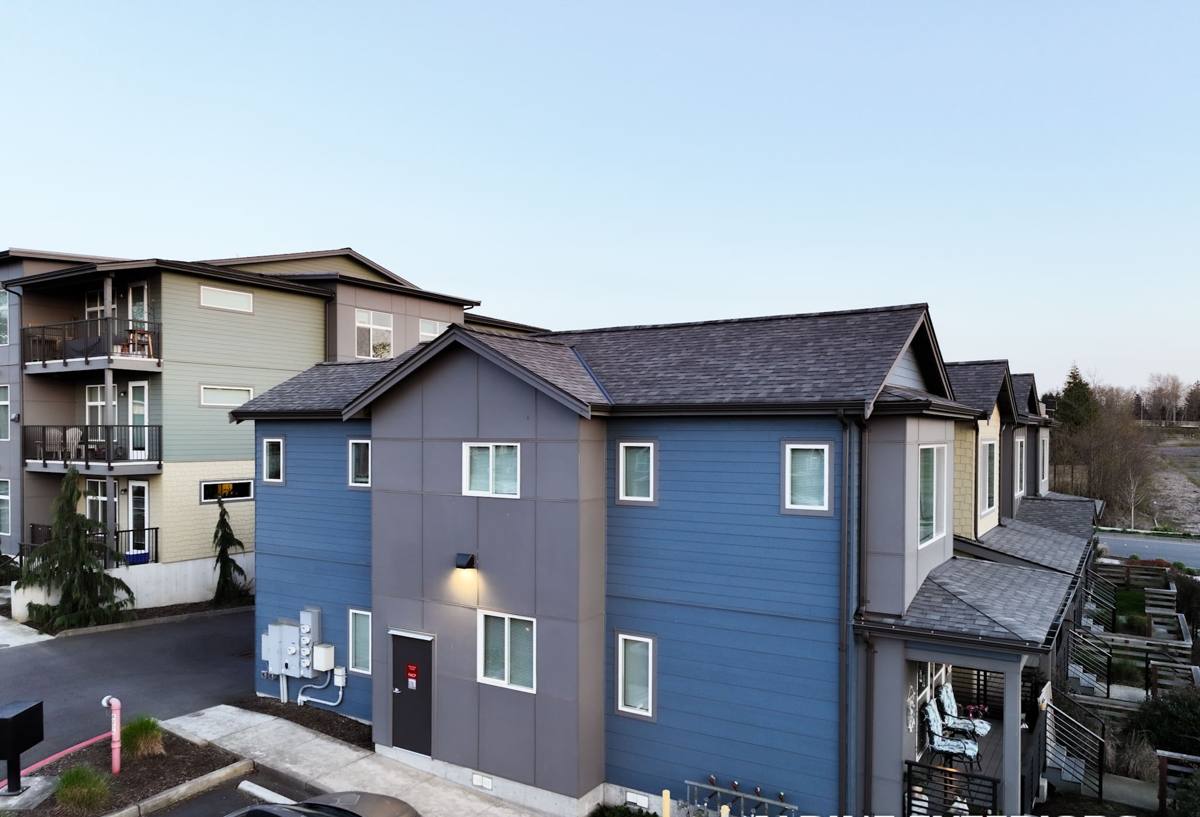
What This Climate Does to a Roof in Acme
Salt Air and Corrosion
Salt-laden air accelerates corrosion on any exposed metal component — fasteners, flashing, vents, and gutter hardware all age faster near the water than they would on an inland roof. A roofing system that isn't specified with corrosion-resistant fasteners and flashing will show rust streaking, pitting, and eventual failure at exactly the points where water management matters most: valleys, penetrations, and roof-to-wall transitions.
Driving Rain and Wind-Driven Exposure
Whatcom County gets a lot of rain, but the more damaging factor on many Acme lots is wind-driven rain hitting the roof at an angle rather than falling straight down. That pushes water sideways under shingles, around vents, and into any flashing detail that was installed to handle only vertical drainage. A roof built for this area needs underlayment and flashing that account for lateral water movement, not just gravity.
A Long Moss Season
Cool temperatures, shade from surrounding trees, and consistent moisture give moss a long window to establish itself on Acme roofs — often most of the year rather than a few weeks in late fall. Moss holds water against the roofing material, works its way under shingle edges, and lifts them over time, which shortens the service life of an otherwise sound roof. North-facing slopes and valleys where debris collects are usually the first places it shows up.
Signs Your Acme Home Needs a New Roof, Not a Repair
Not every roofing problem calls for a full tear-off. But a homeowner should know when patching stops making sense and a full replacement becomes the more honest recommendation.
- Granule loss heavy enough to show up consistently in gutters and downspouts
- Multiple layers of aging shingles already on the roof, limiting future repair options
- Soft or spongy decking felt underfoot, or visible sagging near valleys and eaves
- Moss regrowth that returns within a season or two of cleaning, even after treatment
- Repeated leaks in different locations rather than one isolated failure point
- Flashing that's rusted, cracked, or separating from the roof deck
- Roof age approaching or past the manufacturer's expected service life for the material installed
If a roof is showing two or more of these at once, a repair is usually a short-term fix on a system that's already past the point of reliable patching.
What a Correct New Roof Installation Involves
Full Tear-Off and Deck Inspection
We remove existing roofing down to the deck rather than layering new material over old. That's the only way to actually inspect the sheathing underneath for rot, soft spots, or prior water damage that's been hidden under the old roofing — a real risk on a lot that's been sitting under damp, shaded conditions for years. Any damaged decking gets replaced before anything new goes down; installing new roofing over a compromised deck just hides the problem for another few years.
Underlayment and Ice-and-Water Protection
Given how much wind-driven rain this area sees, underlayment choice matters more here than it would on a drier, more sheltered roof. We use synthetic underlayment rated for the exposure, with self-adhering ice-and-water membrane at vulnerable points — eaves, valleys, and around penetrations — where wind-driven moisture is most likely to find a way in.
Flashing at Every Transition
Flashing is where most roof leaks actually start, not out in the open field of the roofing material itself. Valleys, chimneys, skylights, vent pipes, and roof-to-wall transitions all get new flashing during a full replacement, properly lapped so water sheds correctly even when it's coming in sideways off the wind. We don't reuse old flashing on a new roof — it defeats the point of the replacement.
Ventilation That Lets the Roof Deck Dry
A roof deck that can't breathe stays damp longer after every storm, which feeds moss growth and accelerates material breakdown from the underside as well as the top. Balanced intake and exhaust ventilation is part of a correct installation, not an optional upgrade, especially on a shaded Acme lot where surfaces already take longer to dry than they would on open ground.
Roofing Material Options for Acme Homes
| Material | Moss and Moisture Resistance | Corrosion Exposure (Fasteners/Flashing) | Typical Longevity Here |
|---|---|---|---|
| Architectural asphalt shingle | Good with algae-resistant granules and proper ventilation | Managed with corrosion-resistant fastener spec | 25–30 years with correct install and upkeep |
| Standing seam metal | Very good; sheds moss and debris well on slope | Requires coated or stainless fasteners near salt air | 40+ years with proper detailing |
| Composite/synthetic shingle | Good; resists moisture absorption better than wood | Standard corrosion-resistant fasteners | Comparable to architectural shingle, varies by product |
| Cedar shake | Moisture-absorbent; needs regular treatment in this climate | Fasteners still need corrosion resistance | Shorter without consistent maintenance |
We'll walk through which of these fits a given roof's slope, sun exposure, and budget, but the underlying rule doesn't change: whatever material goes on top, the fasteners, flashing, and underlayment underneath have to be specified for salt air and driving rain, or the material choice won't matter much in ten years.
Cost Factors in a New Roof Installation
Every roof is priced individually based on the actual scope, but a few factors consistently move the number up or down on Acme jobs specifically.
| Factor | Why It Matters Here |
|---|---|
| Roof pitch and access | Steeper or harder-to-access roofs take longer and require more safety setup |
| Deck condition found at tear-off | Rot or soft sheathing from long-term moisture exposure adds replacement material and labor |
| Material choice | Standing seam metal costs more upfront than asphalt but needs less long-term attention in this climate |
| Number and complexity of penetrations | Each vent, skylight, and valley needs its own flashing detail, which adds labor |
| Ventilation upgrades needed | Older homes often need added intake or exhaust venting to meet current standards |
We give a written, itemized estimate before any work starts, so a homeowner knows exactly what's driving the number rather than getting a single lump figure.
Our New Roof Installation Process
- On-site assessment: We inspect the existing roof, decking condition where visible, ventilation, and how sun and shade fall across different slopes of the specific property.
- Written scope and estimate: A clear, itemized plan covering material, tear-off, deck repair allowance, flashing, and ventilation — before any contract is signed.
- Tear-off and deck inspection: Full removal of existing roofing, with any damaged sheathing identified and replaced.
- Underlayment and flashing installation: Ice-and-water membrane at vulnerable points, synthetic underlayment across the field, and new flashing at every transition.
- Roofing material installation: Installed to manufacturer specification for fastener pattern, spacing, and exposure.
- Ventilation and final details: Intake and exhaust venting confirmed, all penetrations sealed and checked.
- Final walkthrough: We review the completed roof with the homeowner and go over basic maintenance expectations for this climate.
Why a Crew That Already Works Acme Matters
A roofing crew that regularly works properties around Sudden Valley and Acme already knows how this specific stretch of Whatcom County behaves — which slopes hold moss longest, how far wind-driven rain travels up under an eave in a coastal storm, and which fastener grade actually holds up against salt air instead of just meeting a generic spec sheet. That's not something a crew coming from a drier, inland market picks up on the first job. It shows up in details like extra flashing attention on north-facing valleys, ventilation sized for a shaded lot rather than an open one, and material recommendations based on what's actually been holding up on nearby roofs, not just what's cheapest to install.
A Simple Checklist Before Hiring for a New Roof in Acme
- Ask whether they do a full tear-off and deck inspection, or install over existing layers
- Confirm current Washington contractor licensing and active liability insurance
- Ask what fastener and flashing materials they use, and whether those are rated for coastal exposure
- Get a written, itemized estimate before signing anything
- Ask how they handle ventilation upgrades on older roofs
- Ask for the manufacturer warranty terms in writing, including what voids them
Maintaining a New Roof After Installation
A correctly installed roof still benefits from regular attention in a climate like this one. Simple upkeep extends the service life of the system and catches small issues before they become full leaks.
- Clear debris from valleys and gutters at least twice a year, more often under heavy tree cover
- Have moss treated or removed before it establishes under shingle edges, not after
- Check flashing and sealant at penetrations annually for early signs of wear
- Trim back overhanging branches that keep sections of the roof shaded and slow to dry
- Address any interior ceiling staining near exterior walls promptly rather than waiting
If you're weighing a full roof replacement for a home in the Acme or Sudden Valley area, we're happy to take a look and give you an honest read on what the roof actually needs. Reach out below for a free, no-pressure estimate.