 Sudden Valley
 Window Installation in Acme: Built for Whatcom County Weather
Acme sits back from the coast in the Whatcom County foothills, but that doesn't mean your windows get an easy ride. The same weather system that dumps driving rain on Bellingham and Sudden Valley reaches Acme too, and the humidity that feeds a long moss season on siding and trim does the same thing to window sills, casings, and the flashing behind them. Add in the temperature swings between valley fog and open sun, and window openings here take on water and movement stress that a lot of installers from outside the area simply don't plan for.
This page is specifically about window installation for homes in and around Acme — not a generic rundown. If you're weighing a full replacement, a partial re-window after siding work, or new construction openings, the details below are what actually matter for a house in this part of Whatcom County.
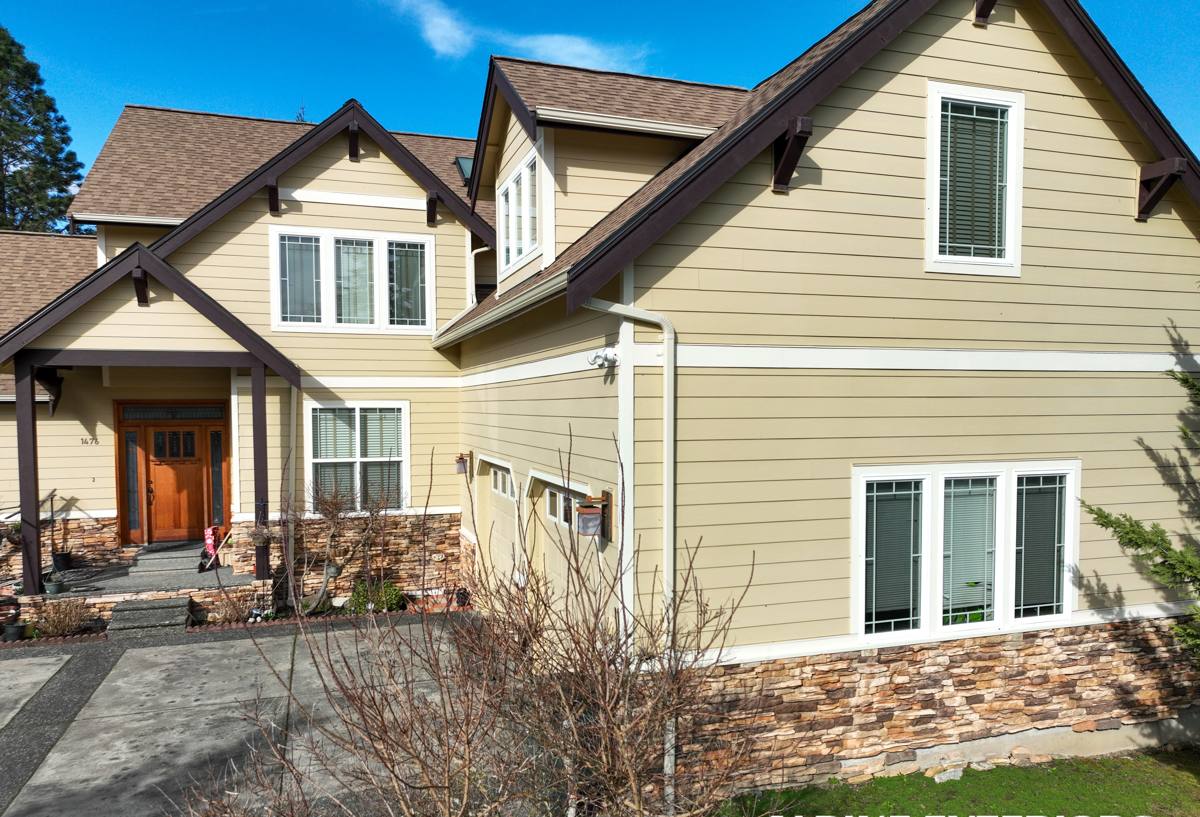
What This Climate Does to Windows Over Time
Driving Rain
Rain that falls straight down is easy to shed. Rain that's pushed sideways by wind — which is common through the valley corridors around Acme — finds every gap in a window's flashing, trim, and sealant. Over years, even a small flaw in the water management behind the window (not the glass itself, the hidden flashing layer) lets moisture into the wall cavity. By the time it shows up as a soft spot on interior trim or a stain below the sill, the framing has usually been wet for a while.
Moss, Algae, and Trim Rot
The same damp, shaded conditions that grow moss on a north-facing roof or siding wall grow it on window sills, exterior casing, and the caulk lines around a window. Once moss and algae take hold in a seam, they hold moisture against the wood or trim material constantly instead of letting it dry between rain events. That's how a window that looks fine from the yard ends up with rotten sill stock or a failed sealant joint underneath.
Regional Moisture and Salt Air
Whatcom County runs from tidal shoreline to inland forest, and homes closer to the water deal with salt-laden air that accelerates corrosion on hardware, screens, and lower-grade metal flashing. Acme is further inland, so salt exposure is lighter here than it is right on the water, but the broader regional moisture load — humidity, fog, and near-constant fall-to-spring rain — still drives the same underlying issue: windows and their surrounding assemblies need to manage water correctly, not just look weathertight.
Signs an Acme Home's Windows Need Attention
- Condensation forming between the panes (a failed seal on a double- or triple-pane unit)
- Soft, spongy, or discolored wood on the interior or exterior sill
- Visible moss or dark streaking in the caulk line where the window meets siding or trim
- Drafts you can feel near the frame even when the window is latched
- Windows that are difficult to open, close, or lock — a sign the frame has shifted or swollen
- Paint that's bubbling or peeling specifically around the window opening, not the whole wall
- Noticeably higher heating bills with no other explanation
What a Correct Installation Actually Involves
Window installation is often sold as if the window itself is the whole job. In a climate like this, the window is maybe a third of it. The rest is the assembly around it.
Flashing and Water Management
Before a new window goes in, the opening needs a properly lapped flashing system — sill pan flashing at the bottom so any water that gets past the window has somewhere to drain instead of pooling, plus jamb and head flashing integrated correctly with the house wrap or building paper. This layering has to happen shingle-style, top piece over bottom piece, so gravity moves water outward instead of into the wall. Skipping or rushing the sill pan is one of the most common causes of hidden rot we find behind older windows in this area.
Sealing and Insulation
The gap between the window frame and the rough opening needs to be filled with a proper insulating material and sealed on the interior and exterior — not just foamed and forgotten. Too much expanding foam can bow a frame out of square; too little leaves an air and moisture path straight into the wall cavity. Exterior sealant beads need to be tooled correctly and applied to clean, dry, compatible surfaces, or they fail within a season or two, especially with the amount of rain this area sees.
Trim and Exterior Finish
Whatever trims out the window — wood, composite, or vinyl casing — needs to be back-primed or fully sealed on all sides, not just the face, before it goes up. End grain and back sides that are left unsealed are exactly where moss gets a foothold and rot starts, even if the front of the trim looks painted and finished.
Choosing Window Materials for This Climate
| Material | How It Handles This Climate | Maintenance |
|---|---|---|
| Vinyl | Good moisture resistance, no painting needed, reliable in high-humidity areas | Low — occasional cleaning |
| Fiberglass | Very stable in temperature swings, holds paint well if a custom color is wanted | Low to moderate |
| Wood or wood-clad | Strong appearance, but interior wood and any exposed joints need diligent sealing to avoid the rot issues common in wet climates | Higher — periodic inspection and refinishing |
| Aluminum | Durable but conducts cold and can condense heavily indoors in our damp winters | Low, but condensation management needed |
We're not going to tell you one brand is the only option — several manufacturers make solid products in each of these material categories. Where we do push back is on installation methods and detailing that skip the flashing and sealing steps above, regardless of what window is being installed. A premium window installed without a sill pan will still leak eventually; a mid-range window installed correctly will usually outperform it.
Our Process, Start to Finish
- On-site assessment: We look at the existing openings, framing condition, and any signs of past water intrusion before quoting anything.
- Honest scope: If we find rot or damage behind an existing window, we tell you before work starts, not after we've already opened the wall.
- Material selection: We walk through material and glass options based on your budget, the window's exposure (sun, wind, rain-facing walls), and how the home is used.
- Removal and inspection: Old windows come out carefully so we can inspect the rough opening and sheathing underneath before anything new goes in.
- Flashing and installation: Sill pan, window, and jamb/head flashing go in as an integrated system tied into the existing house wrap.
- Insulation and sealing: Proper fill and sealant, inside and out, tooled correctly.
- Trim and finish: Casing installed, back-sealed, and finished to match the home.
- Final walkthrough: We check operation, sightlines, and sealant lines with you before calling it done.
Cost Factors for Window Installation in Acme
| Factor | Why It Affects Cost |
|---|---|
| Window size and type | Larger openings, bay windows, or custom shapes cost more than standard sizes |
| Full-frame vs. insert replacement | Full-frame replaces the entire assembly, including flashing correction — more labor, but necessary if there's any water damage |
| Material | Vinyl is generally the most budget-friendly; fiberglass and wood-clad cost more upfront |
| Hidden repairs | Rotten framing or sheathing found during removal adds cost but shouldn't be skipped or covered up |
| Number of openings | Doing multiple windows in one project is more cost-efficient per window than one-offs over time |
| Access and story height | Second-story or hard-to-access windows take more setup time |
We give a broad range during the initial conversation and a firm number once we've actually looked at your openings — vague online estimates rarely hold up once rot or unusual framing is discovered, and we'd rather tell you that upfront than surprise you mid-project.
Why a Crew That Already Works in Acme Matters
A lot of window problems in this region trace back to installers who treat every job the same way regardless of climate — the same flashing detail whether the house is in a dry inland valley or a rain-and-moss corridor like this one. A crew that regularly works Whatcom County homes has already seen how moss establishes itself in poorly sealed trim joints, how wind-driven rain finds gaps other regions never have to deal with, and how quickly a skipped sill pan turns into a rot problem behind drywall. That local pattern recognition is worth more than a manufacturer's brochure.
It also means faster, more accurate scheduling around this area's weather windows, and a crew that isn't guessing at what "normal" looks like for a home here.
After Installation: Keeping Windows Performing
New windows still need basic upkeep in this climate. Rinse pollen, dirt, and organic buildup out of tracks and sills a couple of times a year so moisture doesn't sit against the frame. Check exterior caulk lines annually, especially after a hard winter, and address any cracking before it becomes a leak path. If you notice moss starting to establish on nearby trim or siding, address it early — it's much easier to stop moss from colonizing a joint than to remove rot after it's spread.
If your windows in Acme are drafty, fogging between the panes, showing soft trim, or you're simply planning ahead for a replacement, we're happy to take a look and give you a straightforward, no-pressure estimate — just fill out the form below.