 Sudden Valley
 Storm Damage Repair Built for Alger's Weather
Alger sits close enough to the water and the hills around Sudden Valley that roofs here take a specific kind of beating. It's not one dramatic event that wrecks a roof in this part of Whatcom County — it's the accumulation. Salt-laden air off the water works into fasteners and flashing metal over years. Wind-driven rain finds the smallest gap in a ridge cap or a step flashing seam and keeps finding it every time it storms. And the long, damp moss season here does more structural harm to a roof than most homeowners realize, because moss doesn't just look bad — it holds moisture against the shingle mat and lifts edges enough for wind to get underneath.
When a storm comes through, it's usually not creating new weaknesses so much as it's exploiting ones that were already building. That's the frame we bring to storm damage repair in Alger: fix what the storm broke, but also address what let it break in the first place.
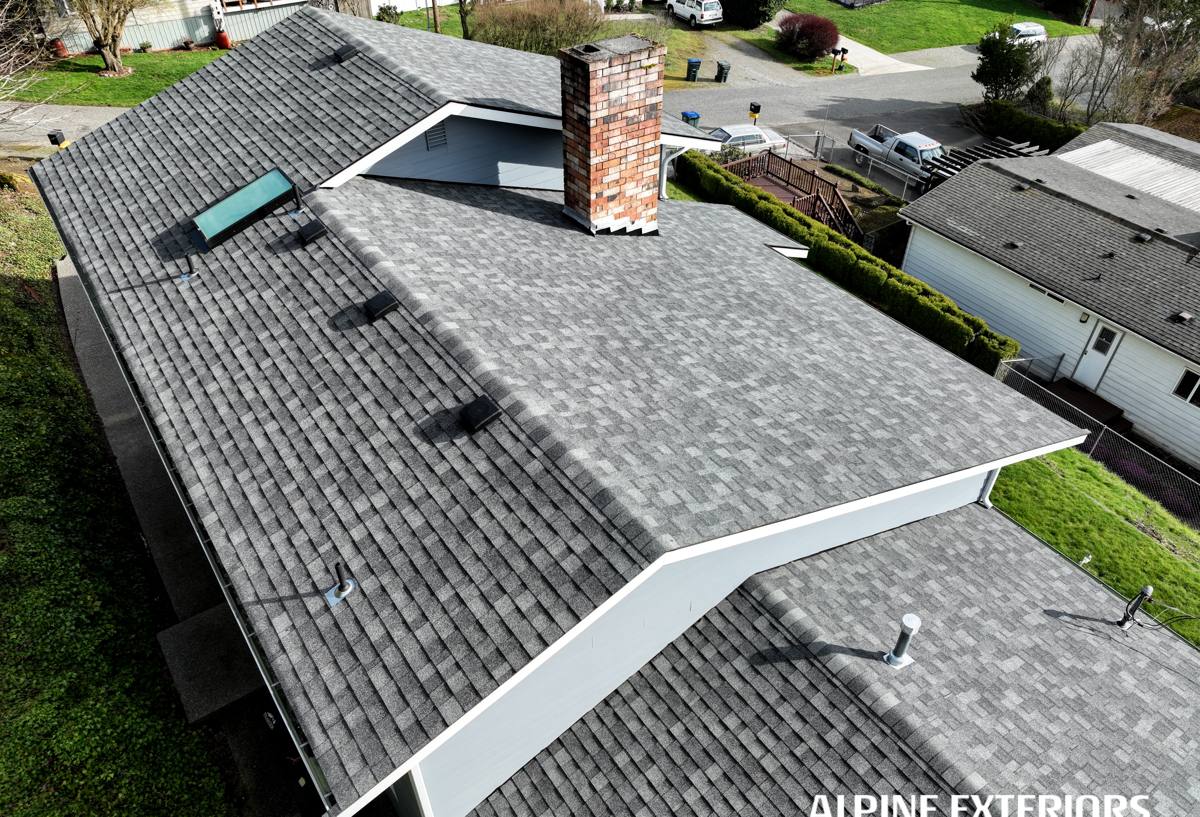
What Storm Damage Actually Looks Like Here
Alger and Sudden Valley storms aren't usually the kind that rip whole roof sections off. More often the damage is quieter and easier to miss from the ground:
- Lifted or creased shingle tabs along ridgelines and roof edges, where wind gets the most leverage
- Displaced or bent flashing at chimneys, skylights, and wall-to-roof transitions, letting wind-driven rain track sideways under the roofing
- Granule loss on older asphalt shingles, accelerated by driving rain and moss growth, leaving the mat exposed
- Debris impact — branches and cones from nearby trees — that punctures or bruises shingles without an obvious visible hole
- Gutter and downspout separation from wind load, which then dumps water where it shouldn't be, right against fascia and soffit
- Moss mats that trapped moisture through the wet season and softened the shingle underneath before the storm ever hit
The tricky part is that most of this is only visible from the roof itself, not from the driveway. A roof can look fine from the street and still be actively leaking into the attic.
Why Salt Air, Driving Rain, and Moss Change the Repair
Salt Air and Metal Components
Flashing, fasteners, and gutter hardware corrode faster near the water than they do further inland. A storm repair that reuses corroded flashing or drives new nails through already-weakened metal is a repair that fails again within a season or two. We check the condition of all metal components during a storm repair, not just the shingles, because the flashing is usually the actual point of failure even when the visible damage is to the roofing above it.
Wind-Driven Rain
Rain that comes in sideways behaves differently than rain that falls straight down. It gets pushed uphill under shingle laps and around fastener heads that would otherwise shed water fine. Storm repairs in this area need attention to lap direction, sealant placement, and underlayment condition — not just patching the visible hole.
Moss Season
Whatcom County's wet, shaded conditions keep moss active for a large part of the year. Moss growth on a roof isn't cosmetic — it holds water against the shingle surface long after a storm has passed, which softens the mat, breaks the granule bond, and makes the roof more vulnerable the next time wind hits it. Any honest storm damage repair in Alger should include a look at moss buildup nearby, because leaving it in place undoes the repair over time.
What a Correct Storm Damage Repair Involves
A proper repair isn't just replacing the shingles that are obviously torn. It typically includes:
- Full roof-surface inspection, not just the storm-damaged section, since one weak area often points to others
- Attic check for water staining, insulation damage, or active moisture, which tells us whether the leak has already gotten past the roofing
- Flashing evaluation at every penetration and transition, since flashing failure is a common root cause of leaks that get blamed on shingles
- Matching materials where possible, so a repair doesn't leave a visibly different patch or mix incompatible shingle types
- Underlayment repair if water has tracked under the shingle layer, since patching over compromised underlayment just delays the next leak
- Gutter and drainage check to make sure water is actually leaving the roof instead of pooling against a repaired section
Skipping any of these steps is how a "repair" turns into a callback six months later.
Our Process for Alger Storm Repairs
When we get a call after a storm, the process is straightforward:
1. Assessment
We inspect the roof in person — ground-level assumptions about storm damage are unreliable, and photos from a phone rarely show flashing condition or granule loss accurately.
2. Honest Scope
We tell you plainly whether this is a targeted repair, a larger section replacement, or something that's actually pointing toward a full roof replacement down the line. We're not going to talk a straightforward repair into something bigger than it needs to be, and we're not going to undersell a job that genuinely needs more work.
3. Documentation
If you're filing an insurance claim, we document the damage clearly enough to support it — photos, notes on cause, and a scope that matches what's actually needed.
4. Repair
Work gets done with materials matched to your existing roof where possible, with particular attention to flashing and sealing given how much wind-driven rain and salt air affect this area.
5. Follow-Up
We check our own work after the next significant rain where practical, because the real test of a storm repair is whether it holds through the next storm, not whether it looks finished on a dry day.
Repair vs. Replacement: What Decides It
| Factor | Leans Toward Repair | Leans Toward Replacement |
|---|---|---|
| Age of roof | Under 10-12 years | Nearing or past expected lifespan |
| Extent of damage | Localized to one section | Spread across multiple roof planes |
| Underlying condition | Deck and underlayment sound | Soft spots, rot, or widespread moss damage found |
| Shingle match availability | Matching shingles still available | Discontinued style, patch would be visibly mismatched |
| Number of prior repairs | First or second repair on this roof | Repeated patches in the same areas |
Most storm calls we get in Alger are legitimately repair situations. But we'd rather tell you upfront if a repair is just delaying an inevitable replacement than have you pay for patchwork on a roof that's past the point of it being worthwhile.
Insurance and Storm Claims
Many storm repairs in this area are covered in part by homeowner's insurance, depending on your policy and the cause of damage. A few practical notes:
- Document damage with photos as soon as it's safely visible, before any repair work starts
- Keep any tarping or emergency mitigation receipts — insurers generally expect reasonable steps to prevent further damage
- A repair estimate that clearly separates storm-caused damage from pre-existing wear (like moss deterioration) tends to move through claims more smoothly
- We're happy to provide documentation to support a claim, though the claim decision itself is between you and your insurer
Why a Crew That Already Works Alger Matters
Storm damage repair isn't a generic skill applied the same way everywhere. A crew that regularly works roofs in Alger and the broader Sudden Valley area already knows which flashing details tend to fail first in this climate, how far moss typically gets established before it starts causing real damage, and what wind-driven rain actually does to a roof edge here versus a drier inland location. That's the difference between a repair that's cosmetically fine and one that's actually built to hold up through the next wet season. It also means faster response — we're not routing a crew in from across the county after a storm when time matters for preventing interior water damage.
After a Storm: A Homeowner's Quick Checklist
- Check the attic and ceilings for new water stains or damp spots after any significant wind or rain event
- Look at gutters from the ground for obvious sagging, separation, or debris blockage
- Note any shingle debris in the yard — granules or shingle pieces on the ground are a sign something came loose above
- Avoid climbing onto the roof yourself, especially on wet or mossy surfaces
- Call for an inspection promptly rather than waiting — small flashing or shingle gaps let a lot of water in over repeated storms
- Keep receipts and photos if you plan to file an insurance claim
Preventing the Next Storm From Doing the Same Damage
Because so much storm damage here builds on existing moss and moisture issues, ongoing roof maintenance matters as much as the repair itself. Periodic moss treatment, keeping gutters clear so water actually drains instead of backing up under the roof edge, and catching small flashing issues before a storm turns them into leaks all reduce how much damage the next storm can do. A roof that's been maintained through Whatcom County's wet season handles a windstorm very differently than one that's been left alone for a few years.
If you've had storm damage — or you're just not sure whether that moss patch and a few loose shingles are something to worry about — we're glad to come take an honest look. Fill out the form below for a free, no-pressure estimate on storm damage roof repair for your Alger home.