 Sudden Valley
 Board & Batten Siding, Built for the Sudden Valley Climate
Board and batten has a strong following in the Bellingham and Sudden Valley area because it fits the region's mix of wooded lots, lake-view homes, and craftsman and modern-farmhouse styles. The vertical lines read as clean and substantial against evergreen backdrops, and the deep shadow lines the battens create hide minor wall waviness better than lap siding does. But the look is only half the story. This is a wet corner of Washington, and board and batten's exposed vertical seams and narrow battens behave very differently in our climate than they would in a dry inland market. If it's not detailed correctly, it will show problems years before a well-installed lap or panel system would.
We install board and batten on Bellingham-area homes regularly, and the installation choices we make here are shaped directly by what this climate does to a wall over a decade or two of Whatcom County winters.
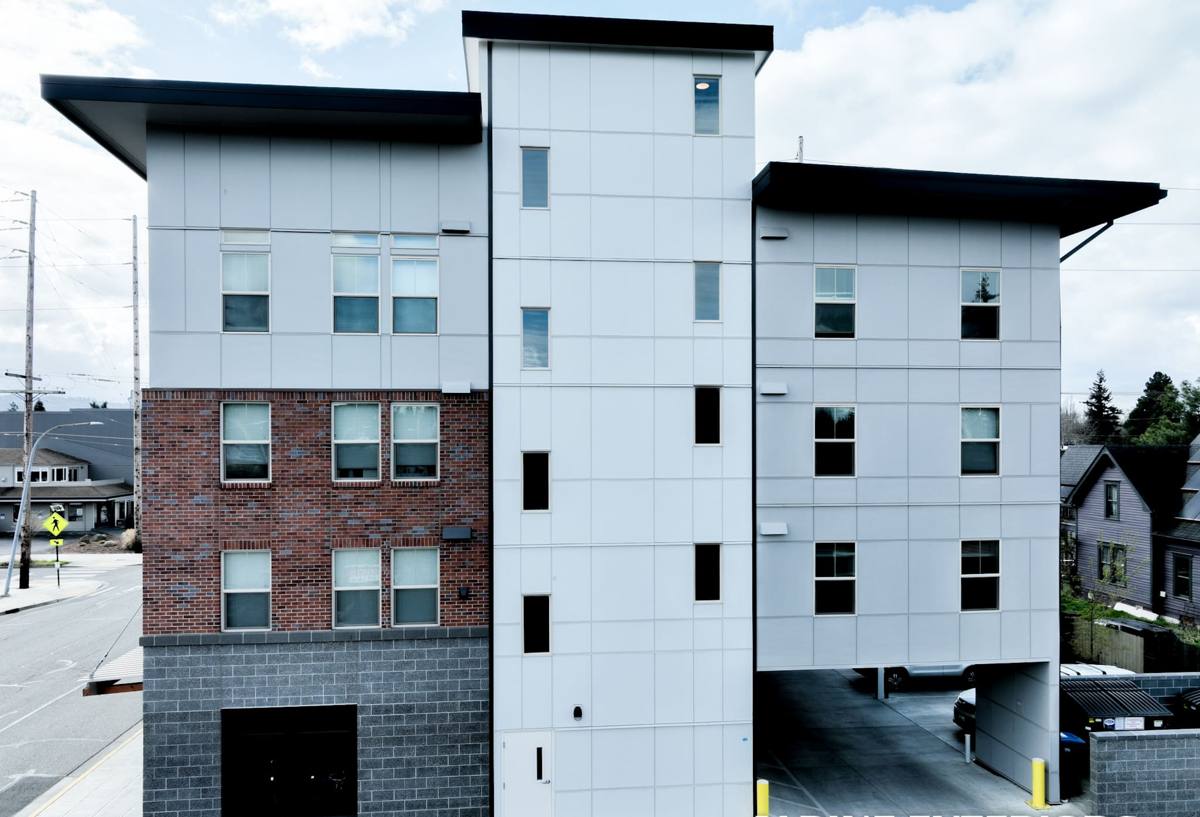
What Sudden Valley's Climate Does to Board & Batten Siding
Salt Air and Driving Rain
Homes closer to the water pick up salt-laden moisture in the air, which accelerates corrosion on fasteners and metal trim if the wrong hardware gets used. Combine that with the driving, wind-pushed rain that comes through this part of Whatcom County in fall and winter, and every vertical seam in a board and batten wall becomes a potential water path. Rain here doesn't just fall straight down — it gets pushed sideways into wall assemblies, which is exactly the kind of exposure board and batten's seam-heavy design needs to be engineered against.
A Long Moss Season
Shaded, tree-lined lots around Sudden Valley stay damp for a large part of the year, and that dampness is what moss needs to take hold. Moss loves horizontal ledges — batten faces, trim caps, window heads — anywhere water can sit instead of shedding. On the wrong substrate, moss holds moisture against the wall long after the rain stops, which is a slow but steady path to rot underneath.
Why This Matters More for Board & Batten Specifically
Lap siding sheds water down a continuous horizontal plane with relatively few penetrations. Board and batten multiplies the number of vertical seams across a wall — every batten covers a joint between boards, and every one of those joints is a place water can find its way in if the board material swells, cups, or isn't backed with the right moisture barrier. That's the trade-off you're accepting with this style, and it's why the material underneath the battens matters as much as the look on top.
What a Correct Board & Batten Job Requires Here
A board and batten installation done right for this climate has a few non-negotiables, regardless of what brand of siding is used:
- A weather-resistive barrier installed correctly behind the siding, with proper flashing at every window, door, and penetration
- Rainscreen or furring strategy that lets any moisture that does get behind the panels drain and dry rather than sit against the sheathing
- Battens and boards that don't swell, cup, or absorb water at the joint line — this is where wood-based and composite products historically struggle
- Correct fastener spacing and type so battens stay tight over decades of freeze-thaw and wet-dry cycling
- Properly detailed bottom terminations so board ends aren't sitting in standing water or snow line contact
- Factory-finished color that won't need repainting on a maintenance cycle you can't ignore
Miss any one of these and you get the same failure pattern: swelling at the joints, paint or finish breakdown along the battens first, moss establishing on horizontal trim faces, and eventually soft spots at the bottom courses where water has nowhere to go.
Why We Only Install This Style in James Hardie Fiber Cement
We don't offer board and batten in primed spruce, cedar, or engineered wood products, and we don't install vinyl board and batten panel systems either. This isn't a style preference — it's a direct response to how those materials perform under the exact conditions described above.
Wood-based battens and boards are dimensional lumber or engineered wood at their core, and both absorb moisture at cut edges and joint lines. In a climate with this much sustained dampness and moss pressure, that absorption cycle is what eventually causes cupping, checking, and rot — usually starting right at the batten joints, which is the one place on this style of siding you can't easily inspect without removing trim. Vinyl board and batten avoids the rot question but introduces its own: it expands and contracts more than fiber cement across our seasonal temperature swings, which stresses the fastening system over time, and it doesn't hold a factory finish the way ColorPlus does — it just fades.
James Hardie fiber cement is cement, sand, and cellulose fiber. It doesn't rot, it isn't a food source for moss the way wood substrates can be, and it holds its dimension through wet Whatcom County winters and drier summers without the swelling that stresses batten joints. Hardie's ColorPlus factory finish is baked on under controlled conditions, which means better fade resistance and color consistency than field-applied paint or stain, and it comes with a longer finish warranty than most site-applied coatings can offer. For a style built almost entirely out of exposed seams and joints, starting with a substrate that doesn't move or absorb water at those joints is the single biggest factor in whether the job still looks good in fifteen years.
Hardie Lines Suited to Board & Batten
| Hardie Product | Best Use in a Board & Batten Design |
|---|---|
| HardiePanel vertical siding with battens | The most common board and batten configuration — large panels with battens over the seams, efficient install |
| Individual HardieTrim battens | Used over panel seams or as accent battens for a more custom board spacing and rhythm |
| HZ10 product line | Engineered for wetter, harsher climates like ours — relevant on lake-adjacent and heavily shaded Sudden Valley lots |
| ColorPlus factory finish | Recommended over field paint for any exposed vertical-seam style, given our moisture exposure |
Our Process for a Bellingham Board & Batten Install
1. Site and Wall Assessment
We look at your home's exposure — how much direct weather it takes, how shaded and damp the lot stays, and what condition the existing wall assembly is in before we ever talk panel layout or batten spacing.
2. Moisture Management Plan
Every board and batten job we do gets a weather-resistive barrier and drainage plan appropriate to that wall, with flashing details worked out at windows, doors, and any penetrations before the first panel goes up.
3. Layout and Batten Spacing
We plan panel and batten spacing to match your home's proportions and elevation, keeping joints out of high-exposure zones where possible and away from areas that collect standing water or debris.
4. Installation to Manufacturer Spec
Fastener type, spacing, and clearances follow James Hardie's published installation requirements — this is what keeps the warranty valid and what actually determines how the wall performs in twenty years, not just how it looks on install day.
5. Final Detailing
Bottom terminations, trim caps, and any transitions to other materials get finished so there's no ledge or gap where moisture and moss can start their slow work.
Cost Factors for Board & Batten in This Area
Board and batten typically costs somewhat more than a standard lap installation because of the added trim pieces and batten labor. A few things that move the number for a specific Bellingham or Sudden Valley project:
| Factor | Why It Affects Cost |
|---|---|
| Wall complexity | More corners, gables, and dormers mean more batten cuts and trim detail |
| Existing wall condition | Rot or moisture damage found during removal adds repair scope before new siding goes on |
| Access and lot conditions | Sloped, wooded, or lake-adjacent Sudden Valley lots can affect staging and scaffolding needs |
| Batten spacing and pattern | Tighter batten spacing or a custom rhythm uses more material and labor than a standard layout |
| Color and finish | Standard ColorPlus colors versus premium or custom finish options |
We give a firm number after walking the property — not a phone quote — because the wall condition and exposure on your specific lot are what actually drive the price.
Signs Your Current Board & Batten Siding Needs Attention
- Cupping, warping, or visible gaps opening up at batten joints
- Moss or dark staining collecting along batten faces or trim ledges
- Paint or finish peeling first and worst along the vertical seams
- Soft or spongy sections near the bottom courses or foundation line
- Fastener heads showing rust or staining bleeding down the face of the board
Any one of these is worth a look before it spreads. On this style of siding, joint-level problems tend to move faster once they start, because water that gets behind a batten has a straight path down the wall.
Why a Crew That Works Bellingham Regularly Matters
Board and batten done wrong doesn't fail everywhere the same way — it fails at the details: the flashing behind a window head, the drainage gap behind the panel, the fastener choice at a salt-exposed elevation. Those are exactly the details a crew learns by installing siding on homes with this specific climate exposure, not by installing the same style in a dry, inland market and assuming the details transfer. We know what a Sudden Valley winter does to an exterior wall, and we build the moisture management and detailing into every board and batten job accordingly.
If you're weighing board and batten for a home in Bellingham or Sudden Valley, we're happy to walk the property, look at your current siding condition, and talk through what a correctly detailed James Hardie installation would look like for your specific elevation and exposure. Reach out for a free, no-pressure estimate using the form below.