 Sudden Valley
 New-Construction Windows in Columbia: Why the Installation Method Matters
"New-construction window" describes a specific type of window and a specific way of installing it — not just a window going into a brand-new house. These units have a nailing fin (sometimes called a flange) around the perimeter of the frame that gets fastened directly to the wall sheathing before siding goes on. That's different from a retrofit or "pocket" window, which slides into an existing frame during a remodel without disturbing the surrounding wall. In Columbia, we see new-construction windows specified for ground-up builds, additions, garage conversions, and any remodel where the contractor has opened the wall down to the studs anyway.
The method matters because the nailing fin is only half the job. The other half is how that fin ties into the water-resistive barrier (house wrap), the sill flashing, and the siding above and below it. Get that sequence wrong and you don't find out for a year or two — until water starts tracking down inside the wall cavity. Get it right and the window becomes part of a continuous drainage plane that sheds water outward, which is exactly what a home in this part of Whatcom County needs.
What Sudden Valley's Climate Asks of a Window Installation
Driving Rain and Marine Air
Whatcom County sits close enough to the Salish Sea that homes here regularly deal with wind-driven rain, not just straight-down rain. Wind-driven rain finds gaps that vertical rain never would — around corners, under sills, and at the top corners of a rough opening where flashing laps are most often done wrong. Marine air also carries more moisture and salt content than inland air, which accelerates corrosion on unprotected fasteners and speeds up wear on lower-grade sealants and finishes.
Shade, Tree Cover, and Moss Season
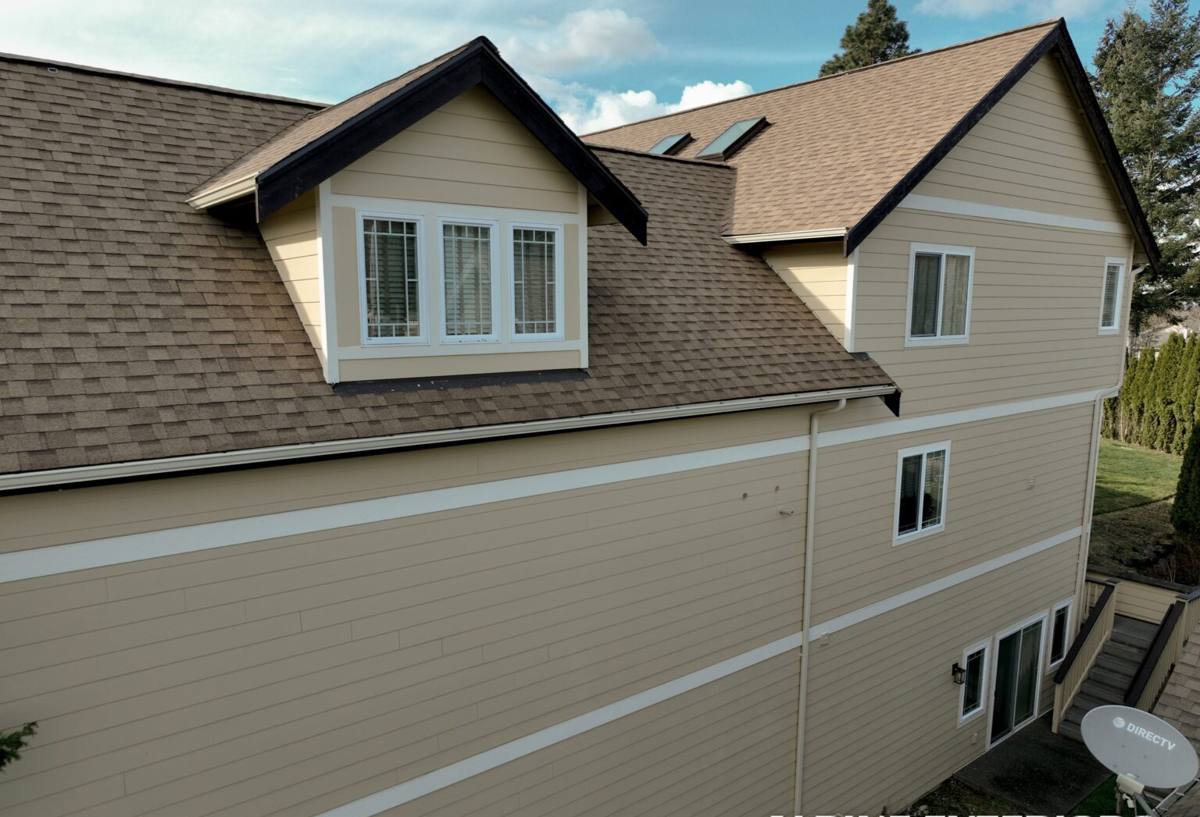
Columbia, like much of Sudden Valley, sits in a heavily wooded setting. That tree cover is part of what makes the neighborhood pleasant to live in, but it also means less direct sun on exterior walls, longer drying times after rain, and a moss season that runs long here compared to more open, sun-exposed parts of the county. Moss and algae don't just grow on roofs — they take hold on window sills, trim boards, and any horizontal or textured surface that stays damp for extended stretches. A window detail that can't shed water quickly becomes a spot where moss gets a foothold, which then holds even more moisture against the frame and trim.
None of this means new-construction windows are a bad fit for Columbia — it means the flashing and drainage details have to be done correctly and consistently, every window, every time.
What a Correct New-Construction Window Installation Involves
Sill Pan Flashing
Before the window ever goes in, the rough opening's sill should get a sloped or sloped-corner sill pan — a flashing detail that catches any water that gets past the window and directs it back outside instead of letting it sit on the framing. This is one of the most commonly skipped steps in lower-budget installs, and it's one of the most important in a climate that sees this much sustained rain.
House Wrap and Flashing Tape Sequencing
Water management around a window works like shingles on a roof: every layer has to lap over the layer below it, from the bottom up. That means sill flashing goes on first, then the window's side flanges get taped, then the head (top) flashing laps over the house wrap above the window, and the house wrap itself gets integrated in the correct order at each step. Reverse any part of that sequence and you've built a spot where water is directed into the wall instead of away from it.
Fastening and Shimming
The nailing fin gets fastened per the manufacturer's schedule — skipping fasteners or over-driving them can rack the frame or leave gaps to backfill with sealant, and sealant should never be the primary defense against water intrusion. The window is also shimmed square and plumb in the rough opening before it's fastened off, checked with a level on all four sides, not just eyeballed.
Sealant and Backer Rod
Exterior sealant at the trim and interior sealant at the frame are the last line of defense, not the first. We use sealants rated for the temperature swings and UV exposure this region sees, and we use backer rod in wider gaps so the sealant bead has proper depth and doesn't fail early.
New-Construction vs. Retrofit Windows: Which One Applies
Homeowners in Columbia sometimes ask us for a "new-construction window install" when what they actually need is a retrofit window, or vice versa. The right choice depends on whether the wall is already open.
| Factor | New-Construction Window | Retrofit / Pocket Window |
|---|---|---|
| When it applies | New builds, additions, or remodels with the wall opened to studs | Existing home, siding and trim staying in place |
| Installation point | Nailing fin fastened to sheathing before siding | New frame inserted into the existing window frame |
| Flashing access | Full access to re-flash sill, jambs, and head | Limited to whatever flashing already exists behind the trim |
| Rough opening | Can be resized to change window shape or size | Fixed to the existing opening size |
| Best fit for Columbia | New construction, additions, full wall/siding remodels | Straight window swaps where siding stays untouched |
If your project already has the wall open — an addition, a garage conversion, a full re-side — a new-construction window is almost always the better long-term choice, because it lets us fully re-flash that opening instead of working around what's already there.
How Our Process Works in Columbia
Site Visit and Rough Opening Review
We start by looking at the actual framing — not just the window schedule on a set of plans. Rough openings get checked for square, level, and correct dimensions before any window is ordered, since a mis-sized opening causes problems no window can fix on its own.
Product Selection
We walk through frame material, glass package, and grille or configuration options based on the home's exposure — how much direct sun and wind-driven rain a given wall actually sees, since not every wall of a house faces the weather the same way.
Installation Day
Sill pans, flashing tape, and house wrap integration happen in the correct sequence described above, window by window, with each opening shimmed and checked before it's fastened and sealed.
Final Check
We walk the finished openings looking specifically at flashing laps, sealant lines, and operation of each sash before calling the job complete.
Frame and Glass Considerations for This Climate
Vinyl, fiberglass, and wood-clad frames are all viable options, and each comes with real trade-offs rather than a single "best" answer. Vinyl is low-maintenance and budget-friendly but can expand and contract more with temperature swings. Fiberglass holds its shape well over time and handles moisture exposure with less concern, generally at a higher cost. Wood-clad frames offer a traditional interior look but require more attention to exterior cladding integrity, since any breach in the cladding exposes wood to the moisture this climate delivers for much of the year.
On glass, we typically recommend a low-E coating paired with an appropriate gas fill for this region's temperature range — it helps with both comfort and condensation control on interior glass during our colder, damper months. Grille patterns and exterior color are aesthetic choices, but we'll flag anything that traps water or debris against the frame, since anything that holds moisture for long periods becomes a maintenance issue in a climate that gives moss and algae plenty of time to take hold.
Why a Crew That Already Works Columbia Makes a Difference
Sudden Valley's mix of tree cover, terrain, and access can make straightforward jobs elsewhere a little more involved here — narrow driveways, staging materials on sloped lots, and working around root systems and drainage patterns that aren't obvious from the street. A crew that's already worked in this neighborhood knows what to expect before the first ladder goes up, which keeps the job moving and reduces surprises. Local, licensed, and insured work also matters for something as structural as a window opening — ask any contractor bidding this kind of work to show current licensing and insurance before signing anything, and don't treat that as a rude question. It's a standard one, and any legitimate contractor expects it.
Homeowner Maintenance Checklist
New-construction windows are largely maintenance-free once installed correctly, but a little seasonal attention keeps them performing for their full service life in this climate:
- Check exterior caulk lines at the trim once a year for cracking or separation, especially after the first winter
- Clear leaves, needles, and debris from sills and tracks before fall rains set in
- Watch shaded sills and trim for early moss or algae growth and clean it off before it spreads
- Operate every sash a few times a year, even ones you rarely open, so hardware doesn't seize up
- Look inside at the lower corners of the frame after heavy wind-driven rain for any sign of moisture intrusion
If you're planning new construction, an addition, or a wall-opening remodel in Columbia, we're happy to walk the site, look at your rough openings, and put together a free, no-pressure estimate — just fill out the form below.