 Sudden Valley
 Composite Decking for Cordata Homes
Cordata sits inside the same wet, marine-influenced weather system that shapes every deck we build around Sudden Valley and the rest of Whatcom County. Long stretches of drizzle, driving rain off the Sound, and moss that takes hold anywhere shade and moisture linger for more than a few days all put real stress on outdoor living space. A deck here isn't just a summer feature — it's exposed to wet conditions eight or nine months of the year, and it needs to be built with that in mind from the framing up, not just the surface boards.
We install composite decking for homeowners in the Cordata area who want a deck that holds its look and structure without the annual sanding, staining, and moss scrubbing that wood decking demands in this climate. This page covers what local conditions actually do to a deck, what a correctly built composite deck involves, and how our process works for homes in this area.
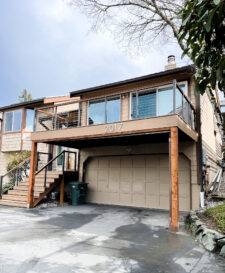
What Whatcom County Weather Does to a Deck
Rain and standing moisture
Whatcom County gets a lot of rain, but it's the pattern that's hard on decks — long, low-intensity soakings rather than short downpours. Water sits on horizontal surfaces, works into fastener holes, and finds its way under boards that aren't spaced or ventilated correctly. Over time that moisture is what causes rot in wood framing, corrosion in the wrong fasteners, and warping in lower-grade decking materials.
Moss and algae
Anywhere shaded by trees, fences, or the house itself, moss and algae build up fast in this climate. On wood decking that means a slick, green surface within a season or two and a maintenance cycle of pressure washing and treating that never really ends. Composite boards resist moss growth far better, but they aren't immune — a deck with poor airflow underneath or boards laid flush against a damp foundation wall will still grow moss on the surface if it's never allowed to dry.
Salt air and marine influence
Being near the water in this part of Washington means a low but steady exposure to salt-laden air, which accelerates corrosion on hardware, screws, and connectors that aren't rated for it. It's a slower process than what you'd see right on the coast, but over ten or fifteen years it's enough to matter, especially on older decks built with standard hardware instead of stainless or coated fasteners.
Why Composite Makes Sense for This Climate
Wood decking can absolutely be done right, and we still build with it when a homeowner wants that look and is prepared for the upkeep. But for a lot of Cordata homeowners, composite is the more practical call given how much of the year this deck will be wet.
| Factor | Wood Decking | Composite Decking |
|---|---|---|
| Moss and algae resistance | Low — needs regular treatment | Higher — smoother, denser surface resists growth |
| Annual maintenance | Sanding, staining, sealing | Occasional wash-down |
| Moisture absorption | Absorbs and swells, leading to splitting and cupping | Minimal absorption, especially capped boards |
| Upfront material cost | Lower | Higher |
| Expected lifespan (properly installed) | 15–20 years with upkeep | 25–30+ years, manufacturer-backed |
| Fading and color change | Grays and weathers without staining | Slight fade over years, more stable with capped products |
The honest trade-off is upfront cost. Composite material runs more than pressure-treated or cedar. Where it earns that back is in reduced maintenance and a longer service life in a climate that's hard on wood — a real consideration for anyone who doesn't want a weekend project every spring.
Choosing the Right Board for a Wet Climate
Not all composite decking performs the same way here, and this is where a lot of installation problems actually start — at the material choice, not the labor.
Capped vs. uncapped composite
Capped composite boards have a plastic shell wrapped around the wood-plastic core, which is the main defense against moisture intrusion and staining. Uncapped or lower-grade composite can still absorb some moisture at the core over time, especially at cut ends that aren't sealed. In a climate with this much sustained wetness, we generally steer homeowners toward capped boards for anything with real weather exposure.
Board profile and drainage
Grooved-edge boards with hidden fastener systems look cleaner and avoid surface screw holes where water can pool, but they also require correct spacing to let water drain between boards instead of channeling it against the substructure. Solid boards are more resistant to flex but need attention to slope so water sheds off the deck surface rather than sitting.
What a Correct Installation Actually Involves
The composite boards themselves get most of the attention, but most of the failures we get called out to fix started below the surface. A correct build in this climate includes:
- Pressure-treated or coated framing rated for ground contact where applicable, since even covered framing sees moisture in this climate
- Joist tape over the top of every joist to keep fasteners from creating a path for water into the wood
- Proper slope away from the house — typically a slight pitch so water runs off rather than pooling near the ledger
- Ledger board flashing where the deck attaches to the house, which is the single most common source of hidden rot on older decks we tear out
- Adequate under-deck ventilation so moisture and moss don't build up in the shaded space beneath the boards
- Stainless steel or coated, marine-rated fasteners and hardware given the corrosion exposure in this area
- Correct board spacing for the specific product, since composite expands and contracts with temperature more than people expect
Skip any one of these and the deck can look fine on day one while a moisture problem builds quietly underneath for a few seasons before it shows up as soft framing, a loose ledger, or boards that start to cup.
Our Process for Cordata Projects
We keep the process straightforward and matched to what the site actually needs:
- On-site evaluation — we look at grade, drainage, sun and shade exposure, and the condition of any existing structure before recommending anything
- Material and layout discussion — board type, color, railing, and layout, with honest trade-offs on cost and maintenance for each option
- Permitting — handled as required for the scope of work and structure
- Demo and framing — old decking removed, framing inspected and repaired or replaced as needed, flashing and joist tape installed correctly the first time
- Composite installation — boards installed to manufacturer spacing and fastening specs, which matters for keeping any product warranty valid
- Final walkthrough and cleanup — site cleared, deck reviewed with the homeowner before we consider the job done
Maintaining a Composite Deck in This Climate
Composite cuts the maintenance load significantly compared to wood, but "low maintenance" isn't "no maintenance," especially with the moss pressure in this area. A simple seasonal routine keeps a deck looking and draining the way it should:
- Sweep off leaves and debris regularly, especially in shaded corners where moisture collects
- Rinse the deck surface a few times a year with plain water and a soft-bristle brush to stop moss and algae before they take hold
- Check that gaps between boards stay clear of debris so water can keep draining through
- Confirm under-deck ventilation isn't blocked by stored items or overgrown landscaping
- Inspect railing posts and ledger connections annually for any movement or gaps
Cost Factors for a Cordata Composite Deck
Every deck is different, but the same handful of factors drive most of the price difference between projects in this area:
| Factor | Impact on Cost |
|---|---|
| Deck size and footprint | Largest single driver — more square footage means more material and labor |
| Board tier (uncapped vs. capped composite) | Capped, higher-grade boards cost more per square foot but last longer here |
| Height and structural complexity | Multi-level decks, stairs, and taller framing add labor |
| Existing structure condition | Rot or undersized framing found during tear-out adds repair cost |
| Railing type | Composite or metal railing systems cost more than basic wood rail |
| Site access | Tight or sloped lots can add labor time for material staging |
We give a firm, itemized quote after seeing the site — not a ballpark based on square footage alone, since framing condition and access can shift the number more than people expect.
Why a Local Crew Matters for This Job
A deck built without accounting for this area's rain pattern, moss pressure, and salt-air exposure can look identical to a correctly built one for the first year or two. The difference shows up later, in the framing and hardware most homeowners never see until something fails. Working regularly around Sudden Valley and the greater Whatcom County area means we're not guessing at how a given board or fastener holds up here — we've seen what this climate does to decks over time and build accordingly, from the joist tape up.
If you're weighing a composite deck for your Cordata property, we're happy to walk the site, talk through material options honestly, and put together a straightforward estimate — no pressure, no obligation. The form below is the fastest way to get that started.