 Sudden Valley
 Storm Damage Roof Repair Built for Deming's Weather
Deming sits in the foothill corridor of Whatcom County, where Mount Baker Highway traffic gives way to heavy tree cover, river-bottom moisture, and weather systems that roll in off the Salish Sea and stall against the Cascade foothills. That combination is hard on roofs. Homes here deal with driving wind-and-rain events, branch and limb strikes from mature conifers, and a moss season that runs longer than it does in drier parts of the state. When a storm damages a roof out here, the fix has to account for all of that — not just patch the hole and move on.
We work storm damage calls throughout the Sudden Valley and greater Whatcom County area, including Deming, and we've learned that a roof repair done without understanding the local conditions tends to fail again within a season or two. This page covers what storm damage actually looks like on a Deming roof, what a correct repair involves, and how we handle the work from first call to final walkthrough.
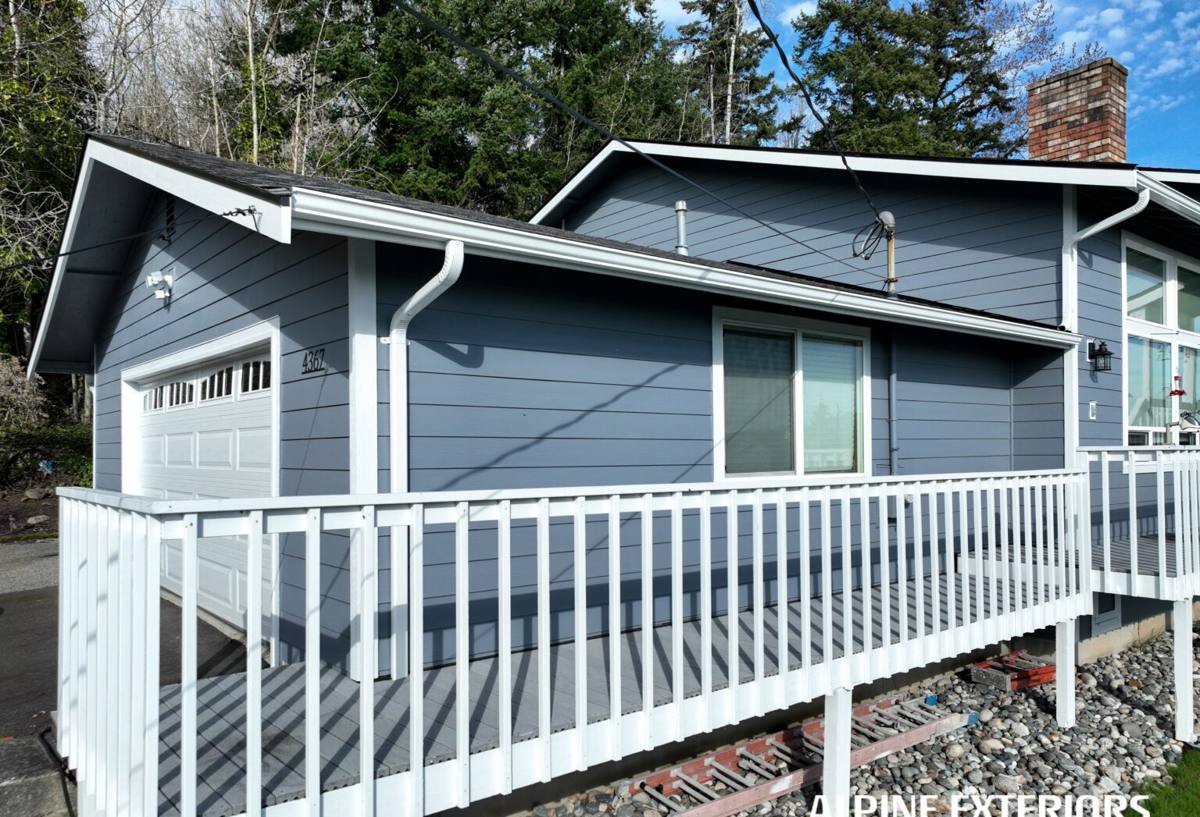
What Storm Damage Looks Like on a Deming Roof
Not all storm damage is obvious. Some of it announces itself — a tree limb through the decking, shingles scattered across the yard, a soaked ceiling stain the morning after a windstorm. But a lot of storm damage on roofs in this part of Whatcom County is quieter and shows up weeks or months later as a leak, a soft spot, or a mystery water stain.
Wind Damage
Sustained wind and gusting fronts lift shingle tabs, break the adhesive seal strips, and crease or tear the shingle itself. Once a seal strip is broken, that shingle no longer sheds water the way it's designed to — even if it looks fine from the ground. Wind can also pull flashing loose at chimneys, vents, and roof-to-wall transitions, which is one of the most common places we find hidden leaks after a storm.
Impact Damage
Deming's tree canopy is a blessing and a liability. Branches and full limbs come down in wind and heavy wet-snow events, and even a glancing hit can crack shingles, dent metal flashing, or puncture decking. Smaller impact damage from debris and hail (less common here, but it happens) can bruise shingles in ways that aren't visible until the granule layer starts wearing through early.
Water Intrusion
Once wind or impact compromises the roof's surface, water finds its way in — often along the path of least resistance, which is rarely directly above the stain you see on your ceiling. Water can travel along rafters and sheathing before it drips through, which is why a proper storm damage inspection checks well beyond the obvious entry point.
Moss and Debris Buildup After a Storm
Storms knock needles, cones, and branches onto the roof, and in a shaded, damp community like Deming that debris doesn't dry out quickly. Left in valleys and behind chimneys, it holds moisture against the roofing material and accelerates moss growth — which then lifts shingles and traps even more water. A storm repair that doesn't include clearing this debris is an incomplete repair.
Why Local Climate Changes How the Repair Should Be Done
A storm repair in a dry inland climate and a storm repair in Whatcom County are not the same job, even if the visible damage looks identical. The extended damp season, the amount of shade from surrounding trees, and the moss pressure specific to this region all change what materials and techniques hold up.
- Repairs need to seal properly in cool, damp conditions — not every sealant and adhesive cures reliably below a certain temperature or with residual moisture in the substrate.
- Flashing details matter more here because prolonged dampness finds any gap in a valley, step-flash, or chimney counter-flash over time.
- Moss-resistant practices (zinc or copper strips, proper ventilation, debris clearing) should be part of a storm repair when the roof already shows moss pressure, not treated as a separate future project.
- Matching shingle color and granule type matters more in a wooded setting where a mismatched repair patch stands out under filtered light for years.
Our Storm Damage Repair Process
1. Inspection First, Before Any Work Is Quoted
We start with a full roof inspection, not just a look at the spot you called about. That means checking the decking, flashing, vents, valleys, and the attic side if accessible, because storm damage rarely stays contained to one square of shingles.
2. A Clear, Honest Scope
You get a written explanation of what's actually damaged, what's simply worn and unrelated to the storm, and what repair options make sense. We don't pad a storm claim with unrelated work, and we don't downplay damage that will turn into a bigger problem if it's ignored.
3. The Repair Itself
Depending on the damage, that might mean replacing a section of shingles, re-securing or replacing flashing, repairing damaged decking underneath before anything goes back on top, or a combination of all three. We match materials as closely as possible so the repair blends in rather than becoming its own weak point.
4. Cleanup and Debris Clearing
Storm work always includes clearing branches, needles, and granule debris from the roof surface and gutters. Leaving that behind undoes a lot of the value of the repair, especially heading into another wet season.
5. Final Walkthrough
We walk the completed repair with you, explain what was done, and flag anything else worth keeping an eye on — including areas that aren't storm damage but are worth planning for.
Insurance and Storm Claims
Many storm repairs in this area go through homeowner's insurance. We're glad to provide a clear, itemized inspection report and photos to support a claim, and we can talk through what an adjuster is likely to look for. We don't handle the claim on your behalf or promise a specific settlement outcome — that's between you and your insurer — but we make sure the documentation reflects the actual condition of your roof so you're working from accurate information.
Repair vs. Replacement: How We Help You Decide
Not every storm-damaged roof needs to be replaced, and not every roof can be fixed with a patch. The right call depends on the roof's age, how much of it is affected, and whether the underlying decking is sound.
| Factor | Favors Repair | Favors Replacement |
|---|---|---|
| Roof age | Under roughly 12-15 years, still within useful life | Nearing or past expected lifespan for the material |
| Extent of damage | Localized — one slope or a few sections | Widespread across multiple slopes |
| Decking condition | Solid, dry, no rot found during inspection | Soft spots, rot, or repeated water staining found |
| Moss/debris history | Manageable with cleaning and minor treatment | Heavy, longstanding moss with shingle degradation underneath |
| Prior repairs | First or second repair on this roof | History of repeated leaks in different spots |
If a repair is the honest answer, that's what we'll recommend. If the roof is telling us it's past the point where patching makes sense, we'll explain why, in plain terms, before you spend money on a fix that won't hold.
What to Check After a Storm, Before You Call
A little bit of homeowner awareness goes a long way in catching storm damage early, before it turns into an interior repair too. From the ground, safely:
- Look for shingles or shingle pieces in the yard or gutters after wind events
- Check for visible sagging, gaps, or dark streaks along roof lines
- Note any new branches or debris resting on the roof surface
- Watch for new water stains on ceilings or upper-floor walls in the days after a storm
- Check attic insulation for damp spots or a musty smell if you have safe attic access
- Listen for dripping sounds during or right after heavy rain that weren't there before
If you notice any of these, it's worth having it looked at before the next storm compounds the damage — a small repair now is almost always less costly than the water damage that follows a delay.
Why a Crew That Already Works Deming Matters
Storm damage repair isn't just a general roofing skill — it's a job that goes better when the crew already understands the specific conditions of the area. We know how Deming's shade cover and river-valley humidity affect moss timing and material choices. We know that a repair matched to a shingle that's already granule-worn from years of damp exposure needs a slightly different approach than the same repair on a newer roof in a sunnier neighborhood. That familiarity means fewer surprises, a more accurate first inspection, and a repair that's built for the conditions it actually has to survive — not just a generic patch job.
Get a Free, No-Pressure Estimate
If a recent storm has left your roof with visible damage — or you just want a second set of eyes after a rough windstorm — we're happy to take a look. The estimate is free, there's no pressure to book anything on the spot, and you'll get a straight answer about what your roof actually needs. Use the form below to get started.