 Sudden Valley
 Deck Repair Built for Edgemoor's Conditions
Edgemoor sits close enough to the water and deep enough into Whatcom County's wet-season pattern that decks here age differently than decks in drier parts of the state. Homes near Sudden Valley deal with a long stretch of the year where wood stays damp, moss gets a head start every fall, and salt-tinged air off the water accelerates corrosion on anything metal. A deck that would last two decades in eastern Washington can start showing real trouble in half that time out here if it wasn't built or maintained with this climate in mind.
We work on decks in this area regularly, which matters more than it sounds like. A crew that mostly repairs decks in dry inland climates will treat every job the same way. A crew that works Edgemoor and the rest of Sudden Valley knows where water actually collects on a deck built into this terrain, which framing details fail first, and which fixes are cosmetic versus which ones are load-bearing and non-negotiable.
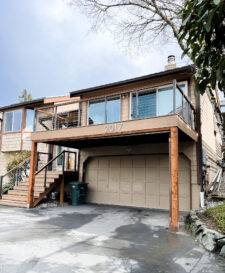
What the Regional Climate Does to a Deck
Three things drive most of the deck repair calls we get in this part of Whatcom County, and they compound each other.
Driving Rain and Standing Moisture
Whatcom County gets sustained rain, not just occasional showers, and wind-driven rain finds its way into joints, fastener holes, and any spot where two pieces of wood meet without a gap to drain and dry. Ledger boards, stair stringers, and the underside of deck boards where they contact joists are the classic failure points. Wood that's wet for days at a time and never fully dries between storms is wood that's rotting slowly whether or not it looks bad on the surface.
Salt Air and Metal Fatigue
Proximity to the water means airborne salt reaches decks, railings, and any exposed hardware. Standard fasteners, brackets, and connectors corrode faster here than they would inland. Corroded hardware doesn't just look bad — a rusted-through joist hanger or a bracket that's lost structural integrity is a safety issue, and it's often hidden from view until something starts to sag or flex.
A Long Moss Season
Moss doesn't just look green and slippery. It holds moisture against the wood surface, blocks air movement, and keeps deck boards from ever fully drying out during the wetter months. Left alone, moss growth turns a maintenance issue into a rot issue, especially in shaded areas under trees or on the north side of a house, which describes a lot of lots in this part of Sudden Valley.
Signs an Edgemoor Deck Needs Repair, Not Just Cleaning
- Soft or spongy spots when you walk across the deck, especially near the house or at stair landings
- Boards that have visibly cupped, split, or pulled away from fasteners
- Railings or posts that flex or wobble when pushed
- Rust streaks bleeding out from fastener heads or hardware connections
- Gaps opening up where the deck meets the house (ledger board separation)
- Persistent dark staining or moss regrowth within weeks of cleaning
- A musty smell coming from underneath the deck
- Stairs that feel less solid than they used to, particularly at the stringer connections
Any one of these on its own might be minor. Several together usually mean water has been getting into the structure for a while, not just the surface.
What a Correct Repair Actually Involves
A lot of deck "repair" work in wet climates is done wrong — boards get swapped without checking what's underneath, or surface staining gets treated as the whole problem when the framing is the real issue. A repair that holds up in this climate needs to start below the surface.
1. Inspection Before Anything Gets Fixed
We check the ledger board connection to the house first, since that's the single most safety-critical joint on most decks and the one most commonly compromised by long-term moisture exposure. From there we look at joists, beams, post bases, and hardware condition, not just the decking boards people notice.
2. Identify Rot Versus Surface Weathering
Weathered wood that's structurally sound just needs cleaning, sealing, or refinishing. Rotted wood needs to be cut out and replaced — there's no coating or sealant that reverses actual decay. Probing suspect areas with an awl or screwdriver tells us which is which; guessing from the surface doesn't.
3. Replace Compromised Framing and Hardware
Given the corrosion rate on hardware in this area, we typically recommend replacing old fasteners and connectors with corrosion-resistant, code-rated hardware rather than reusing anything that's shown rust. This is the detail that gets skipped most often on budget repairs, and it's the one most likely to cause a repeat failure.
4. Address Drainage and Airflow, Not Just the Symptom
If a deck is failing because water pools in one area or air can't circulate underneath it, replacing boards without fixing that will just lead to the same failure again in a few years. Sometimes the right fix includes small grading, gapping, or ventilation adjustments alongside the board and framing work.
5. Finish With the Right Protection for the Conditions
Sealants and stains rated for coastal, high-moisture exposure hold up longer here than general-purpose products. Reapplication schedules also need to be realistic for a climate with this much sustained damp weather, not based on a manufacturer's best-case timeline written for a drier region.
Repair Versus Replacement: How We Make the Call
| Situation | Usually Repairable | Usually Needs Replacement |
|---|---|---|
| Localized rot in a few boards | Yes — spot replacement | Only if rot has spread to framing |
| Ledger board separation from house | Sometimes, if caught early | Often, if moisture damage is extensive |
| Surface graying, no soft spots | Yes — clean, sand, refinish | Not needed |
| Rusted hardware, sound wood | Yes — hardware swap | Not needed |
| Multiple joists soft or rotted | Rarely cost-effective | Often, at least partial rebuild |
| Deck over 20-25 years old with recurring issues | Case by case | Frequently the more economical long-term choice |
Age alone doesn't decide this — a well-built, well-maintained older deck can still be a good repair candidate, while a newer deck with poor original drainage details can already be in trouble. We give a straight answer after inspection rather than defaulting to "replace everything," which isn't always the right call or the honest one.
Why It Matters That We Already Work in Edgemoor and Sudden Valley
Deck repair isn't a one-size-fits-all trade. A crew that regularly works this specific area around Sudden Valley has already seen how the local combination of rain, humidity, moss, and salt-touched air plays out on real decks over years, not just in a manual. That shows up in small decisions: which side of a deck to expect rot on first based on sun and wind exposure, which hardware grades actually hold up locally, and how aggressive to be about ventilation and drainage fixes versus just replacing boards.
It also means less guesswork for you. We're not learning the local conditions on your project — we're applying what we already know works here.
What to Expect From Our Process
- On-site inspection of the full deck structure, not just the visible surface
- A clear explanation of what's failing and why, in plain terms
- An honest repair-versus-replace recommendation based on what we actually find
- A written scope covering materials, hardware, and labor before work starts
- Repair work that addresses the cause (moisture, drainage, corrosion) alongside the visible damage
- Guidance on maintenance timing suited to this climate, not a generic schedule
Maintenance That Extends the Life of a Repair
A good repair can be undone by the same conditions that caused the original damage if it's not maintained afterward. In this climate, that generally means:
- Clearing moss and debris from the deck surface and gaps between boards before it can hold moisture through the wet months
- Checking the ledger board area and any spots where wood meets wood or wood meets masonry at least once a year
- Re-sealing or restaining on a schedule matched to actual local wear, not a manufacturer's generic interval
- Keeping gutters and downspouts near the deck clear so runoff isn't draining directly onto or under it
- Watching for early rust bleed on hardware, which is easier and cheaper to address before it spreads
None of this requires a big time investment, but skipping it is the most common reason a solid repair only lasts a few years instead of well beyond that.
Get a Straight Answer on Your Deck
If you're noticing soft spots, rust stains, moss that keeps coming back, or a deck that just doesn't feel as solid as it used to, it's worth having someone look at it before those signs turn into a bigger structural problem. We offer a free, no-pressure estimate for homeowners in Edgemoor and the rest of the Sudden Valley area — an honest look at what's going on and what it would take to fix it right. Fill out the form below to get started.