 Sudden Valley
 Siding Built for Geneva's Weather, Not Just Its Curb Appeal
Geneva homes sit in a stretch of Whatcom County that gets the full spectrum of what Pacific Northwest weather can do to a house exterior. Wind-driven rain works its way sideways into seams and laps. Salt-laden air off the water accelerates corrosion on anything metal. And for a good chunk of the year, shaded north walls and tree-lined lots stay damp long enough for moss and algae to take hold and stay there. None of that is unusual for this part of the state — but it does mean siding choice and installation quality matter more here than they would in a drier climate.
This page is about one thing specifically: James Hardie fiber cement siding, installed correctly, on a Geneva home. Not a general overview of siding options, and not a sales pitch for whatever product happens to be in stock. We only install James Hardie, and we want to walk through why that's the right call for this neighborhood and what a job actually involves when it's done right.
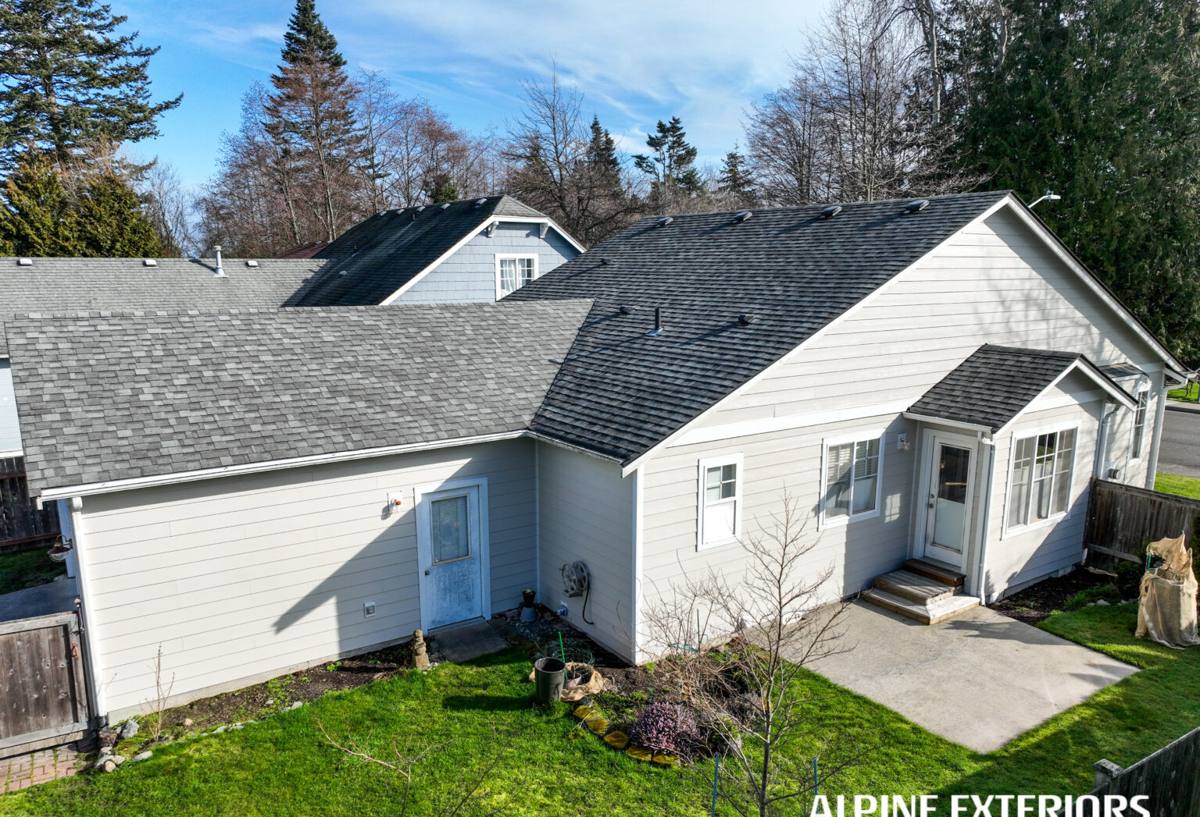
What Geneva's Climate Actually Does to Exterior Siding
Moisture That Doesn't Let Up
Sudden Valley sees a long wet season, and a lot of that rain doesn't fall straight down — it gets pushed sideways by wind, which means it hits vertical wall surfaces with real force. Any gap, poorly lapped joint, or under-caulked seam becomes a point of entry. Once moisture gets behind siding, it doesn't dry out quickly in a climate where the air itself stays humid for months.
Salt Air and Fastener Corrosion
Salt-laden air breaks down unprotected metal faster than people expect — nail heads, flashing, and trim fasteners are usually the first things to show it. Corrosion at a fastener point isn't just cosmetic; it's a failure point where water can start tracking behind the siding.
Moss, Algae, and Shade
Between tree cover and a long stretch of overcast, damp weather, north- and west-facing walls in this area stay wet longer than they would in a sunnier climate. That's exactly the environment moss and algae need to establish. On some siding materials, that growth traps moisture against the surface and slowly degrades it. On others, it's a surface-level nuisance that pressure washes off without touching the material underneath.
Why James Hardie Is the Right System for This Exposure
James Hardie fiber cement is engineered specifically for climate zones like ours. The HZ5 product line — designed for the Pacific Northwest's wet, moderate-temperature conditions — resists moisture absorption and swelling far better than wood-based or wood-composite siding. It won't rot, and it isn't a food source for the organic growth that thrives in shaded, damp spots.
A few specifics that matter for a Geneva installation:
- Non-combustible core — fiber cement doesn't burn, which matters given wildfire smoke seasons and general fire risk awareness in the region.
- ColorPlus factory finish — a baked-on finish that resists fading and chipping far better than field-applied paint, and doesn't need repainting every few years.
- Dimensional stability — Hardie board expands and contracts far less than wood or vinyl with temperature and moisture swings, which means fewer stress cracks at joints over time.
- Moss and algae resistance — the surface doesn't provide the organic food source that some composite and wood products do, so growth stays superficial and washes off rather than embedding.
We've made James Hardie the only product we install — not LP SmartSide, not vinyl, not cedar, not off-brand fiber cement. That's a deliberate standard, not a lack of options. It lets us install one system well, understand its behavior in this exact climate, and stand behind the result.
How Common Siding Materials Hold Up in This Climate
| Material | Moisture Behavior Here | Long-Term Maintenance |
|---|---|---|
| James Hardie fiber cement | Minimal absorption, engineered for wet coastal climates | Occasional wash; ColorPlus finish holds color for years |
| Vinyl siding | Can warp or buckle with temperature swings; seams are a moisture entry risk | Low, but cracks/fades and is hard to color-match when repaired |
| Cedar | Absorbs moisture readily; prone to rot in shaded, damp wall sections | Regular sealing/staining required, higher long-term cost |
| LP SmartSide | Engineered wood strand product; edge sealing is critical to prevent swelling | Moderate; installation quality has a big impact on lifespan |
This isn't a knock on every alternative — vinyl and LP both have real markets and honest use cases. But for the specific combination of driving rain, salt air, and shaded moss-prone walls that Geneva homes deal with, fiber cement's moisture and stability profile is the better long-term fit, which is why it's the only system we put our name behind.
What a Correct James Hardie Installation Actually Involves
The material is only half the equation. A lot of siding failures we see on older homes in this area weren't a product problem — they were an installation problem. Getting this right in a wet climate means:
The Drainage Plane Comes First
Before a single board goes up, the wall needs a properly lapped weather-resistive barrier and, in most cases, a rainscreen or drainage gap behind the siding. This gives any moisture that does get past the siding a path to drain and dry out instead of sitting against the sheathing.
Flashing at Every Penetration
Windows, doors, hose bibs, vents, and deck ledgers all need proper flashing integrated with the water-resistive barrier — not just caulk. Caulk is a backup, not a primary defense, especially in wind-driven rain.
Fastener Placement and Corrosion Resistance
James Hardie specifies fastener type, spacing, and placement for a reason — under- or over-driven nails, wrong fastener material, or incorrect spacing can void the warranty and create early failure points. In a salt-air environment, using the correct corrosion-resistant fasteners isn't optional.
Proper Clearances
Siding needs to be held up off decks, patios, and grade by the manufacturer-specified clearance, and kept clear of soil and mulch beds. Skipping this is one of the most common causes of moisture damage at the bottom courses of a wall.
Our Process on a Geneva Job
- On-site assessment — we look at existing siding condition, wall exposure, moisture history, and any problem areas specific to the home's orientation and tree cover.
- Product and color selection — walking through Hardie's plank, panel, and shingle profiles and ColorPlus palette against the home's style and HOA or neighborhood expectations where relevant.
- Tear-off and inspection — removing old siding and checking the sheathing and framing underneath for hidden moisture damage before anything new goes up.
- Weather barrier and drainage plane installation — the part of the job that doesn't show but determines how the siding performs in ten years, not just year one.
- Hardie installation to manufacturer spec — correct fasteners, spacing, flashing, and clearances throughout.
- Final walkthrough — checking caulking, trim details, and touch-up before we call it finished.
Cost Factors for a Geneva Home
Every home is different, but the biggest cost drivers on a Hardie project in this area tend to be the same few things:
| Factor | Why It Matters |
|---|---|
| Home size and wall complexity | More corners, dormers, and roof lines mean more cutting, flashing, and labor time |
| Existing siding removal and repair | Hidden rot or sheathing damage found during tear-off adds scope |
| Product line and profile | Lap, panel, and shingle profiles, plus ColorPlus color selection, affect material cost |
| Site access | Sloped Sudden Valley lots and tree-heavy yards can affect staging and labor time |
| Trim and detail work | Window and door trim, fascia, and accent details add finish-carpentry time |
We give straightforward, itemized estimates rather than a single lump number, so you can see what's driving the cost and where there's flexibility.
Signs Your Siding Is Telling You Something
A lot of homeowners in this area wait longer than they should because the damage isn't obvious from the street. Worth checking for:
- Soft or spongy spots when you press on siding, especially near the bottom courses
- Paint that's bubbling, peeling, or failing faster than it should
- Persistent moss or algae staining that comes back quickly after cleaning
- Visible gaps, warping, or cupping at seams and corners
- Rust streaking below nail heads or trim fasteners
- Rising energy bills that coincide with drafts near exterior walls
Any one of these is worth a closer look before it turns into a sheathing or framing repair, which costs a lot more than a siding repair.
Why It Matters That We Already Work This Neighborhood
A crew that's worked Sudden Valley and the surrounding Whatcom County area already knows how the local exposure plays out house to house — which walls take the worst of the driving rain, where moss tends to build up fastest, and how lot grading and tree cover here typically affect drainage. That's not something you can fully substitute with a generic install checklist. It shows up in small decisions on site: how much drainage gap to build in on a particularly shaded wall, or where extra flashing attention is worth the time even if it's not strictly required.
We install one product because we believe it's the right one for this climate, and we work this area because we know what this area actually does to a house over time. If you're weighing a siding replacement or repair on a Geneva home, we're happy to take a look and give you a straightforward, no-pressure estimate — fill out the form below and we'll get in touch.